
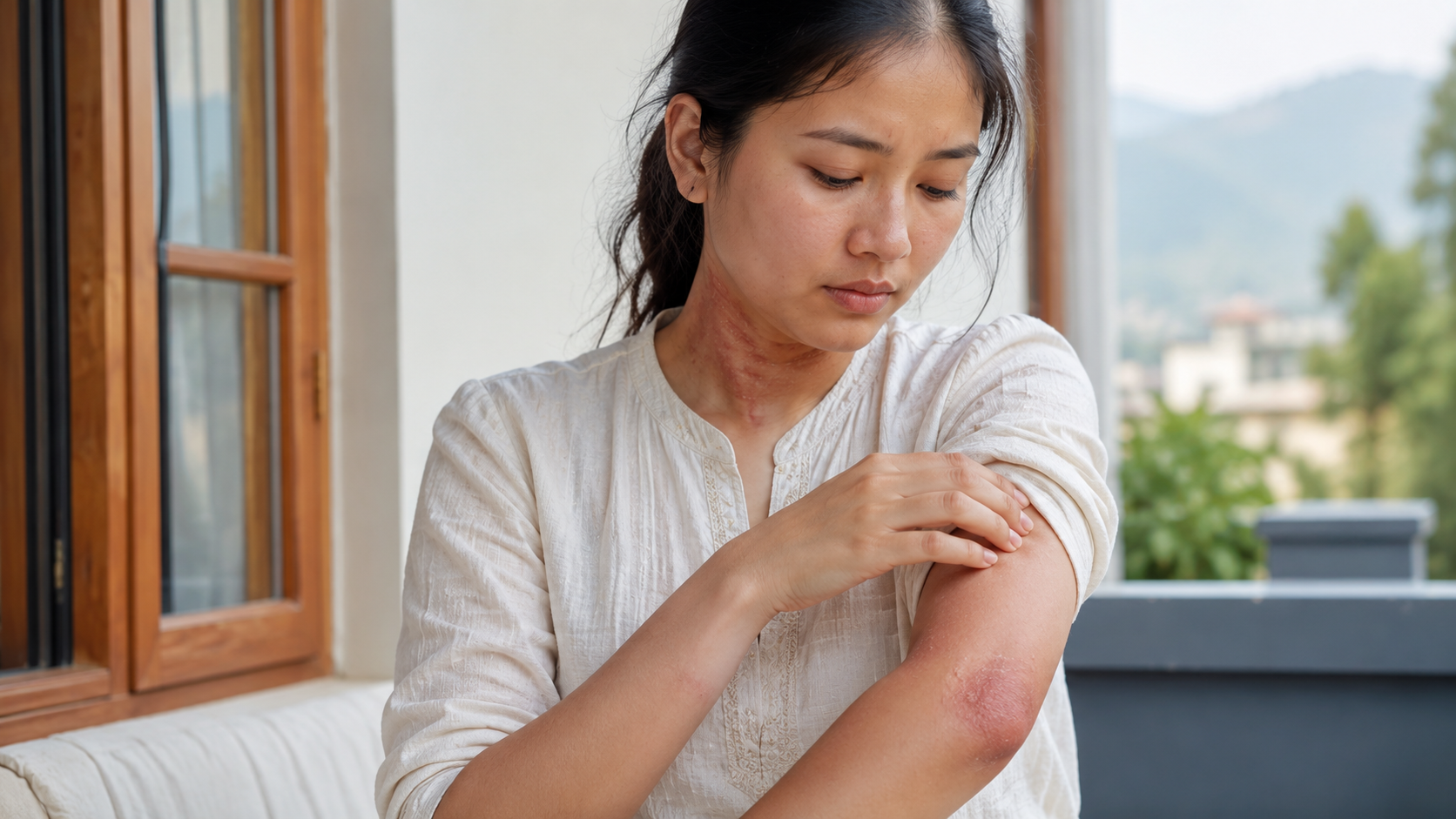
Atopic eczema
Atopic eczema, also called atopic dermatitis, is a long-term condition that makes the skin dry, itchy and inflamed. It often begins in childhood but can affect people of any age. Symptoms may improve for a while and then flare again. Atopic eczema is not contagious and cannot spread from one person to another.
eczema is a group of inflammatory skin conditions caused by environmental and genetic factors that lead to dry, itchy, and sometimes blistered skin. While there is no guaranteed cure, the condition can be effectively managed by identifying and avoiding personal triggers, using thick moisturizers, and seeking professional medical advice.
A moisturizer is a cream, lotion, or ointment used to remove dryness from the skin and keep it soft, smooth, and moist from within.
Symptoms
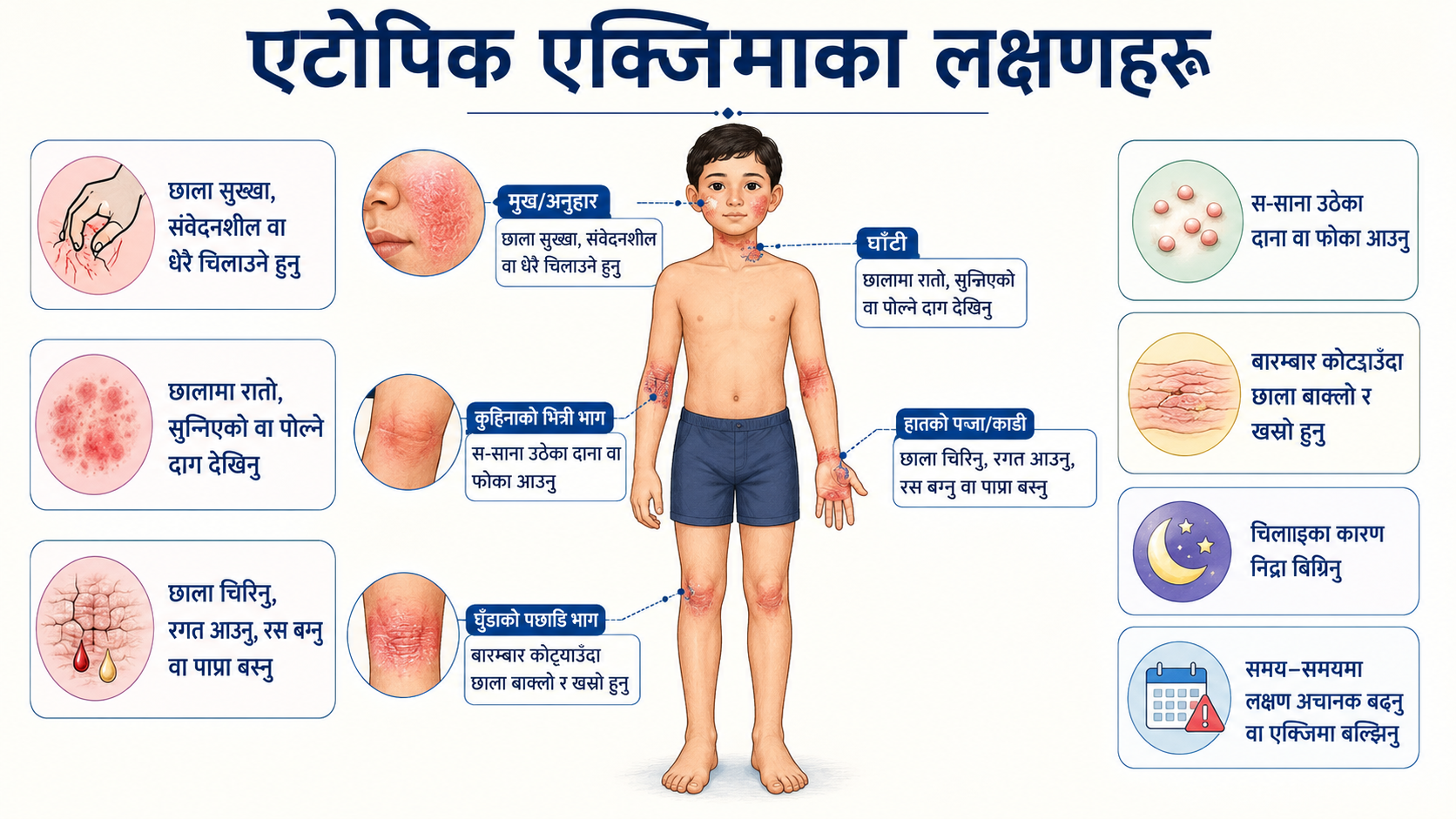
Symptoms can vary with age, skin tone and severity. They may include:
Dry, itchy or sensitive skin
Red, swollen or inflamed patches
Darker, lighter, purple, grey or brown changes on darker skin
Cracked, bleeding, weeping or crusted skin
Small raised bumps or blisters
Thickened or rough skin after repeated scratching
Disturbed sleep because of itching
Symptoms that periodically worsen, known as a flare
In babies, the face and outer limbs are often affected. In older children and adults, eczema commonly appears inside the elbows, behind the knees, on the hands, face or neck.
Red flags
Seek urgent medical assessment if you or your child has:
Eczema that suddenly becomes painful or rapidly worsens
Groups of painful blisters or small round open sores
Fever, unusual tiredness or feeling very unwell with worsening eczema
Redness, heat or swelling spreading beyond the affected skin
Pus, increasing discharge, yellow crusting or a bad smell
Red or painful eyes, light sensitivity or eczema blisters near the eyes
Severe swelling of the face, lips, tongue or throat, or difficulty breathing
A baby who is feeding poorly, unusually sleepy or seriously unwell
Painful, rapidly worsening eczema with blisters may be eczema herpeticum, a serious viral infection requiring urgent treatment.
Self-care
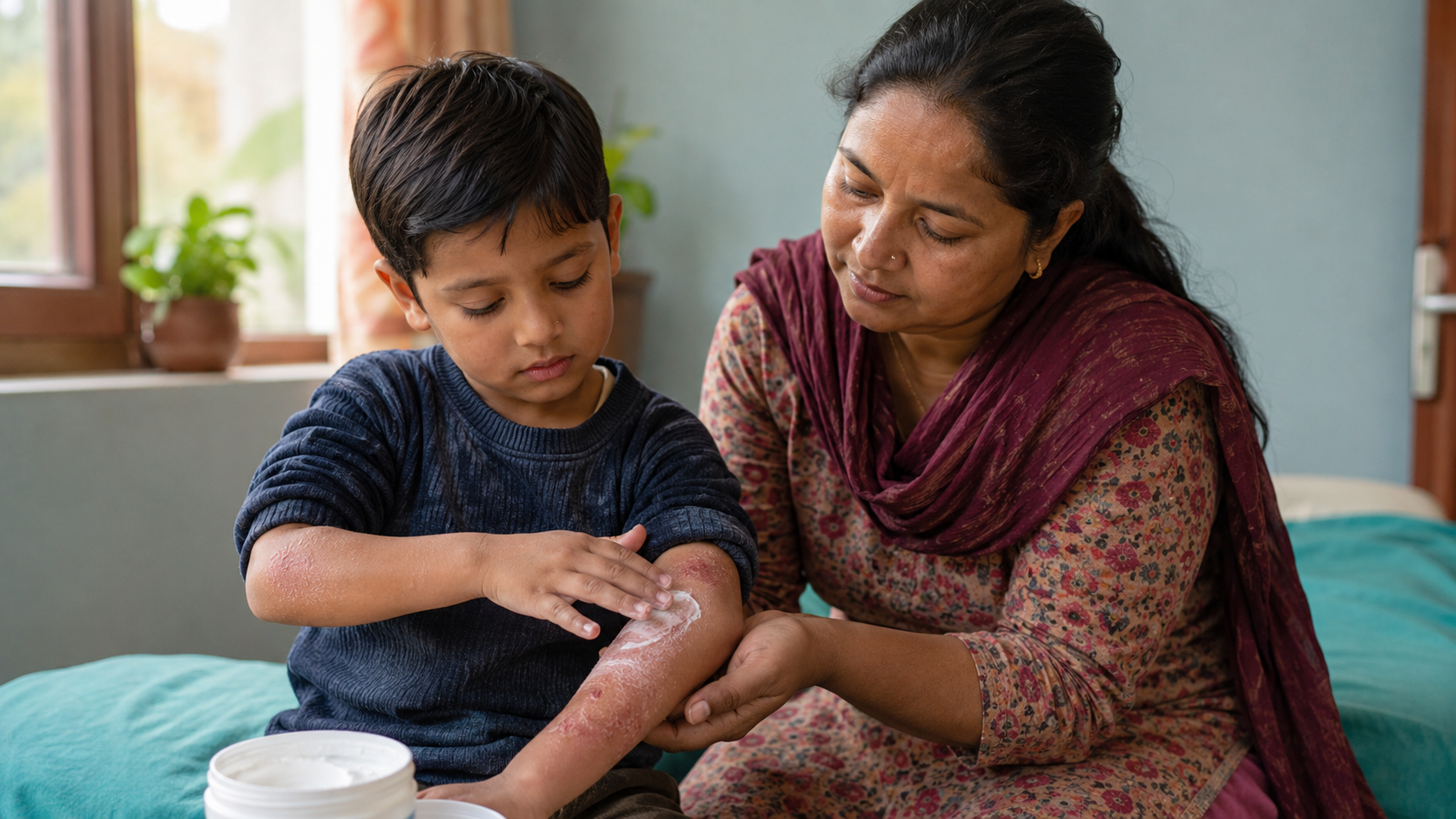
Apply an unperfumed emollient regularly, including when the skin looks clear.
Use an emollient or gentle soap substitute instead of fragranced soap and shower gel.
Keep baths or showers short and use lukewarm rather than hot water.
Pat the skin dry and apply emollient soon afterwards.
Keep fingernails short and discourage scratching where possible.
Wear soft, breathable clothing and avoid wool or rough fabric if it irritates the skin.
Notice personal triggers such as heat, sweating, fragranced products, dust or stress.
Do not remove several foods from a child's diet unless advised by a qualified health professional.
Emollients can soak into clothing and bedding and make them catch fire more easily. Keep treated skin and fabrics away from cigarettes, cooking flames, heaters and other naked flames.
Treatment
Emollients are the main everyday treatment and should continue during both clear periods and flares. When the skin is inflamed, a clinician may recommend a topical corticosteroid of a strength suited to the person's age, the severity of the eczema and the part of the body affected. Used correctly for the advised period, these medicines can control inflammation safely.
Other treatments may include topical anti-inflammatory creams or non-steroid creams, medicated dressings or wet wraps. Antibiotics are only needed when a bacterial infection requires treatment; weeping or crusting alone does not always mean antibiotics are necessary. Severe or persistent eczema may require dermatology review, light therapy or medicines that act throughout the body.
Questions to ask your doctor
Is this atopic eczema or another skin condition?
What might be triggering the flares?
Which emollient and soap substitute should we use?
Which steroid cream is suitable for each body area?
How much should be applied and for how long?
Are there signs of bacterial or viral infection?
Is allergy testing or a change in diet genuinely needed?
When should we be referred to a dermatologist?
Which symptoms require urgent medical help?
Nepal pathway
In Nepal, start with your nearest health post, PHC, clinic, or hospital if symptoms are worrying, severe, worsening, or not improving. Take previous prescriptions, test reports, allergy information, and current medicines with you. Seek urgent care immediately if there are red flag symptoms.
Disclaimer
This is general health information only and does not replace medical advice, diagnosis, treatment, or emergency care.
Help improve this guide
Spotted an error or want to contact us about this guide? Send a message to the HamroSwasthya team.