
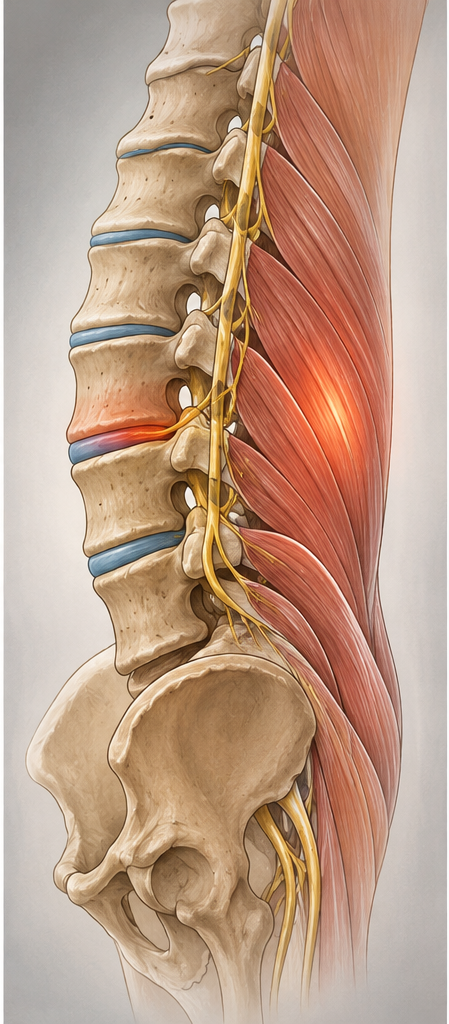
Back Pain
Back pain is a very common experience for many people. It can be caused by a wide range of factors, and often, the exact reason for the pain is not immediately clear. Fortunately, most back pain typically improves and resolves by itself over time.
Symptoms
Back pain can feel different for everyone, but common symptoms include:
An ache or stiffness in your back.
Sharp, shooting, or dull pain anywhere along your spine.
Pain that gets worse when you move, lift, or bend.
Muscle spasms or tightness in your back.
Sometimes, the pain might spread to your buttocks or legs.
Red flags

Non-urgent concerns: When to see a doctor or health worker for back pain:
See a doctor or health worker if your back pain:
Does not get better after a few weeks of home care.
Prevents you from doing your daily activities.
Makes you very worried or is hard to manage.
Happens with unexplained weight loss.
Occurs with a lump, swelling, or change in the shape of your back.
Does not improve with rest or gets worse at night.
Worsens when you sneeze, cough, or have a bowel movement.
Is in your upper back (between your shoulders) rather than your lower back.
Urgent concerns: When to contact a doctor or health worker quickly:
Contact a doctor or health worker quickly if your back pain:
Comes with fever, chills, shivers, or if you feel generally unwell.
Is severe and started suddenly, or is getting worse very quickly.
Immediate action: When to seek emergency medical help:
Seek emergency medical help (call for an ambulance or go to the nearest hospital emergency department) if your back pain:
Comes with pain, tingling, weakness, or numbness in both legs.
Causes a loss of feeling around your genitals or anus.
Leads to changes in your bladder or bowel control, such as difficulty urinating, or accidentally urinating or having a bowel movement.
Results in changes in how your penis or vagina feels during sex, or causes problems like not being able to get or keep an erection, or not being able to have an orgasm.
Is accompanied by chest pain.
Started after a serious accident, such as a car crash.
Do not drive yourself to the emergency department. Ask someone else to drive you, or call for emergency services and ask for an ambulance. Remember to bring all medicines you are taking with you.
Self-care
Self-Care
Keep moving: Avoid long periods of bed rest. Gentle activities like walking can help reduce stiffness and improve your back pain. Do not force yourself into movements that cause sharp pain.
Use heat or cold: Applying a warm cloth, hot water bottle, or an ice pack (wrapped in a cloth) to the painful area can help ease discomfort. Try both to see what works best for you.
Gentle exercises: Simple stretches and light movements can help your back feel better. Listen to your body and stop if you feel increased pain.
Over-the-counter pain relief: Simple painkillers available without a prescription can help manage discomfort. Always follow the instructions on the package.
Mind your posture: Pay attention to how you sit, stand, and lift. Try to keep your back straight and use support for your lower back if needed, especially when sitting for long periods.
Lift correctly: When lifting heavy items, bend your knees and use your leg muscles, keeping your back straight, rather than bending from your waist.
Treatment

Urgent Medical Advice for Back Pain
You should seek urgent medical help if you have back pain and experience any of the following signs:
You feel hot, cold, shivery, or generally unwell (like having a fever).
The pain is severe and started suddenly, or it is getting worse very quickly.
Contact a doctor or health worker for an urgent appointment, or call emergency medical services if you are experiencing these symptoms.
Treatments for Back Pain
If your back pain is severe or does not improve, a doctor may prescribe painkillers.
If your pain does not get better after a few weeks, other treatments may be recommended. These include:
Group exercise sessions and physiotherapy.
Manual therapy: A trained therapist will massage and gently move the muscles, bones, and joints in your back.
Cognitive behavioural therapy (CBT) to help you manage the pain and its impact on your life.
A procedure to block pain signals from specific nerves in your back. This is usually considered only for long-term lower back pain.
If your back pain is due to a medical condition, such as a slipped disc, and other treatments have not been effective, surgery might be an option.
Questions to ask your doctor
- What do you think might be causing my back pain?
- What can I do at home to help manage my pain?
- Are there any specific exercises or movements that would be good or bad for me to do?
- What treatment options are available for my back pain?
- How long do you expect my pain to last?
- What are the warning signs that mean I should see a doctor again quickly?
- When should I come back for a follow-up visit, if needed?
Nepal pathway
In Nepal, start with your nearest health post, PHC, clinic, or hospital if symptoms are worrying, severe, worsening, or not improving. Take previous prescriptions, test reports, allergy information, and current medicines with you. Seek urgent care immediately if there are red flag symptoms.
Disclaimer
This is general health information only and does not replace medical advice, diagnosis, treatment, or emergency care.
Help improve this guide
Spotted an error or want to contact us about this guide? Send a message to the HamroSwasthya team.