

Dehydration
Dehydration can affect anyone, but babies, young children, and older adults are more likely to become dehydrated than other people. It is important to recognise the signs early and act quickly, because dehydration can become serious if the body loses too much fluid without replacing it. Drinking enough fluids every day, and replacing fluids lost during illness, hot weather, or physical activity, helps keep the body working well.
Symptoms
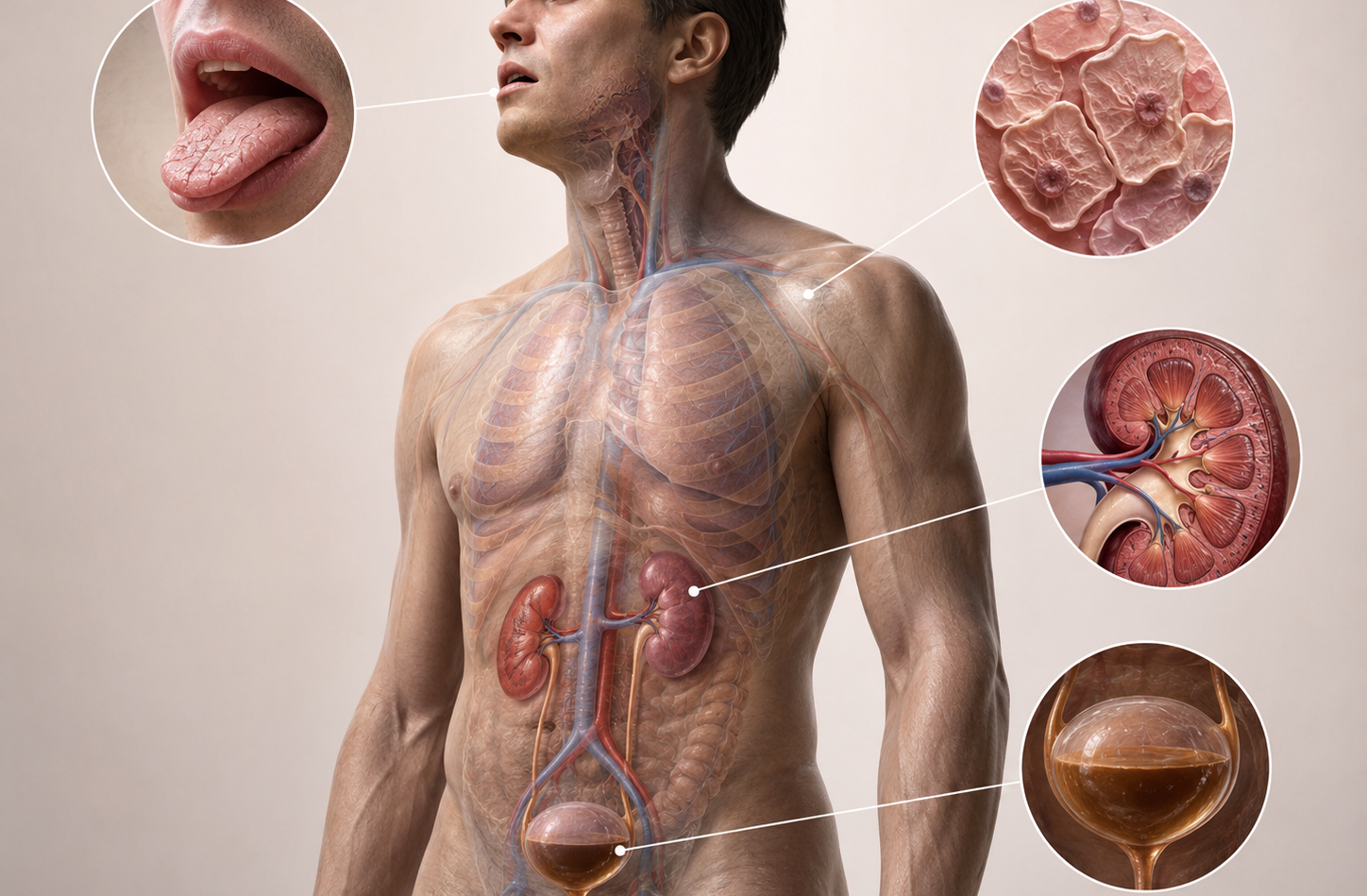
Dehydration can cause different symptoms in adults, children, and babies.
Adults and children may notice these signs:
feeling thirsty
a dry mouth, lips, or tongue
dark yellow urine with a strong smell
passing urine less often than normal
headache
feeling dizzy or lightheaded
feeling tired or weak
sunken eyes
Babies may show different warning signs. Look for:
a sunken soft spot on the top of the head (this soft area is called the fontanelle)
sunken eyes
little or no tears when crying
fewer wet nappies than usual
being unusually sleepy, hard to wake, or irritable
Red flags
Babies, young children, and older adults get dehydrated more easily than others and need extra attention.
Seek urgent medical care from a doctor or health worker as soon as possible if you notice any of the following warning signs:
You feel unusually tired, or your child seems drowsy or hard to keep awake
You feel dizzy when you stand up and the dizziness does not go away
Your urine is dark yellow, or you are passing urine less often than usual
Your baby has fewer wet nappies than normal
You or your child are breathing faster than usual, or the heart is beating quickly
Your baby or child has few or no tears when crying
Your baby has a sunken fontanelle - the soft spot on top of the head dips inward
These signs may mean the dehydration is serious and needs prompt treatment.
Go to the nearest emergency department or call emergency services immediately if you or someone else has dehydration along with any of these signs:
Skin, lips, or tongue that looks blue, grey, pale, or blotchy - on darker skin tones, check the palms of the hands or the soles of the feet
Skin that feels cold to the touch
Difficulty breathing, or very fast or laboured breathing
Confusion or difficulty thinking clearly
Unusual sleepiness or difficulty waking up
These signs may indicate shock, which is a life-threatening complication of severe dehydration. Do not drive yourself to the hospital. Ask someone to take you, or call emergency services and request an ambulance. Bring any medicines you are currently taking with you.
Self-care
If you notice signs of dehydration, start drinking fluids as soon as possible. If you feel nauseous or have been vomiting, drinking may feel difficult at first. Begin with small sips and slowly increase the amount over time. Avoid tea, coffee, and alcohol, as these drinks cause the body to lose more fluid.
When vomiting or diarrhoea causes heavy fluid loss, the body also loses important salts, sugars, and minerals. Plain water alone may not be enough to replace these. Oral rehydration solutions can help restore what the body has lost. These come as powders that you mix into water and drink. You can find them at a pharmacy or medicine shop. Ask the pharmacist which oral rehydration solution is suitable for you or your child.
Treatment
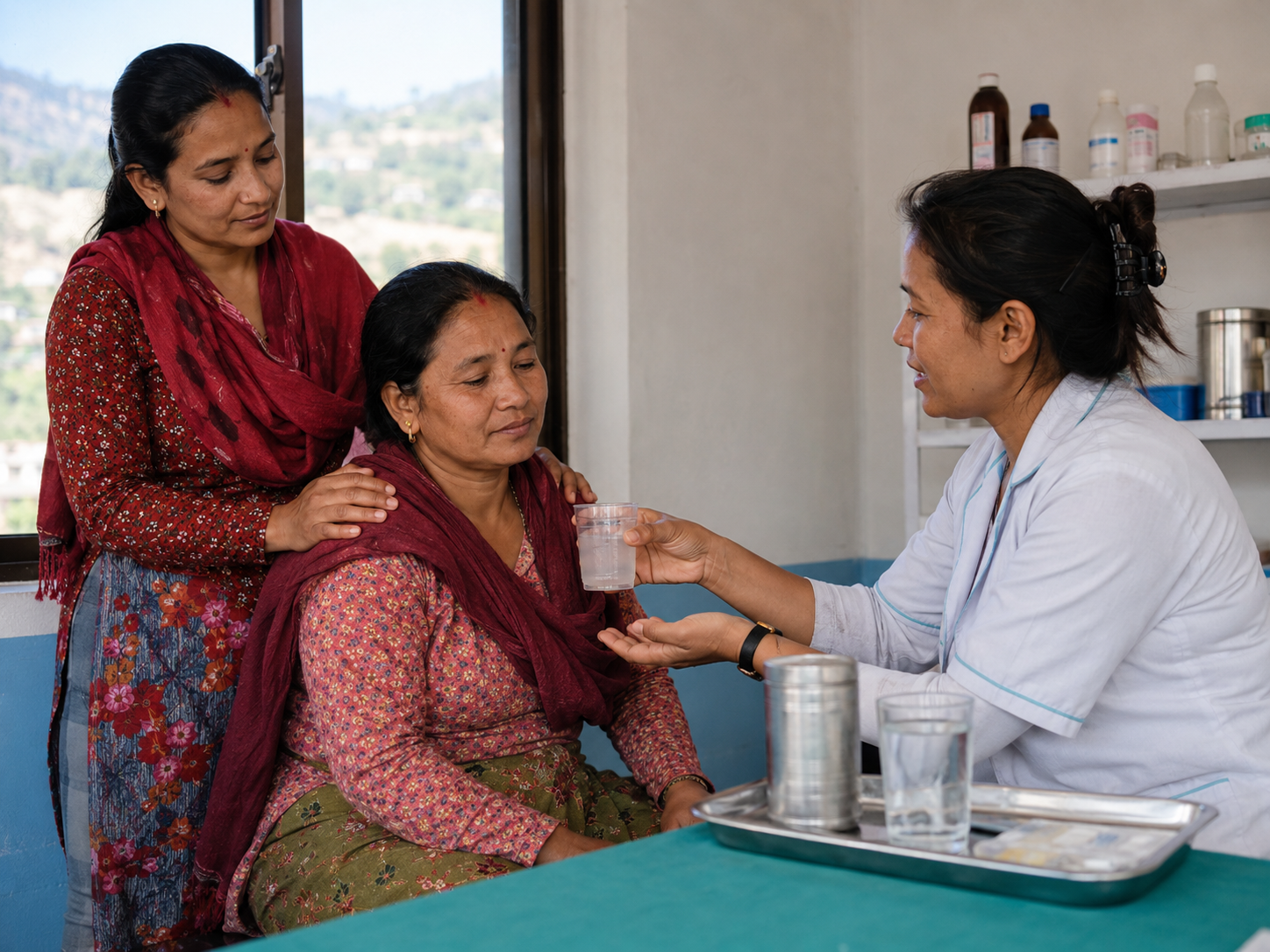
Seek urgent medical help from a doctor, health worker, or emergency service right away if you or your child have any of these warning signs:
You feel unusually tired, or your child seems very drowsy
You feel dizzy when you stand up and the dizziness does not go away
Your urine is dark yellow, or you are passing less urine than usual - or your baby has fewer wet nappies than normal
You or your child are breathing faster than usual, or the heart is beating rapidly
Your baby or child has few or no tears when crying
Your baby has a soft spot on the head that appears sunken
These are signs that dehydration may be serious and needs prompt treatment. Go to your nearest health post, hospital, or emergency service as soon as possible. If you are unsure about a young child, especially one under 5 years old, seek medical advice without delay.
Questions to ask your doctor
Questions to Ask Your Doctor During Consultation
Going to a medical appointment can feel overwhelming. Having a list of questions ready can help you get the most from your visit. Here are some useful questions to consider asking:
About your condition
How severe is my dehydration, and do I need treatment beyond drinking more fluids at home?
What caused my dehydration, and is there an underlying illness I should know about?
How long should it take for me to start feeling better?
About fluids and diet
How much fluid should I be drinking each day, and what types of drinks are best for me?
Should I be using an oral rehydration solution, and if so, how much and how often?
Are there foods or drinks I should avoid while I am recovering?
About my specific situation
My child or baby seems dehydrated - what signs should I watch closely at home?
I am pregnant, elderly, or have another health condition - does this change how I should manage dehydration?
Are any medicines I am taking making dehydration more likely?
About follow-up and warning signs
What warning signs should prompt me to come back or seek urgent help?
Do I need any tests, such as a blood or urine test, to check how my body is coping?
When should I expect to feel fully recovered, and when should I follow up with you?
Nepal pathway
In Nepal, start with your nearest health post, PHC, clinic, or hospital if symptoms are worrying, severe, worsening, or not improving. Take previous prescriptions, test reports, allergy information, and current medicines with you. Seek urgent care immediately if there are red flag symptoms.
Disclaimer
This is general health information only and does not replace medical advice, diagnosis, treatment, or emergency care.
Help improve this guide
Spotted an error or want to contact us about this guide? Send a message to the HamroSwasthya team.