
Heavy periods
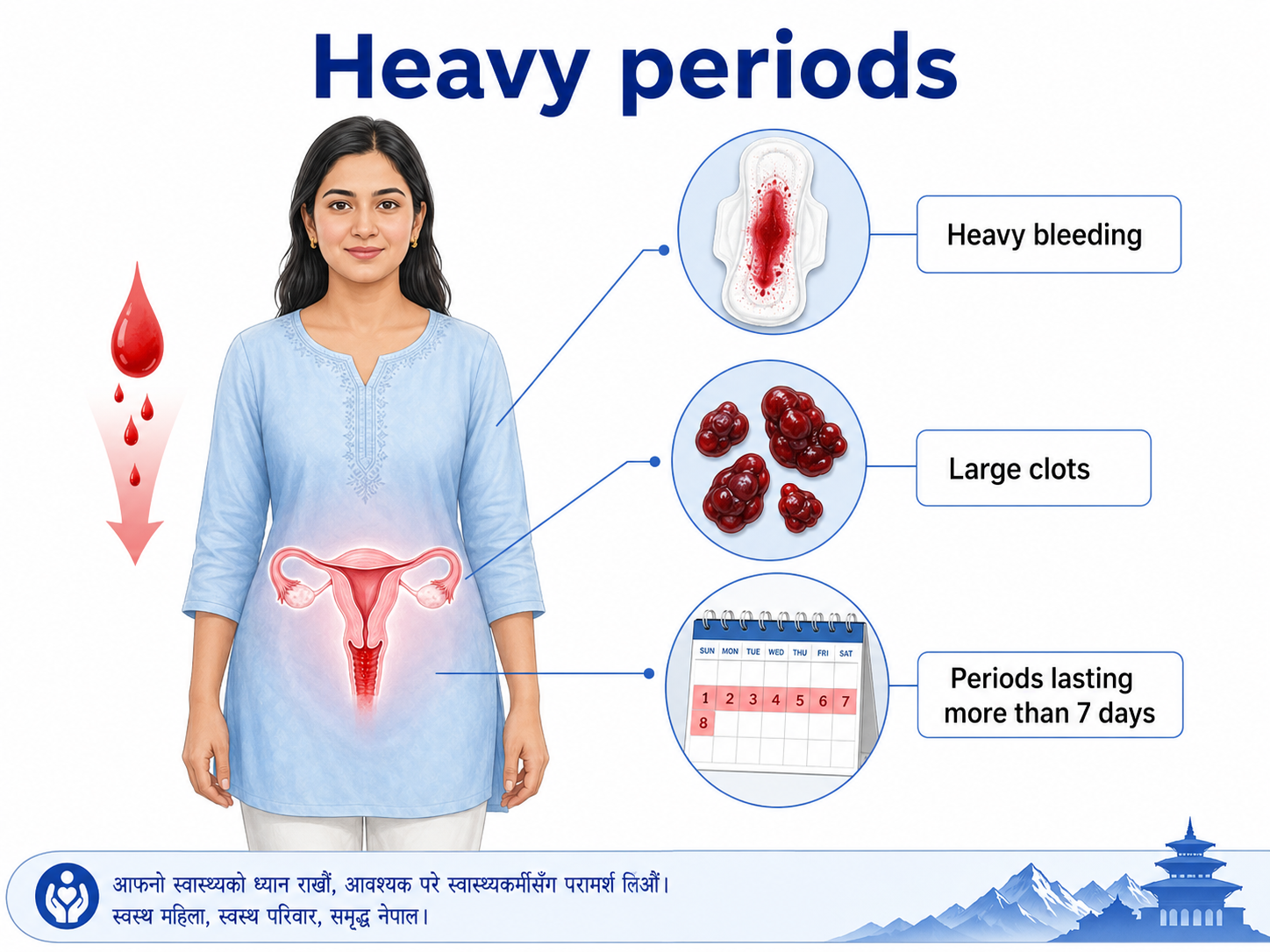
Heavy periods, also called heavy menstrual bleeding, means menstrual bleeding that is heavy enough to interfere with everyday life. You may need to change period products very frequently, use two products together, pass large clots, bleed through clothes or bedding, or have periods lasting longer than seven days. Heavy bleeding can lead to anaemia and may cause tiredness, weakness or breathlessness.
Sometimes no specific cause is found. Other causes include fibroids, adenomyosis, endometriosis, irregular ovulation, bleeding disorders and medicines such as anticoagulants. The aim of assessment and treatment is to improve your quality of life, not simply to measure how much blood you lose.
Symptoms
You may experience:
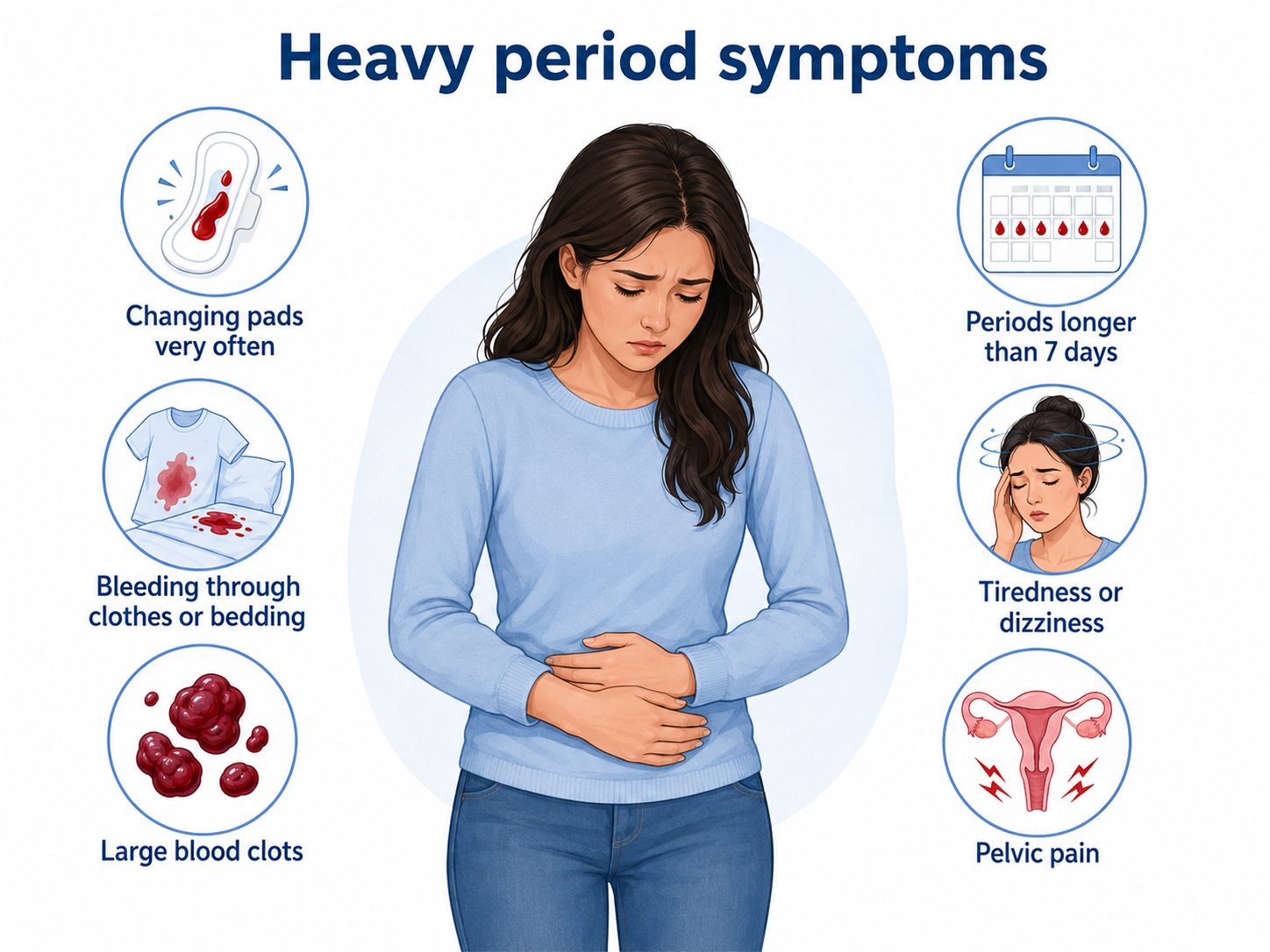
Needing to change a pad or tampon every one to two hours
Using two period products together
Bleeding for more than seven days
Passing blood clots larger than about 2.5 cm
Bleeding through clothes or bedding
Avoiding work, school, exercise, travel or social activities because of bleeding
Pelvic pain, pressure or painful periods
Tiredness, dizziness, headaches, paleness, breathlessness or noticeable heartbeats from anaemia
Red flags
Seek urgent medical help if:
The bleeding is extremely heavy and you feel faint, dizzy, confused or very unwell
You collapse, have difficulty breathing or develop chest pain
You have severe or rapidly worsening pelvic or abdominal pain
You may be pregnant and have heavy bleeding, severe pain, shoulder-tip pain or faintness
Heavy bleeding occurs after childbirth or a recent pregnancy
Arrange a prompt medical assessment if:
You bleed between periods or after sex
Bleeding starts after menopause
Your periods suddenly become much heavier or irregular
You have persistent pelvic pain, swelling or pressure
You have unexplained weight loss
You have had heavy bleeding since your periods began and you or a close relative also bruise or bleed easily
Self-care
Keep a record of bleeding days, clots, pain and how often you change period products.
Note whether bleeding affects work, school, sleep, travel or exercise.
Drink enough fluids, particularly during very heavy bleeding.
Eat a balanced diet containing iron-rich foods such as lentils, beans, green vegetables, eggs, meat or fortified foods.
Rest when needed, but seek assessment rather than repeatedly managing severe symptoms at home.
Do not take iron tablets unless a health professional recommends them.
Tell your doctor about contraception, pregnancy plans and all medicines you take, especially blood-thinning medicines.
Do not stop prescribed anticoagulants without medical advice.
Treatment
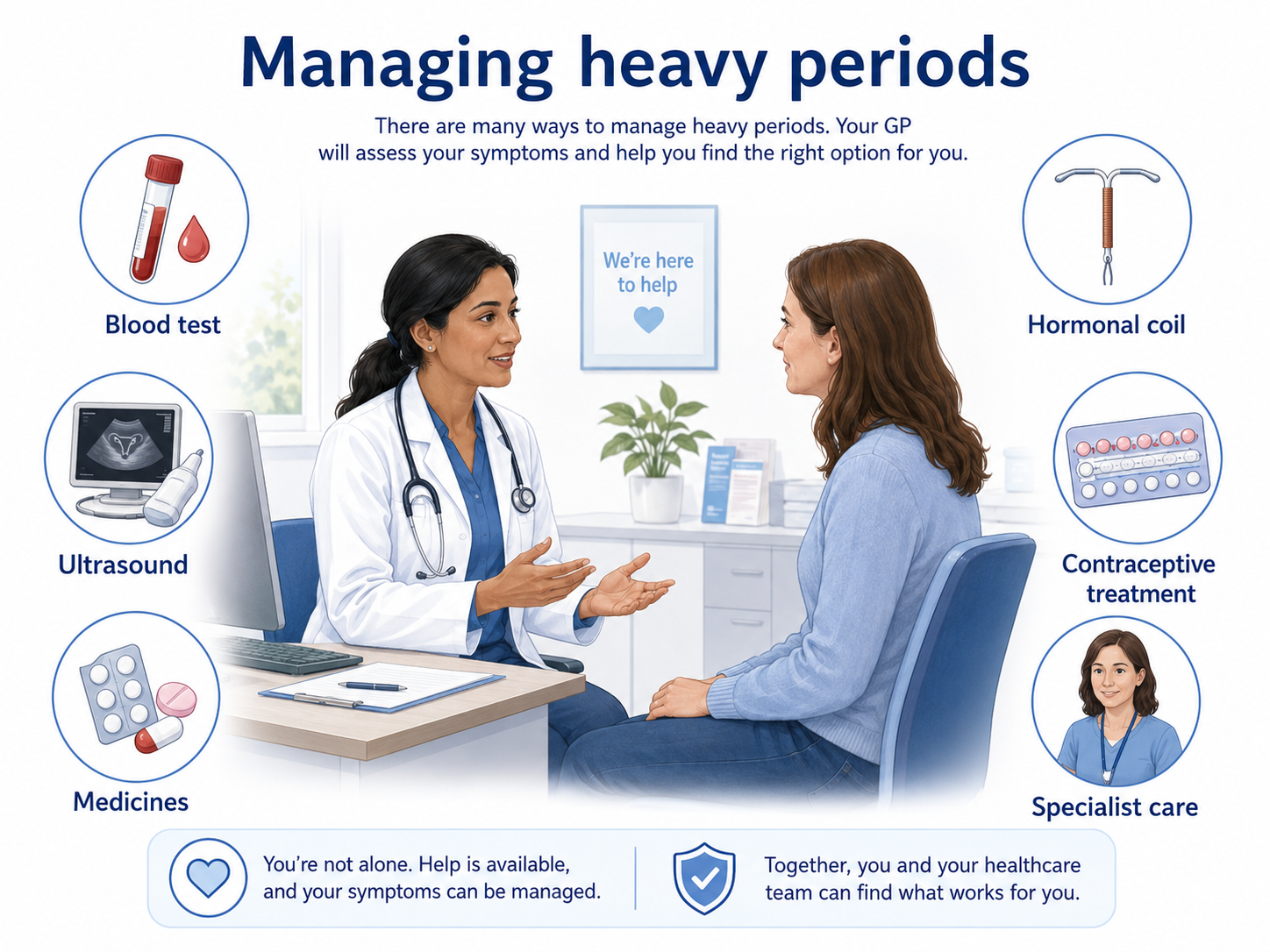
A doctor will ask about the bleeding, pain, pregnancy possibility, contraception, medicines and how symptoms affect your life. A full blood count for everyone with heavy menstrual bleeding is recommended. Other tests depend on your symptoms and may include a pregnancy test, pelvic examination, ultrasound or hysteroscopy. Testing for a bleeding disorder may be considered when heavy bleeding has been present since periods began and there is a personal or family history of abnormal bleeding.
Treatment depends on the likely cause, other health conditions, your preferences and whether you want a future pregnancy. Options may include:
A hormone-releasing intrauterine system
Tranexamic acid to reduce bleeding
Anti-inflammatory medicines that may reduce bleeding and period pain
Combined hormonal contraception
Progestogen treatment
If medicines are unsuitable or do not help, specialist treatment may include removing a polyp or fibroid, endometrial ablation, myomectomy, uterine artery embolisation or hysterectomy. Some procedures affect fertility, so this should be discussed before treatment.
Questions to ask your doctor
Could my bleeding be causing anaemia?
Do I need a blood test, ultrasound or hysteroscopy?
What is the most likely cause of my heavy periods?
Which treatments are suitable with my other health conditions?
How might treatment affect contraception or future pregnancy?
How long should I try a treatment before deciding whether it works?
Which changes should make me seek urgent help?
Nepal pathway
In Nepal, start with your nearest health post, PHC, clinic, or hospital if symptoms are worrying, severe, worsening, or not improving. Take previous prescriptions, test reports, allergy information, and current medicines with you. Seek urgent care immediately if there are red flag symptoms.
Disclaimer
This is general health information only and does not replace medical advice, diagnosis, treatment, or emergency care.
Help improve this guide
Spotted an error or want to contact us about this guide? Send a message to the HamroSwasthya team.