

Rheumatic fever
Rheumatic fever is an inflammatory illness that can develop after an infection caused by group A streptococcal bacteria, usually a sore throat and sometimes a skin infection. It most often affects children and teenagers. The illness is caused by the immune system reacting abnormally after the infection and can affect the joints, heart, brain and skin. It is not the same as rheumatoid arthritis.
Rheumatic fever can damage the heart valves. Repeated episodes increase the risk of permanent valve damage, known as rheumatic heart disease. Early diagnosis, treatment and prevention of further episodes are therefore essential.
Symptoms
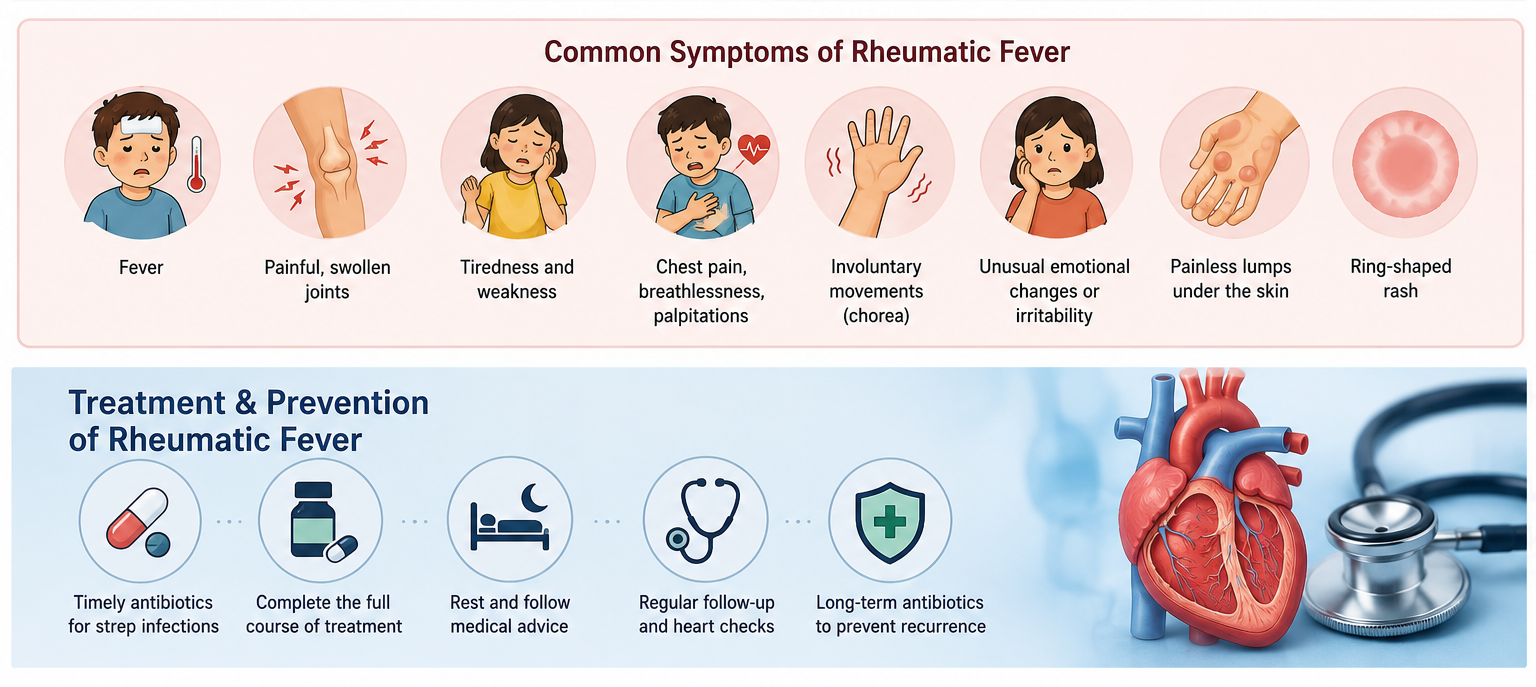
Symptoms commonly begin about one to five weeks after a streptococcal throat or skin infection. They may include:
Painful, swollen joints, especially the knees, ankles, elbows or wrists
Joint pain that moves from one joint to another
Tiredness or weakness
Chest pain, breathlessness, palpitations or a new heart murmur
Sudden jerky, uncontrollable movements of the face, hands or body
Difficulty writing, feeding, dressing or completing usual tasks because of abnormal movements
Unusual emotional changes or irritability
Painless small lumps under the skin near joints
A pink ring-shaped rash with clearer skin in the centre
The skin rash and lumps are uncommon. Abnormal movements, called Sydenham chorea, may appear later than the other symptoms and can sometimes be the main feature.
Red flags
Seek urgent medical assessment if a child or adult has:
Chest pain, severe breathlessness or difficulty breathing
A very fast, irregular or pounding heartbeat
Fainting, collapse, blue lips or severe weakness
New uncontrollable movements, difficulty walking or inability to manage normal activities
Severe joint pain with fever or marked illness
Confusion, extreme drowsiness, seizure or difficulty waking
Swelling of the legs or abdomen
Symptoms following a recent severe sore throat or skin infection
These symptoms may indicate inflammation of the heart, heart-valve problems, heart failure or another serious illness.
Self-care
Rheumatic fever cannot be safely managed with home treatment alone.
Arrange medical assessment promptly if it is suspected.
Rest and avoid strenuous activity until a clinician advises it is safe.
Take prescribed antibiotics and other medicines exactly as directed.
Do not stop long-term preventive antibiotics without medical advice.
Attend follow-up appointments and heart checks.
Seek medical advice for future sore throats or suspected streptococcal infections.
Do not share leftover antibiotics or use them without assessment.
Treatment

Diagnosis is based on the pattern of symptoms, examination and evidence of a recent streptococcal infection. There is no single test that confirms rheumatic fever. Investigations may include blood tests, an ECG and an echocardiogram to assess the heart and valves. Clinicians use recognised diagnostic criteria, such as the Jones criteria.
Treatment may include antibiotics to clear any remaining streptococcal bacteria, medicines to reduce joint and heart inflammation, rest, and treatment for abnormal movements or heart complications.
After recovery, long-term preventive antibiotics may be recommended to reduce the chance of another episode. The duration depends on age, previous episodes and whether the heart valves have been affected. Severe rheumatic heart disease may eventually require specialist treatment or heart-valve surgery
Questions to ask your doctor
Is this rheumatic fever or another cause of fever and joint pain?
Is there evidence of a recent streptococcal infection?
Has the heart or any heart valve been affected?
Do we need an ECG or echocardiogram?
How long will treatment and rest be needed?
Are long-term preventive antibiotics required?
How often should heart checks be arranged?
Which symptoms mean we should return to hospital urgently?
Nepal pathway
In Nepal, start with your nearest health post, PHC, clinic, or hospital if symptoms are worrying, severe, worsening, or not improving. Take previous prescriptions, test reports, allergy information, and current medicines with you. Seek urgent care immediately if there are red flag symptoms.
Disclaimer
This is general health information only and does not replace medical advice, diagnosis, treatment, or emergency care.
Help improve this guide
Spotted an error or want to contact us about this guide? Send a message to the HamroSwasthya team.