
Scabies
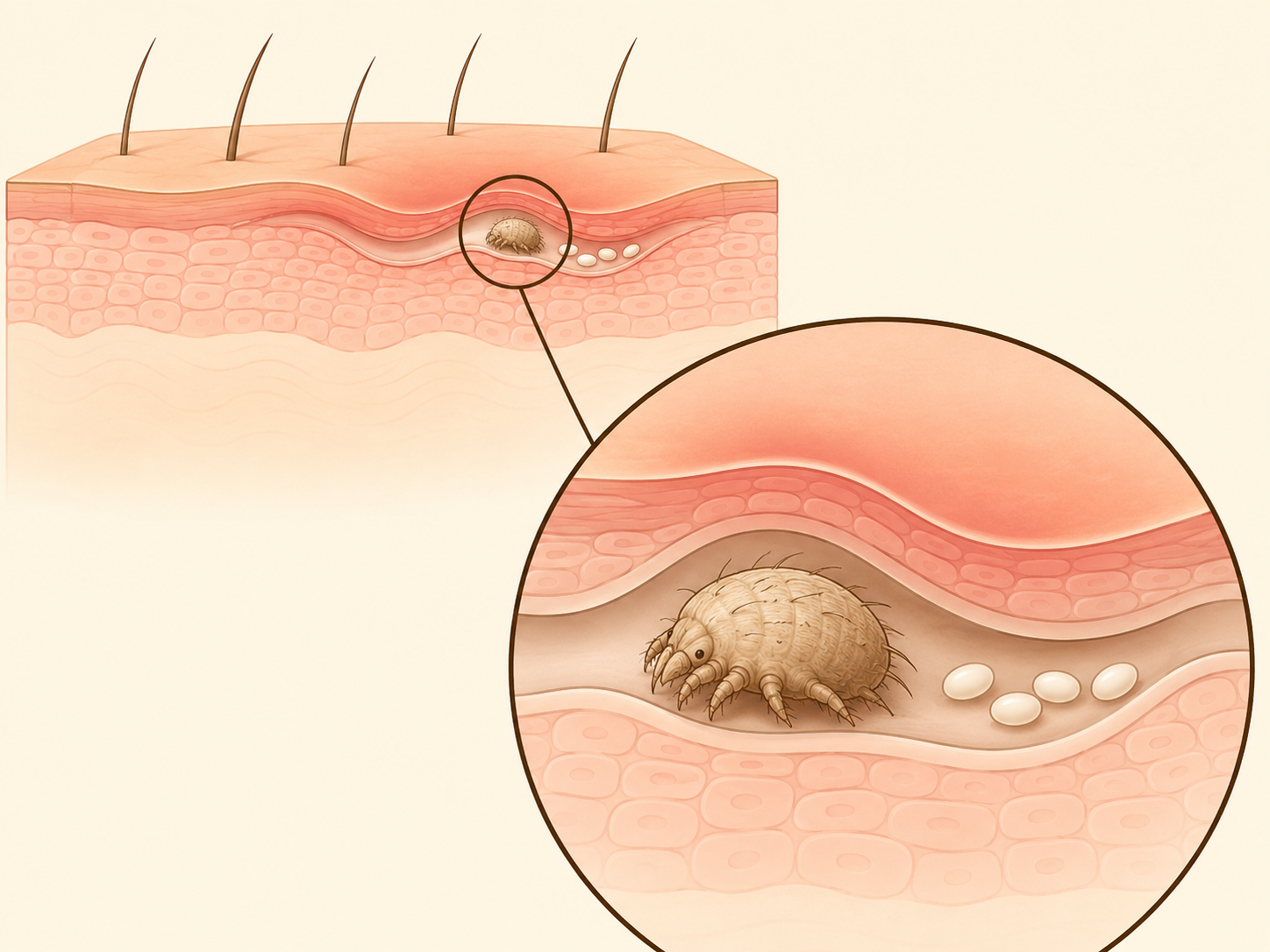
Scabies is a contagious skin condition caused by tiny mites. It causes intense itching, often worse at night, with a rash or small spots. It spreads through prolonged close skin contact and can affect anyone.
Common areas include between the fingers, wrists, waist, buttocks and genitals. A doctor can prescribe treatment, and all household members and close contacts usually need treatment at the same time. Wash bedding, clothes and towels to help prevent reinfection.
Symptoms
The most common symptoms of scabies are:
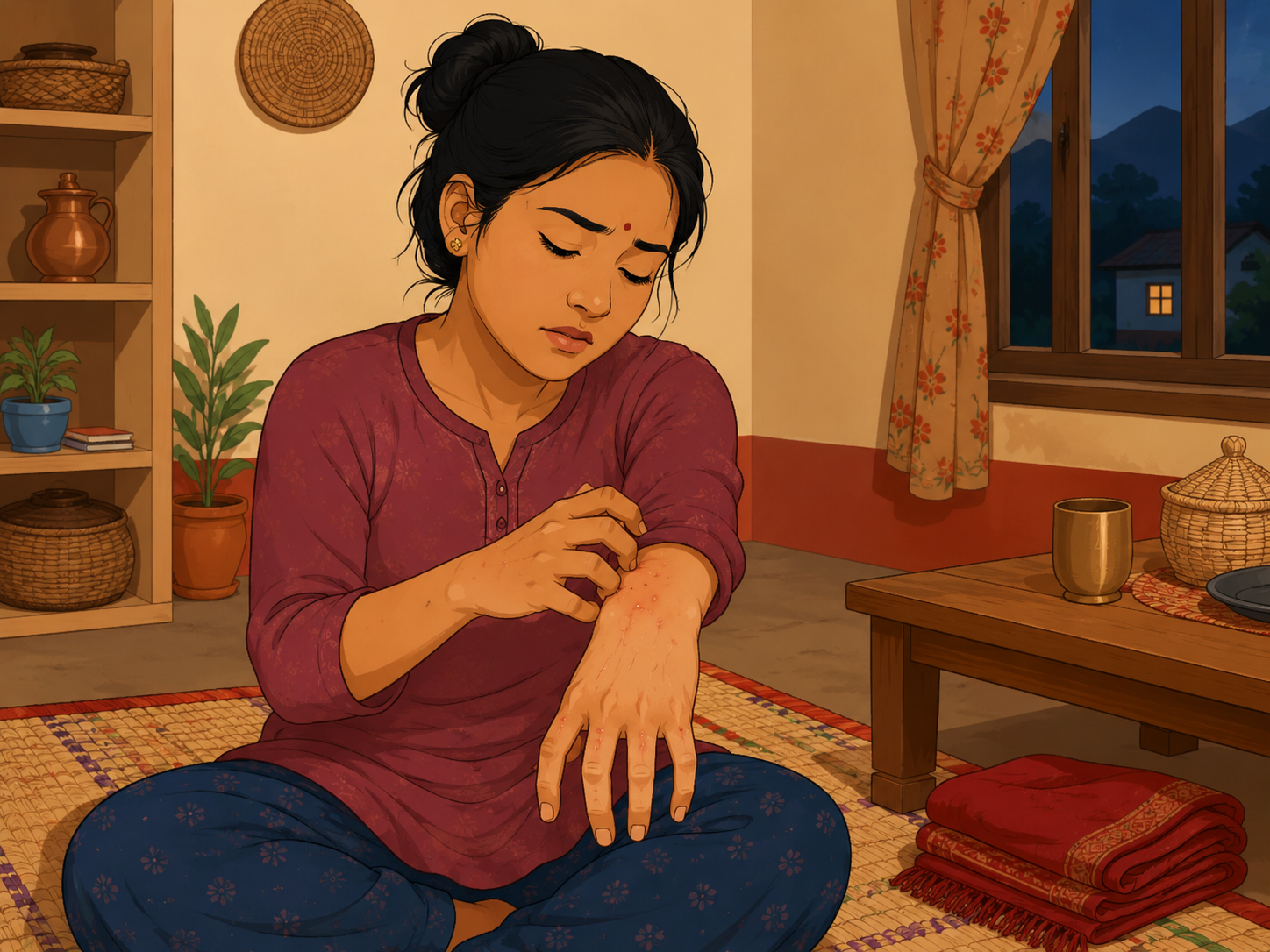
Intense itching - This is usually the first and most noticeable symptom. The itch tends to be much worse at night and can make it difficult to sleep.
A rash - Small, red, raised spots or patches appear on the skin. These can look similar to insect bites or pimples.
Burrow lines - You may notice tiny, thread-like lines on the skin surface where the mites have burrowed. These are often greyish or skin-coloured and may be hard to see clearly.
Blisters or sores - Repeated scratching can break the skin, leading to small blisters or open sores that may become infected.
Where symptoms usually appear
Scabies commonly affects:
The skin between the fingers and toes
The wrists, elbows, and armpits
Around the waistline and buttocks
The genitals
Around the nipples (particularly in women)
In babies and young children, symptoms can also appear on the face, scalp, palms of the hands, and soles of the feet - areas less commonly affected in older children and adults.
When symptoms start
If you have never had scabies before, it can take two to six weeks after contact with the mites for symptoms to appear. If you have had scabies previously, symptoms may appear much sooner - sometimes within a few days.
Even without visible symptoms, a person can still pass scabies on to others during this waiting period.
Red flags
When to Seek Help Urgently
Most cases of scabies are not a medical emergency, but see a doctor promptly or go to the nearest hospital if you notice any of the following:
Signs of skin infection - The affected skin becomes increasingly red, warm, swollen, or painful, or you notice pus or yellow-green discharge from sores. This may mean a bacterial infection has developed and may need antibiotic treatment.
Spreading redness or streaks - Red streaks spreading outward from broken or scratched skin can be a sign of a more serious infection spreading through the body.
Fever or feeling generally unwell - If itching and skin problems are accompanied by a high temperature, shivering, or feeling very sick, seek medical attention the same day.
Crusted (Norwegian) scabies - If the skin develops thick, grey, or scaly crusted patches - especially in someone who is elderly, has a weakened immune system, or has not responded to treatment - this is a more severe form of scabies that needs urgent medical assessment.
Symptoms in a newborn or very young baby - Scabies in young infants can be more widespread and requires prompt medical review.
No improvement after treatment - If symptoms continue or worsen after completing a full course of treatment, return to a doctor rather than repeating treatment on your own.
If you are unsure, it is always safer to get checked by a healthcare professional.
Self-care
Self-care steps can help manage symptoms and prevent the spread of scabies to others. However, scabies does not go away on its own - you will need a prescribed treatment cream or lotion from a doctor to kill the mites.
While you are being treated
Follow treatment instructions carefully. Apply the prescribed cream or lotion exactly as directed, covering all skin from the neck down. Leave it on for the recommended length of time before washing off.
Treat everyone at the same time. All close household members and recent skin-to-skin contacts should be treated at the same time, even if they have no symptoms. This helps prevent re-infection.
Wash clothing and bedding. On the day you start treatment, wash all clothing, bedding, towels, and pillowcases that you have used recently. Use hot water where possible and dry thoroughly. Items that cannot be washed can be sealed in a plastic bag for several days.
Managing the itch
The itching can continue for several weeks after successful treatment as your skin heals. This does not necessarily mean the mites are still present.
A simple moisturiser or a soothing lotion may help ease skin irritation.
Try to avoid scratching as much as possible - broken skin can lead to infection.
Keeping nails short can reduce skin damage if scratching occurs during sleep.
Avoiding spread
Avoid close skin-to-skin contact with others until you and your household contacts have all completed treatment.
Avoid sharing towels, clothing, or bedding with others during this time.
If your symptoms are not improving after completing treatment, or if the itching seems to be getting worse, speak to a doctor.
Treatment
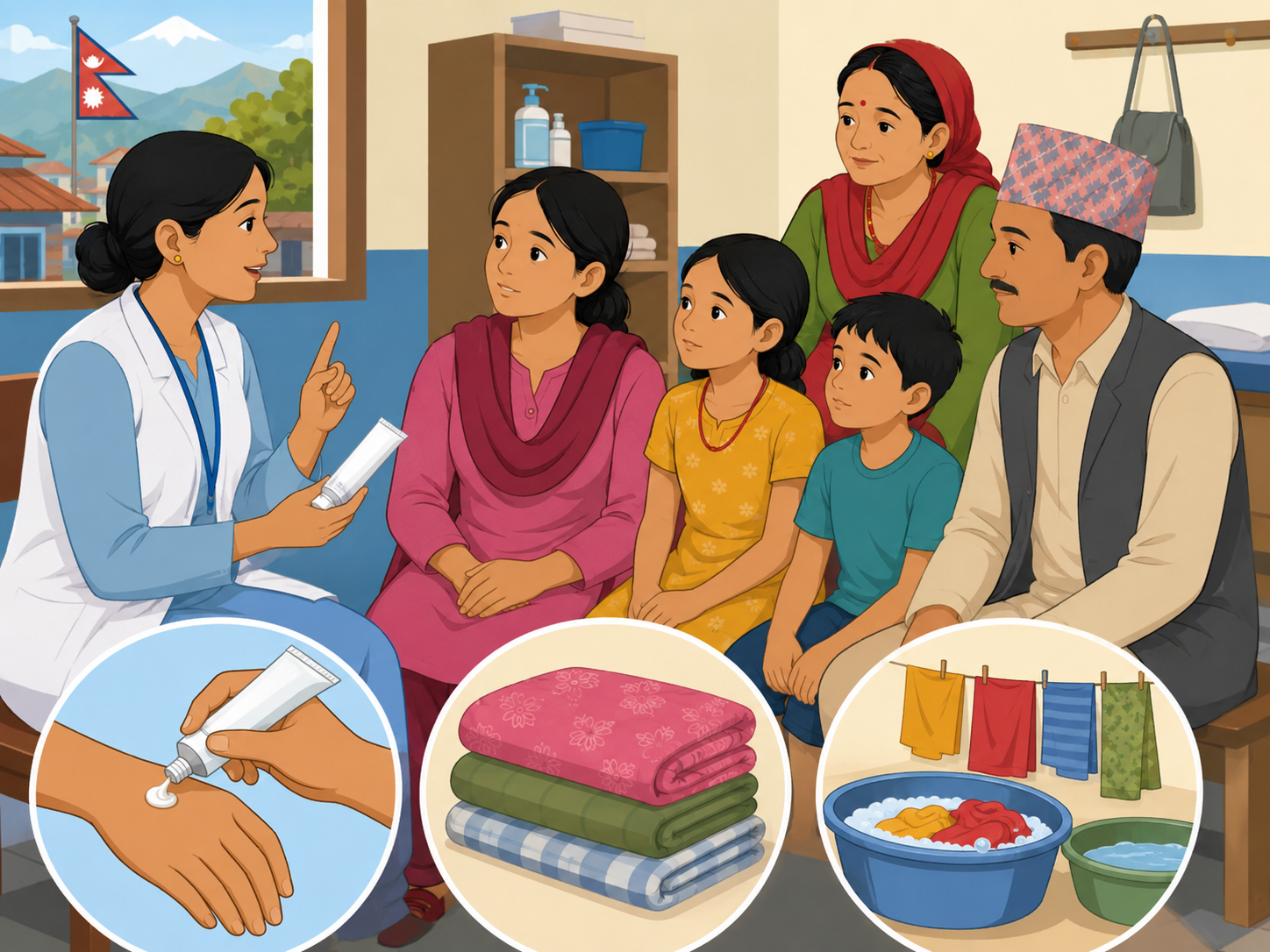
Scabies does not clear up on its own - you will need a medicated cream or lotion prescribed by a doctor to kill the mites.
Medicated creams and lotions
The most common treatment is a skin cream or lotion containing permethrin, which is applied all over the body and left on for a set period before washing off. A doctor may recommend an alternative if permethrin is not suitable for you.
The treatment is usually applied from the neck down in adults and older children. In babies, young children, and older adults, the face and scalp are also included.
It is important to cover every area of skin, including between the fingers and toes, under the nails, around the genitals, and the soles of the feet.
A second application is often recommended about a week after the first, to ensure any newly hatched mites are also killed.
Treating everyone at the same time
All close household contacts and recent skin-to-skin contacts should be treated at the same time, even if they have no itching or rash yet. This is essential to prevent reinfection passing back and forth.
Relieving the itch during treatment
Itching can continue for several weeks after successful treatment, even when the mites have been killed. This is a normal reaction of the skin healing and does not mean the treatment has failed. A doctor may suggest an antihistamine or a mild soothing cream to help with discomfort in the meantime.
If treatment does not seem to work
If itching and the rash continue beyond four weeks after treatment, or if new burrow lines appear, speak to a doctor again. It is possible that reinfection has occurred, or the treatment may need to be repeated. In some cases - particularly with crusted (Norwegian) scabies - stronger or longer treatment will be needed under medical supervision.
Washing clothing and bedding
On the day treatment is applied, wash all clothing, bedding, and towels used in the previous few days at a high temperature. Items that cannot be washed can be sealed in a bag for at least 72 hours, as the mites cannot survive for long away from human skin.
Questions to ask your doctor
Going to a doctor with a list of questions can help you get the most out of your appointment. Here are some useful questions to consider asking:
About your diagnosis
How can you confirm that I have scabies and not another skin condition?
Could my symptoms be caused by something else?
About treatment
Which treatment do you recommend for me, and how exactly should I apply it?
How long do I need to leave the treatment on before washing it off?
Will I need more than one application, and if so, when?
Are there any side effects I should watch out for from the treatment?
Is this treatment safe for my child, or for me if I am pregnant or breastfeeding?
About close contacts
Who in my household needs to be treated, even if they have no symptoms?
Should my partner or other close contacts see a doctor separately, or can they use the same treatment?
About your home and belongings
What do I need to do with bedding, towels, and clothing to avoid re-infection?
About recovery
How long will the itching last after treatment - is it normal for it to continue for a while?
How will I know if the treatment has worked?
When is it safe to return to school or work?
What should I do if my symptoms do not improve after treatment?
About preventing spread
Are there any activities or types of contact I should avoid until I have finished treatment?
Nepal pathway
In Nepal, start with your nearest health post, PHC, clinic, or hospital if symptoms are worrying, severe, worsening, or not improving. Take previous prescriptions, test reports, allergy information, and current medicines with you. Seek urgent care immediately if there are red flag symptoms.
Disclaimer
This is general health information only and does not replace medical advice, diagnosis, treatment, or emergency care.
Help improve this guide
Spotted an error or want to contact us about this guide? Send a message to the HamroSwasthya team.