
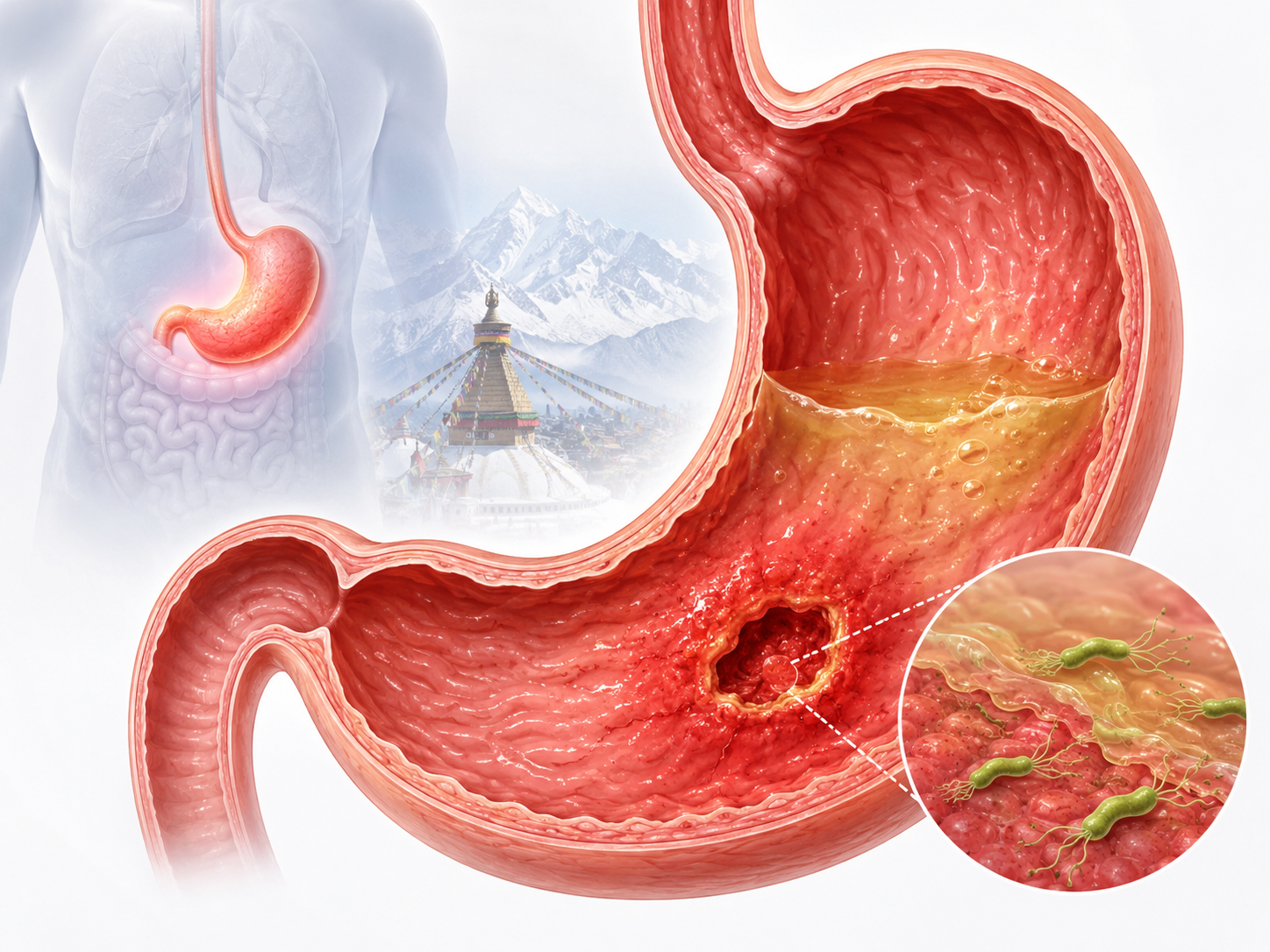
Stomach ulcer
A stomach ulcer is a sore in the lining of the stomach. It is sometimes also called a gastric ulcer. Similar ulcers can occur in the first part of the small intestine, called a duodenal ulcer.
Common causes include infection with a bacterium called Helicobacter pylori (H. pylori) and regular use of certain painkillers, especially anti-inflammatory medicines such as ibuprofen, naproxen, diclofenac, or aspirin.
Symptoms can overlap with indigestion, acid reflux, gallbladder problems, pancreatitis, heart problems, and other conditions. A doctor may need to assess you to confirm the cause.
Symptoms
Possible symptoms of a stomach ulcer include:
Burning, gnawing, or aching pain in the upper abdomen
Pain that may be worse when the stomach is empty or after eating
Indigestion, bloating, burping, or feeling overly full
Nausea or vomiting
Reduced appetite
Unexplained weight loss
Feeling tired or weak, which can sometimes happen with internal bleeding
Some people with an ulcer have few symptoms or no symptoms until a complication develops.
Red flags

Go to the nearest hospital urgently if you have:
Vomit containing bright red blood
Vomit that looks dark brown or black, like coffee grounds
Black, sticky, tar-like, or very smelly stools
Blood in your stool
Sudden severe abdominal pain
Severe pain when the abdomen is touched
Fainting, collapse, severe dizziness, confusion, or extreme weakness
New sudden chest pain
These symptoms may indicate bleeding, a perforated ulcer, or another serious condition. Do not drive yourself if you are very unwell.
Self-care
Avoid smoking and alcohol, as these may worsen stomach symptoms and delay healing.
Avoid taking anti-inflammatory painkillers ((NSAIDs)) such as ibuprofen, naproxen, or diclofenac unless a doctor has advised they are safe for you.
Do not stop prescribed aspirin, blood thinners, or other regular medicines without speaking to the clinician who prescribed them.
Eat regular meals if this reduces discomfort. Avoid foods or drinks that clearly worsen your symptoms, such as very spicy foods, alcohol, tea, coffee, or fizzy drinks.
Avoid lying down immediately after eating if this makes upper abdominal discomfort or acid symptoms worse.
Keep a record of symptoms, medicines, and possible triggers to discuss with a doctor.
Self-care may ease symptoms, but it does not confirm or treat the cause of an ulcer.
Treatment

Treatment depends on the cause of the ulcer.
If H. pylori infection is found, treatment usually includes a combination of antibiotics and an acid-reducing medicine called a proton pump inhibitor, or PPI.
If an ulcer is linked to anti-inflammatory painkillers, a doctor may advise stopping, changing, or reducing the medicine where safe, and may prescribe a PPI to help the ulcer heal.
Some people need tests such as a breath test, stool test, blood test, or camera test of the stomach called an endoscopy. The correct treatment depends on your symptoms, age, medicines, risk factors, and test results.
Do not start antibiotics, borrow medicines, or use long-term acid-reducing medication without advice from a qualified health professional.
Questions to ask your doctor
- Could my symptoms be caused by a stomach ulcer, or another condition?
- Do I need a test for H. pylori?
- Should I stop or change any painkillers or anti-inflammatory medicines?
- Do I need a PPI or other acid-reducing treatment?
- Do I need a stool test, breath test, blood test, or endoscopy?
- Could my symptoms be caused by bleeding or anaemia?
- Which symptoms mean I should seek urgent help?
- Can I continue aspirin, blood thinners, or my other regular medicines?
- What changes to food, alcohol, smoking, or pain relief would be safest for me?
Nepal pathway
In Nepal, start with your nearest health post, PHC, clinic, or hospital if symptoms are worrying, severe, worsening, or not improving. Take previous prescriptions, test reports, allergy information, and current medicines with you. Seek urgent care immediately if there are red flag symptoms.
Disclaimer
This is general health information only and does not replace medical advice, diagnosis, treatment, or emergency care.
Help improve this guide
Spotted an error or want to contact us about this guide? Send a message to the HamroSwasthya team.