
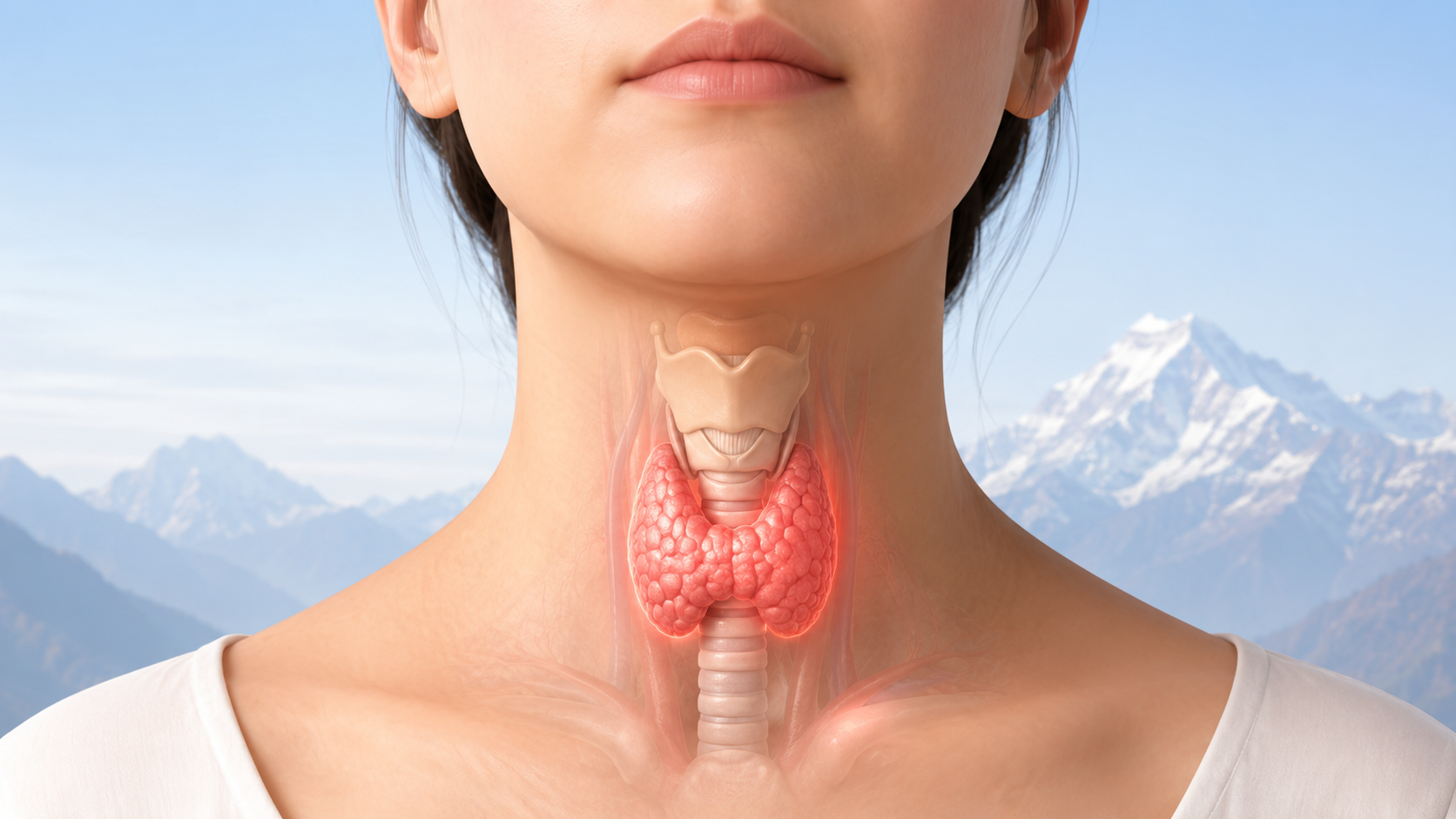
Hypothyroidism
Hypothyroidism, also called an underactive thyroid, happens when the thyroid gland does not produce enough thyroid hormone. These hormones help regulate energy use, body temperature, heart function, digestion, and many other body processes. Symptoms often develop slowly and can be mistaken for stress, ageing, anaemia, depression, or other conditions. A blood test is needed to confirm the diagnosis.
Symptoms
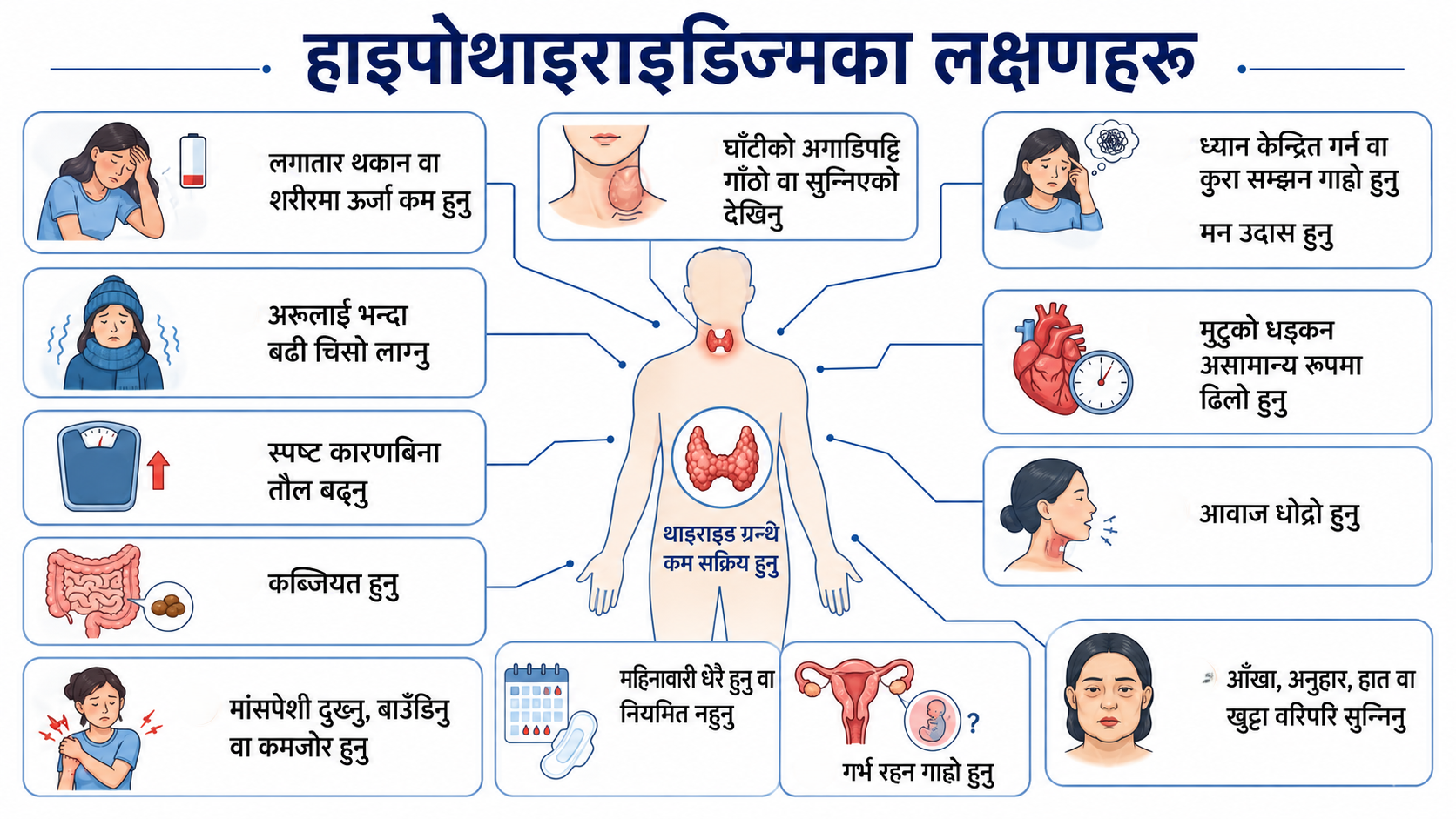
Possible symptoms include:
Persistent tiredness or low energy
Feeling unusually cold
Weight gain that is difficult to explain
Constipation
Dry or rough skin
Dry, thinning hair or hair loss
Muscle aches, cramps, or weakness
Difficulty concentrating or slower thinking
Low mood
A slow heartbeat
A hoarse voice
Heavy or irregular periods
Reduced fertility
Swelling around the eyes, face, hands, or feet
An enlarged thyroid gland or swelling at the front of the neck
Children may have poor growth, delayed puberty, changes in behaviour, or reduced school performance. Not everyone develops every symptom.
Red flags
Seek urgent medical help if someone with known or possible hypothyroidism develops:
Severe confusion, unusual drowsiness, or difficulty waking
Very slow or difficult breathing
Collapse, seizure, or loss of consciousness
Very low body temperature with severe weakness
A very slow heartbeat together with dizziness or severe illness
New neck swelling causing difficulty breathing or swallowing
These may indicate a rare but life-threatening complication called myxoedema coma or another serious condition.
Self-care
Take prescribed thyroid medicine consistently and do not stop it without medical advice.
Attend scheduled blood tests, even when you feel well.
Tell your clinician about all medicines, vitamins, iron, calcium, antacids, and herbal products you use, as some can affect treatment.
Eat a balanced diet rather than taking iodine or "thyroid support" supplements without advice. Too much iodine may be harmful.
Keep a record of symptoms, medication changes, and blood-test results.
Contact a clinician promptly if you are pregnant, planning pregnancy, or become pregnant while taking thyroid medicine, as monitoring and treatment may need adjustment.
Treatment

Diagnosis usually involves thyroid blood tests, particularly thyroid-stimulating hormone (TSH) and free thyroxine (FT4). The commonest treatment for confirmed primary hypothyroidism is levothyroxine, which replaces the hormone the thyroid is not producing adequately.
Blood tests are repeated after treatment starts or changes, and then periodically once levels are stable. Many people need lifelong treatment, although this depends on the cause. Symptoms may take time to improve, and persistent symptoms should be reviewed rather than changing or adding thyroid medicines without medical supervision.
Questions to ask your doctor
Do my symptoms suggest hypothyroidism or another condition?
What do my TSH and FT4 results mean?
What may have caused my underactive thyroid?
Do I need thyroid antibody testing?
How and when should I take levothyroxine?
Could my other medicines or supplements interfere with it?
When should my thyroid blood tests be repeated?
What should I do if symptoms continue despite normal results?
Does pregnancy or planning pregnancy change my treatment?
Which symptoms require urgent medical help?
Nepal pathway
In Nepal, start with your nearest health post, PHC, clinic, or hospital if symptoms are worrying, severe, worsening, or not improving. Take previous prescriptions, test reports, allergy information, and current medicines with you. Seek urgent care immediately if there are red flag symptoms.
Disclaimer
This is general health information only and does not replace medical advice, diagnosis, treatment, or emergency care.
Help improve this guide
Spotted an error or want to contact us about this guide? Send a message to the HamroSwasthya team.