
Vitamin B12 or folate deficiency anaemia
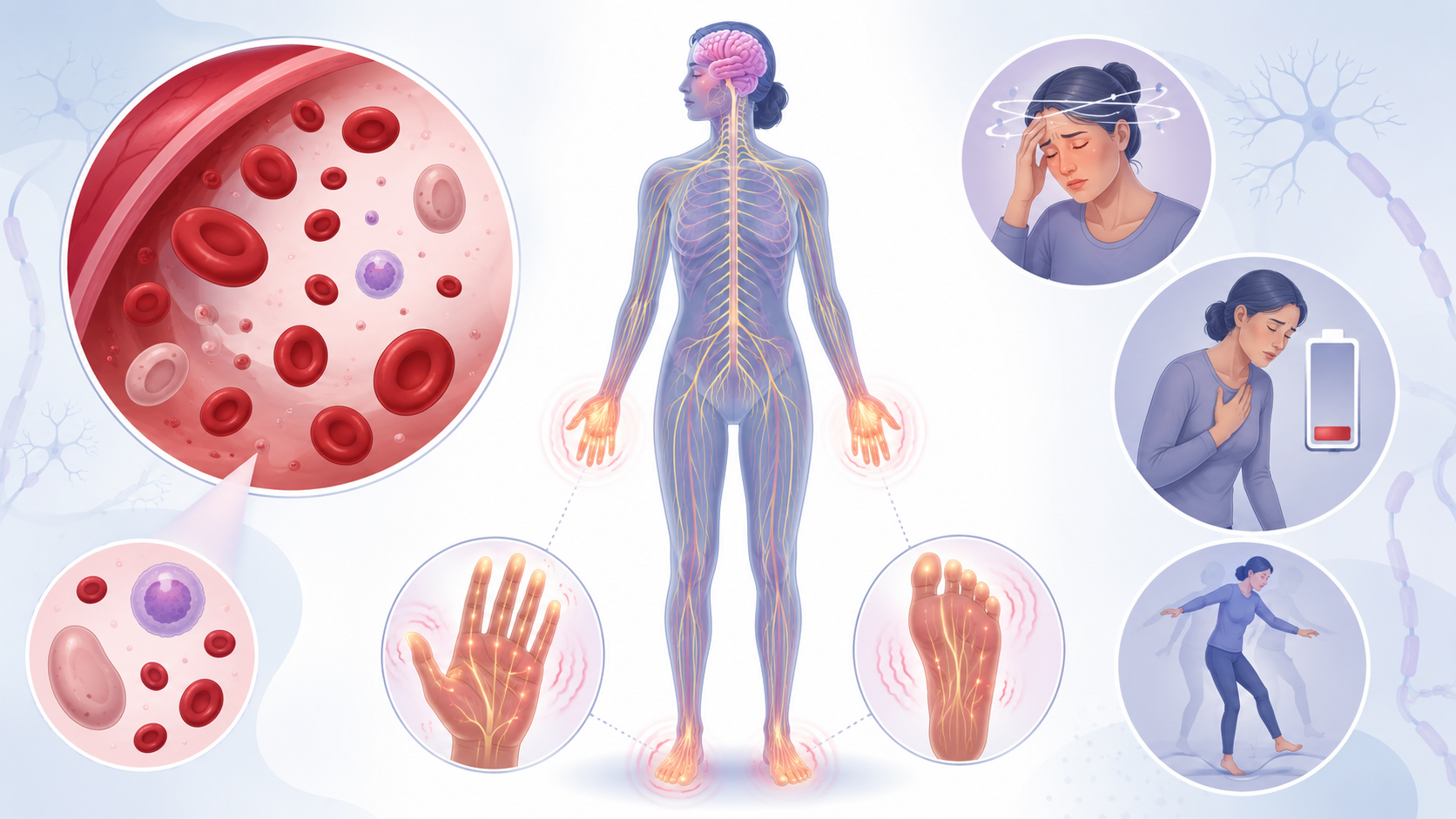
Vitamin B12 and folate help the body make healthy red blood cells. A deficiency can produce unusually large red blood cells that do not work properly, leading to anaemia and reduced oxygen delivery around the body. Vitamin B12 also supports the nervous system, so deficiency can cause nerve or cognitive symptoms even when anaemia is not present. Folate is the natural form of vitamin B9; folic acid is the form commonly used in supplements and treatment.
Possible causes include a diet lacking these vitamins, difficulty absorbing them because of autoimmune gastritis or bowel disease, previous stomach or bowel surgery, pregnancy, certain medicines, and recreational nitrous oxide use.
Symptoms
Symptoms often develop gradually and may include:
Persistent tiredness, weakness or reduced energy
Shortness of breath, palpitations, headaches or dizziness
Pale skin or reduced exercise tolerance
Loss of appetite, indigestion, diarrhoea or a sore, red tongue
Mouth ulcers
Difficulty concentrating, memory changes or low mood
Numbness, tingling or burning sensations in the hands or feet
Muscle weakness, poor balance or difficulty walking
Changes in vision
Nerve symptoms are more strongly associated with vitamin B12 deficiency and may occur without obvious anaemia.
Red flags

Seek urgent medical assessment if you develop:
New or rapidly worsening weakness, numbness or difficulty walking
Loss of balance, repeated falls or poor coordination
New confusion, severe memory change, unusual behaviour or marked drowsiness
Sudden or significant changes in vision
Chest pain, severe breathlessness, fainting or a very fast heartbeat
Severe weakness that is rapidly worsening
Symptoms during pregnancy, especially with severe tiredness, breathlessness or neurological changes
Untreated vitamin B12 deficiency can sometimes cause lasting nerve damage, so treatment should not be delayed when significant neurological symptoms are suspected.
Self-care
Eat a balanced diet containing reliable sources of vitamin B12 and folate.
Vitamin B12 is found mainly in meat, fish, eggs, dairy products and fortified foods.
Folate is found in green vegetables, beans, peas, lentils, citrus fruits and fortified grains.
People following a vegan or very restricted diet should discuss suitable fortified foods or supplements with a health professional.
Do not assume that diet is the cause, as some people cannot absorb vitamin B12 normally.
Do not start long-term high-dose supplements without testing and professional advice.
Tell your clinician about your diet, stomach or bowel surgery, long-term medicines and any nitrous oxide use.
Treatment

Blood tests may include a full blood count, vitamin B12 and folate levels. Further tests may be needed to identify the cause, especially when absorption problems or autoimmune gastritis are suspected. The diagnosis should consider symptoms as well as test results.
Vitamin B12 deficiency may be treated with tablets or injections, depending on the cause, severity and presence of neurological symptoms. Some irreversible absorption problems require lifelong replacement. Folate deficiency is usually treated with folic acid while its underlying cause is addressed.
Vitamin B12 must be checked before folic acid is started. Folic acid can improve the anaemia while allowing untreated vitamin B12-related nerve damage to continue.
Questions to ask your doctor
Is my deficiency caused by diet, poor absorption, medicines or another illness?
Do I have vitamin B12 deficiency, folate deficiency or both?
Could my nerve or memory symptoms be related to vitamin B12 deficiency?
Do I need tablets, injections or lifelong treatment?
Will I need tests for autoimmune gastritis or bowel disease?
When should my blood tests be repeated?
Could any of my regular medicines be contributing?
Is my diet providing enough vitamin B12 and folate?
Which symptoms require urgent medical help?
Nepal pathway
In Nepal, start with your nearest health post, PHC, clinic, or hospital if symptoms are worrying, severe, worsening, or not improving. Take previous prescriptions, test reports, allergy information, and current medicines with you. Seek urgent care immediately if there are red flag symptoms.
Disclaimer
This is general health information only and does not replace medical advice, diagnosis, treatment, or emergency care.
Help improve this guide
Spotted an error or want to contact us about this guide? Send a message to the HamroSwasthya team.