
Back Pain - symptom
Back pain is very coople of any age. It may feel like aching, stiffness, muscle tightness, sharp pain, or pain that spreads to the buttocks or legs. In many cases, it improves gradually with gentle movement, simple self-care, and time. However, some symptoms can indicate a serious problem and need urgent medical assessment.
Emergency warning signs
Go to the nearest hospital emergency department immediately if back pain occurs with any of the following:
Pain, tingling, numbness, or weakness in both legs
Loss of feeling around the genitals, buttocks, or anus
New difficulty passing urine, inability to control urine or bowel movements, or loss of bowel control
New changes in sexual sensation or function together with back pain
Back pain after a serious accident, such as a road traffic accident or major fall
Do not drive yourself if you have severe symptoms. Ask someone to take you or call for emergency help.
What this page cannot tell you
This page provides general information about back pain only. It cannot diagnose the cause of your pain, confirm whether it is due to a muscle problem, nerve problem, infection, fracture, or another condition, or decide which treatment is right for you.
It also cannot assess your individual risk or tell you whether you need urgent medical care. Please speak with a doctor or qualified health professional for a diagnosis, personal advice, and treatment plan.
Common causes
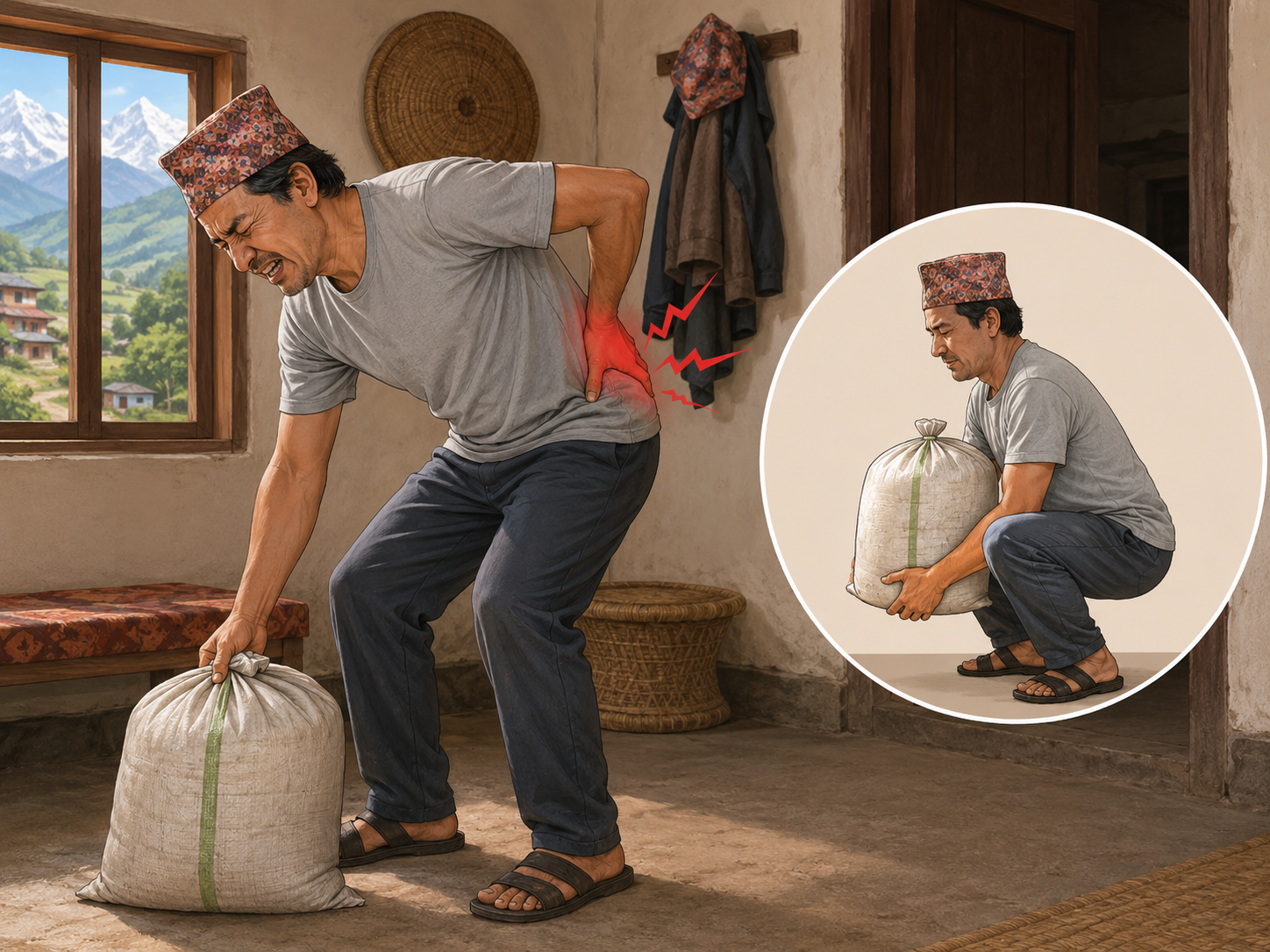
Back pain is often caused by a strain or irritation of muscles, ligaments, or joints in the back. It may develop after lifting, twisting, prolonged sitting, an awkward movement, or increased physical activity.
Other possible causes include:
Disc or nerve irritation, which may cause pain spreading to the leg
Age-related changes in the spine
Injury or fracture
Inflammatory conditions
Less commonly, infection, cancer, or other serious medical conditions
Most back pain is not caused by a serious problem. However, it is important to recognise warning signs because a small number of people may need urgent assessment or treatment.
What you can do yourself
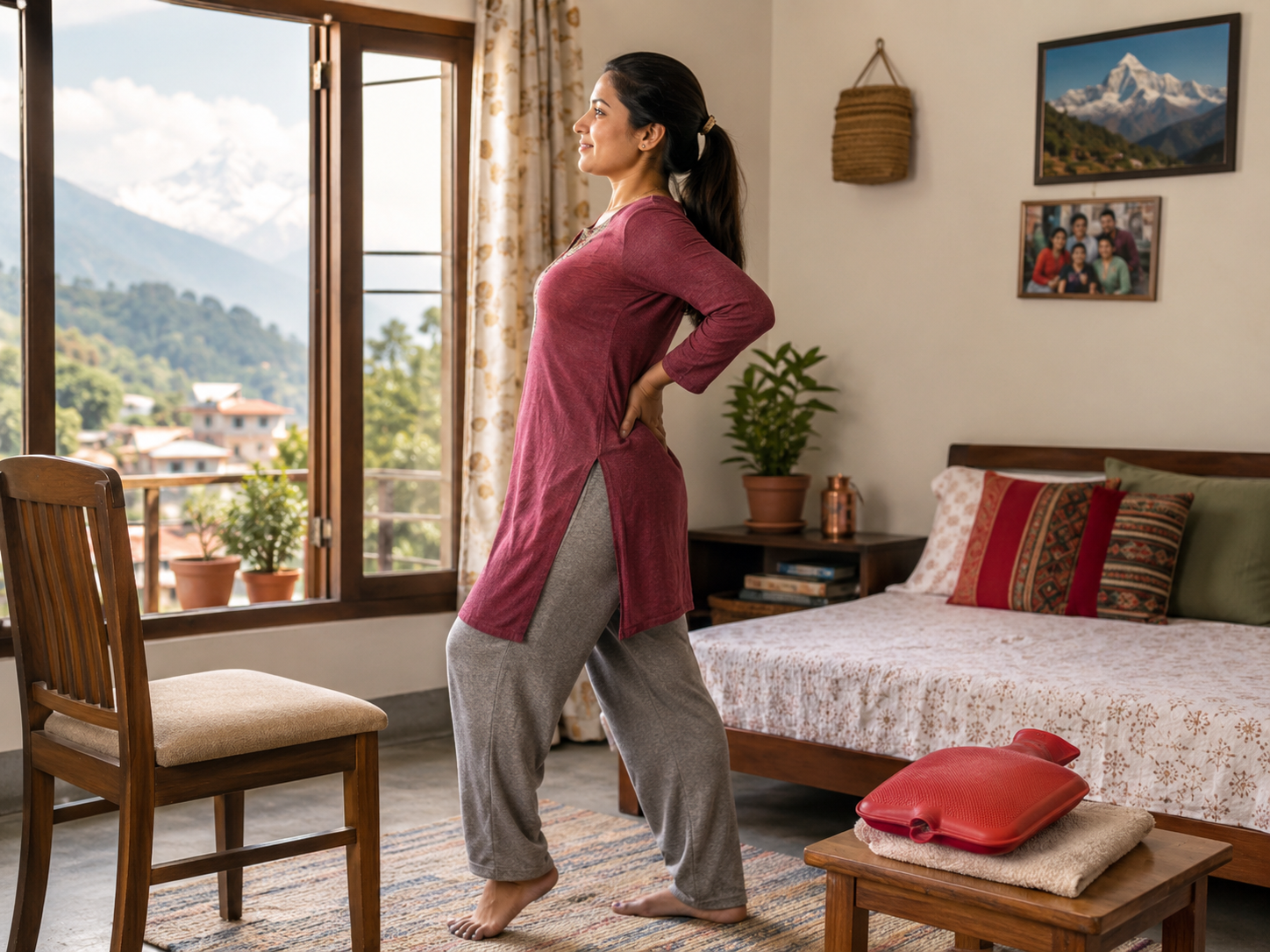
- Keep gently moving. Avoid staying in bed for long periods. Short walks and normal daily activity, as tolerated, can reduce stiffness.
- Try heat or cold. A warm cloth, hot water bottle, or cold pack wrapped in a cloth may help.
- Do gentle stretches or light movements. Stop if pain becomes sharp or clearly worse.
- Consider simple pain relief available from a pharmacy. Follow the instructions on the packet and ask a pharmacist or doctor if you are unsure whether it is safe for you.
- Use a supportive sitting position and take regular breaks from prolonged sitting.
- When lifting, bend your knees, keep the object close to your body, and use your leg muscles rather than bending from the waist.
When to see a doctor
Arrange to see a doctor or qualified health professional if your back pain:
Does not improve after a few weeks of self-care
Stops you from doing normal daily activities or work
Is difficult to manage or is causing significant worry
Occurs with unexplained weight loss
Is associated with a lump, swelling, or change in the shape of the back
Is worse at night, does not improve with rest, or is getting gradually worse
Gets worse when coughing, sneezing, or opening your bowels
Is mainly in the upper back, between the shoulders
Seek urgent medical advice if you have back pain with fever, chills, shivering, feeling generally unwell, sudden severe pain, or pain that is rapidly worsening.
What a doctor may check
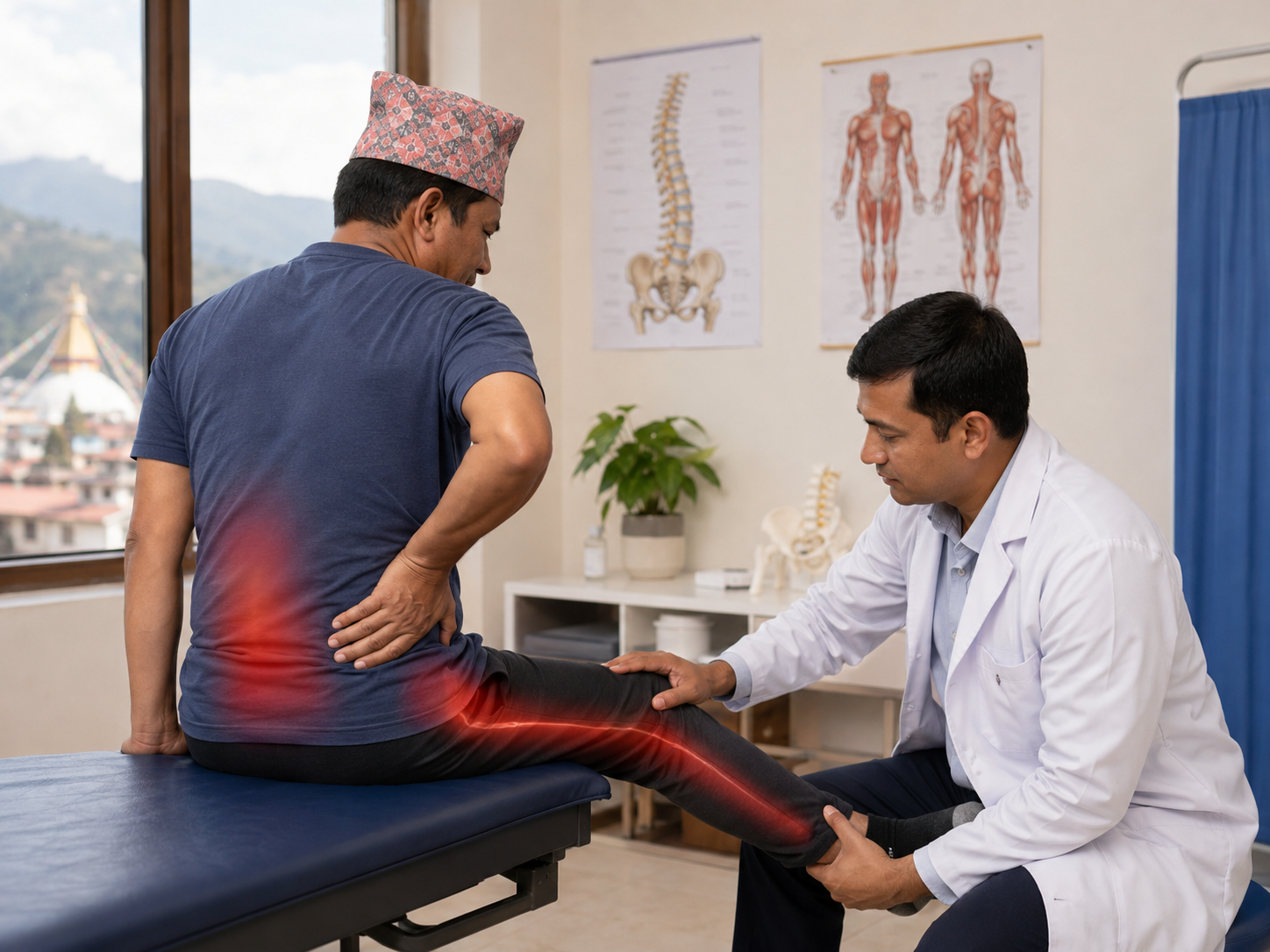
A doctor or qualified health professional may ask about:
When the pain started and what may have triggered it
Where the pain is and whether it spreads to the buttocks or legs
Tingling, numbness, weakness, bladder or bowel changes
Recent injury, falls, heavy lifting, fever, weight loss, or previous cancer
Your work, daily activities, medical conditions, and regular medicines
They may examine your posture, walking, movement of the spine, areas of tenderness, leg strength, sensation, and reflexes.
Most people with uncomplicated back pain do not need scans straight away. Depending on your symptoms, examination findings, and warning signs, a doctor may arrange blood tests, X-rays, MRI scans, or referral to physiotherapy or another specialist.
Nepal context
In Nepal, you can start by visiting your nearest health post, PHC, clinic, or hospital if your back pain is severe, worsening, persistent, or affecting daily life.
Go to the nearest hospital urgently if you have any emergency warning signs. Take your current medicines, previous prescriptions, scan or test reports, and allergy information with you where possible.
Useful records to keep
Keeping a short record can help a doctor understand your problem. Note:
When the pain started
Any injury, fall, lifting, or activity before the pain began
Where the pain is and whether it spreads to a leg
What makes it better or worse
Any numbness, weakness, fever, bladder, or bowel changes
Medicines or treatments you have tried and whether they helped
Previous back problems, scans, operations, or hospital visits
Important notice
This information is for general health information only. It should not be used as a substitute for a doctor's advice, examination, diagnosis, treatment, or emergency services.
Help improve this guide
Spotted an error or want to contact us about this guide? Send a message to the HamroSwasthya team.