
Appendicitis
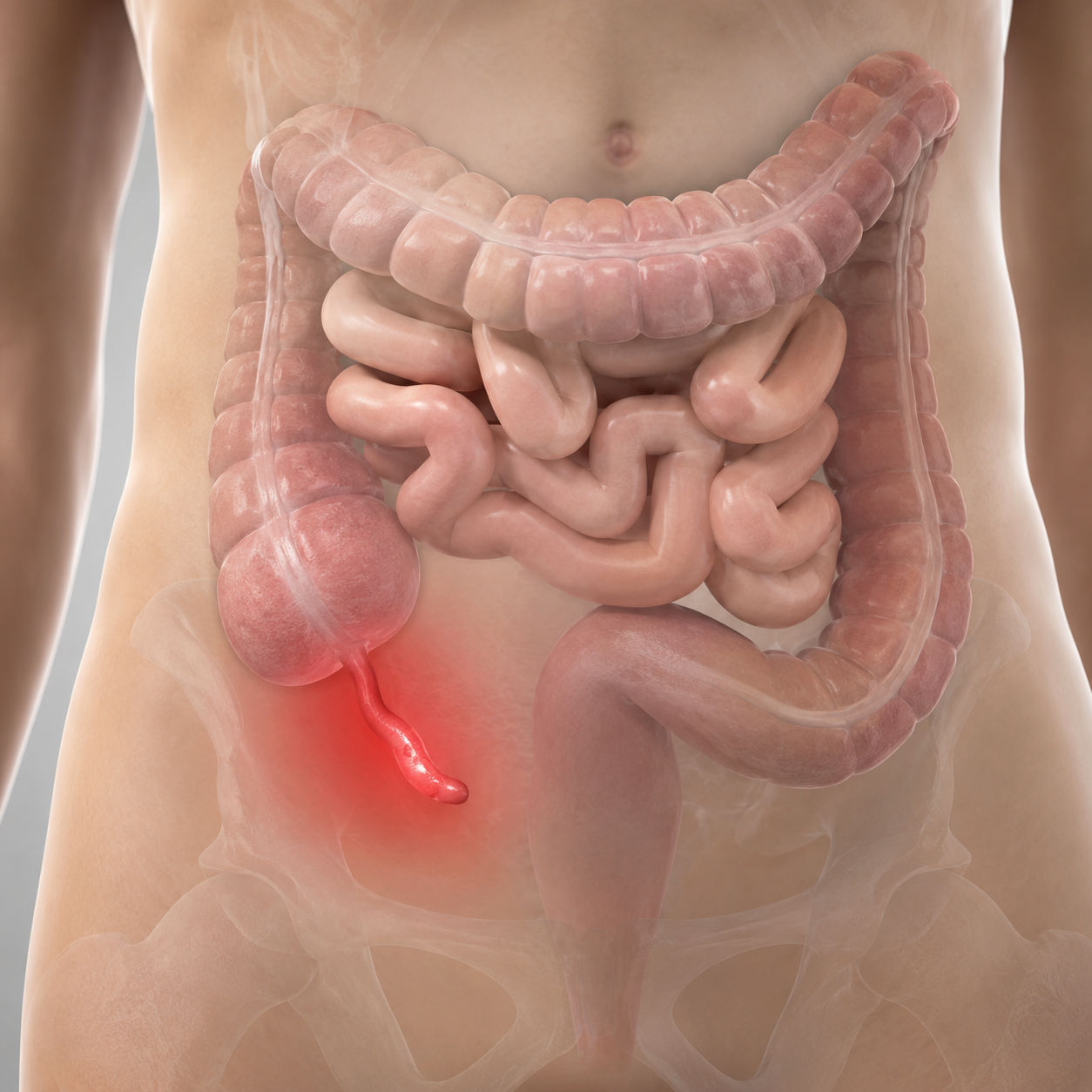
Appendicitis is a condition where the appendix becomes inflamed and swollen. The appendix is a small, finger-shaped pouch attached to the large intestine in the lower right side of the abdomen. It has no known essential function, but when it becomes infected or blocked, it can cause serious illness that requires urgent medical attention.
The condition most commonly causes pain that begins around the belly button and gradually shifts to the lower right side of the abdomen, often becoming more intense over several hours. Other symptoms can include nausea, vomiting, fever, and loss of appetite.
Appendicitis is a medical emergency. Without prompt treatment, the appendix can burst, which can lead to a life-threatening infection spreading through the abdomen. Treatment usually involves surgery to remove the appendix, and in some cases, antibiotics may be used.
If you or someone around you develops worsening abdominal pain, do not wait to see if it improves on its own. Seek medical help as soon as possible.
Symptoms
Appendicitis typically begins with a dull ache or pain around the belly button area. Over the following hours, this pain tends to shift to the lower right side of the abdomen and gradually becomes more intense.
The pain can feel sharper when you move around, cough, or press gently on that area. Bringing your knees up toward your chest may offer some relief.
Not everyone with appendicitis experiences pain in the same way. Some people may have milder discomfort, pain that builds up slowly, or pain in a slightly different location. This is especially common in pregnant women, young children, and older adults.
Along with abdominal pain, other symptoms may include:
Nausea, vomiting, or loss of appetite
Constipation or diarrhoea
Needing to urinate more frequently than normal
Sudden confusion or disorientation, particularly in older people
If appendicitis is left untreated, the appendix can rupture. When this happens, the pain may briefly seem to ease - but this is not a sign of improvement. Soon after, a severe pain typically spreads throughout the entire abdomen, and even small movements can become extremely painful.
Keep in mind that many other conditions can cause similar abdominal pain, such as:
Kidney stones or gallstones
Bowel conditions like irritable bowel syndrome or Crohn's disease
Conditions affecting the uterus or ovaries, such as pelvic inflammatory disease or a ruptured ovarian cyst
Ectopic pregnancy
Because so many conditions share similar symptoms, avoid trying to identify the cause on your own. If you are concerned about abdominal pain, seek medical attention promptly.
Red flags
Urgent advice: See a doctor or health worker soon if:
You or your child have abdominal (tummy) pain that:
keeps getting worse or does not go away
spreads or shifts to the lower right side of the abdomen
Contact a doctor, health worker, or local emergency advice service as soon as possible.
Immediate action required: Go to the nearest emergency department or hospital right away, or call your nearest emergency services if:
You or your child have:
severe pain in the abdomen (tummy)
confusion, skin that looks blotchy or paler than usual (on brown or black skin, this may be more noticeable on the palms of the hands or the soles of the feet), or difficulty breathing - these can be warning signs of sepsis
Do not drive yourself to the hospital. Ask someone else to take you, or call your nearest emergency services and request an ambulance.
Bring all medicines you currently take with you.
Self-care
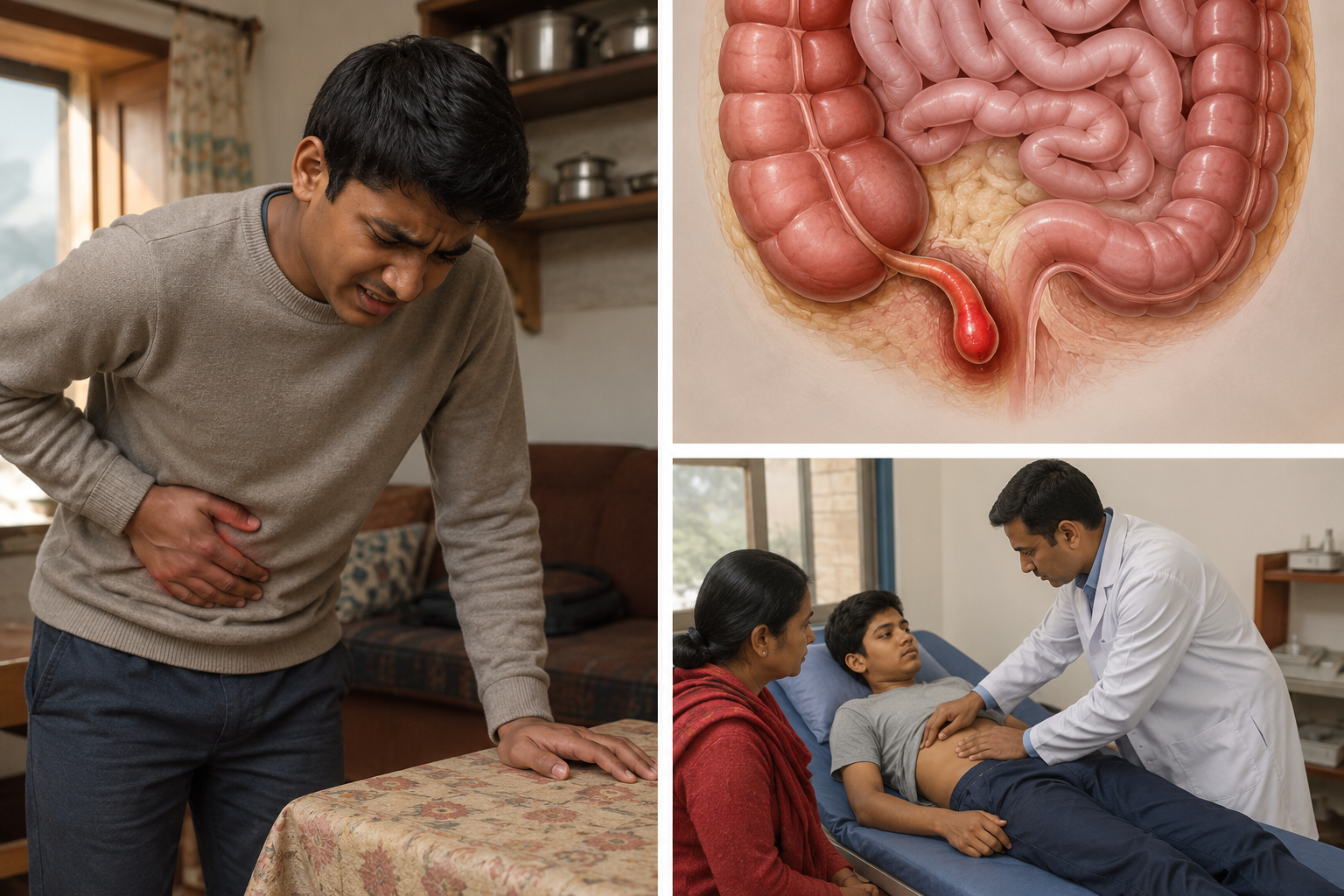
Appendicitis is a medical emergency that must be treated by health professionals - there is no safe way to manage it at home, and no home remedy or self-care measure can treat or cure it.
Avoid the following:
Taking painkillers, laxatives, or any other medicines to ease the pain without first seeing a doctor - doing so can hide symptoms and make it much more difficult to reach the correct diagnosis
Placing a hot water bottle or heat pad on your abdomen, as this can make the condition worse
Eating or drinking anything if you suspect appendicitis, since surgery may be needed
Waiting to see whether the pain settles on its own
What to do:
Seek medical attention promptly if you develop worsening abdominal pain, particularly pain that shifts toward the lower right side of your abdomen
Go to your nearest hospital or emergency facility without delay
If a child is experiencing these symptoms, do not wait - take them for medical help immediately
The only safe course of action for appendicitis is to be assessed and treated by a doctor or qualified health worker in a medical facility. Getting help quickly lowers the risk of serious complications, including a ruptured appendix.
Treatment
Seek urgent medical attention from a doctor, health worker, or your nearest emergency service if you or your child develops abdominal pain that:
keeps getting worse or does not settle on its own
shifts toward the lower right side of the abdomen
Contact your local emergency service by phone or through available online options without delay.
How appendicitis is diagnosed
When you visit a doctor or health worker with symptoms that suggest appendicitis, they will examine your abdomen by gently pressing on it to check for tenderness and swelling. You will need to go to a hospital for further evaluation and care.
Tests that may be carried out include:
blood tests
a urine sample test
imaging scans such as an ultrasound or CT scan to look for signs of swelling around the appendix
a pregnancy test if there is any possibility you could be pregnant
No single test can confirm appendicitis with complete certainty. It can be difficult to diagnose because the symptoms often resemble those of other conditions. In some cases, doctors may monitor you in hospital for several hours to observe how your symptoms change before making a decision.
If your symptoms strongly point to appendicitis, or if there is concern that your appendix may have already burst, doctors may recommend going straight to surgery rather than waiting for further test results.
Treatment for appendicitis
The standard treatment for appendicitis is surgery to remove the appendix, known as an appendectomy. The appendix is not essential for your body to function, so removing it causes no lasting harm.
If surgery is needed, it will be performed as soon as possible, though there may be a short wait of a few hours. The operation generally takes around one hour to complete.
The main steps of an appendectomy are:
1. You will receive a general anaesthetic, meaning you will be unconscious and will not feel any pain throughout the procedure.
2. The surgeon makes small incisions in the abdomen and uses a narrow tube fitted with a camera to locate and view the appendix - this is known as keyhole surgery. In some situations, a single larger cut on the lower right side of the abdomen may be necessary instead, which is called open surgery.
3. The appendix is separated from where it connects to the bowel and removed. If the appendix has burst, the surrounding area will be carefully cleaned out.
4. The abdomen is closed using stitches, surgical clips, or medical glue.
In some cases, appendicitis can be managed with antibiotics instead of surgery. This approach may be considered when the infection has remained localised and surgery would carry a higher than usual risk for that individual.
Occasionally, appendicitis leads to a condition where nearby tissue and part of the bowel stick together around the appendix, forming what is called an appendix mass. When this occurs, antibiotics are usually given first, followed by surgery a few weeks later if symptoms have not fully resolved.
Questions to ask your doctor
When meeting with your doctor about appendicitis, consider asking the following:
Understanding your condition:
How confident are you that this is appendicitis, and which tests will help confirm the diagnosis?
Is there a chance something else is causing these symptoms?
What could happen if we take a little more time before deciding on a treatment plan?
Your treatment options:
Will I need an operation, or could antibiotics alone treat this?
If surgery is needed, when will it take place and what will be done?
What are the risks of going ahead with surgery, and what are the risks of choosing not to have it?
What does it mean for my treatment if my appendix has already ruptured?
Getting better after treatment:
How many days am I likely to spend in hospital?
How much time will pass before I can go back to my usual activities, job, or studies?
Are there foods I should eat or avoid while I am recovering from surgery?
Which symptoms or warning signs should prompt me to seek care after going home?
Ongoing care:
When do I need to return for a follow-up visit?
Who should I reach out to if my pain worsens or I develop a fever after discharge?
Will I require any additional tests or treatment once I leave hospital?
Never feel embarrassed to ask your doctor or health worker to explain something again. Every question you ask about your health matters.
Nepal pathway
In Nepal, start with your nearest health post, PHC, clinic, or hospital if symptoms are worrying, severe, worsening, or not improving. Take previous prescriptions, test reports, allergy information, and current medicines with you. Seek urgent care immediately if there are red flag symptoms.
Disclaimer
This is general health information only and does not replace medical advice, diagnosis, treatment, or emergency care.
Help improve this guide
Spotted an error or want to contact us about this guide? Send a message to the HamroSwasthya team.