
Chickenpox
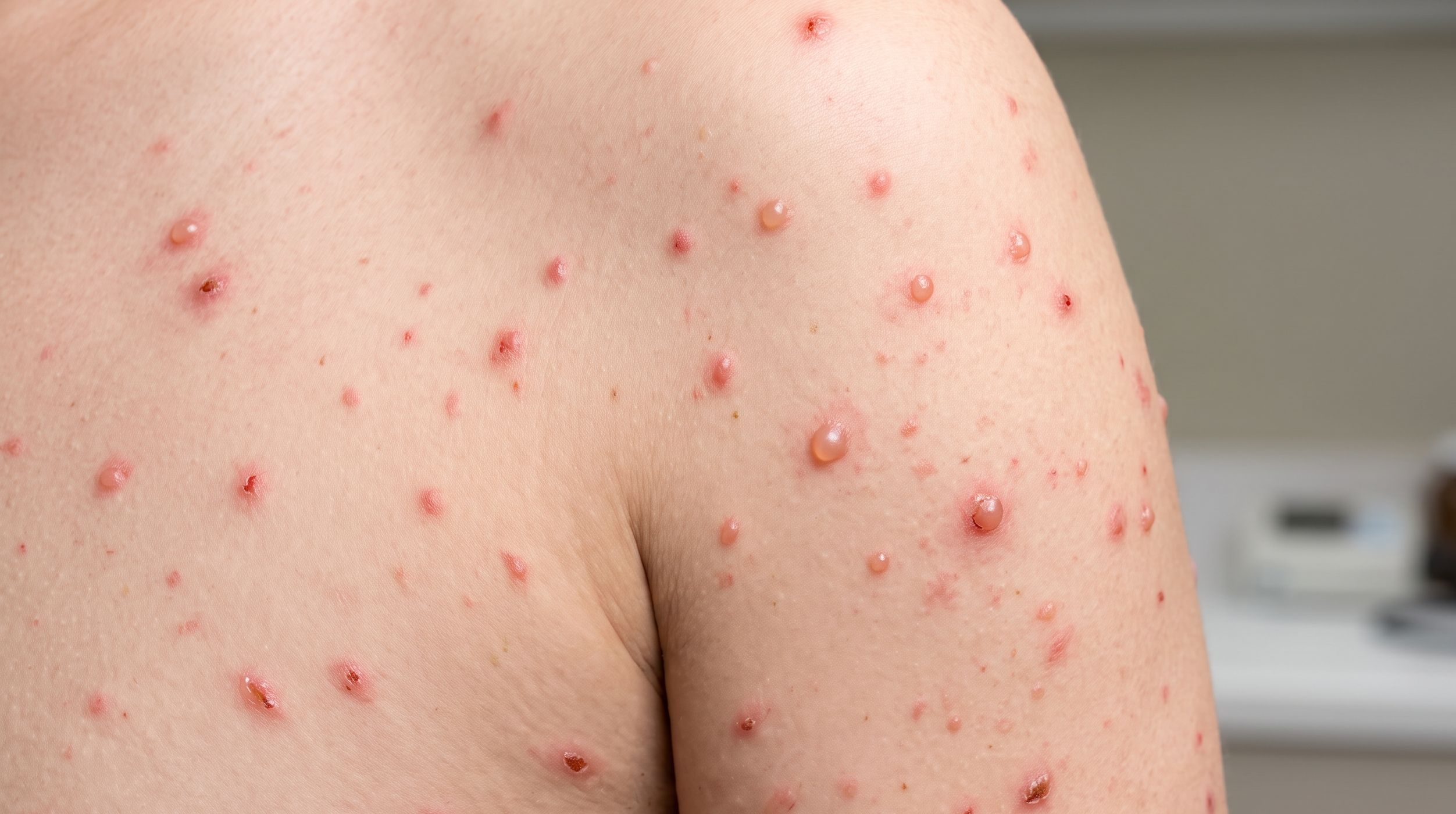
Chickenpox is a very contagious viral infection caused by the varicella-zoster virus. It usually causes an itchy blister-like rash, often with fever and feeling unwell. It is common in children, but adults can also get it and may become more unwell.
Most healthy children recover with self-care, but chickenpox can be serious in newborn babies, pregnant people, adults, and people with a weakened immune system. People at higher risk need medical advice quickly after exposure or symptoms.
Symptoms
Chickenpox often starts with feeling unwell before or around the time the rash appears. Symptoms can include:
Tiredness, headache, or body aches
Loss of appetite
Itchy red spots that become fluid-filled blisters
Blisters that dry and form scabs
Spots appearing in waves over several days
Rash on the face, chest, back, scalp, arms, legs, or inside the mouth
The rash can look different on different skin tones. Some people have only a few spots, while others have many.
Red flags
Seek urgent medical advice or go to the nearest hospital if you or your child has:
Difficulty breathing, chest pain, severe cough, or coughing blood
Severe headache, stiff neck, confusion, drowsiness, seizure, or difficulty waking
Red, hot, swollen, very painful skin around spots, or pus from the spots
Fever that is very high, persistent, or returns after improving
Repeated vomiting, severe dehydration, or inability to drink
Rash or illness in a newborn baby
Chickenpox during pregnancy
Chickenpox in an adult who is very unwell
A weakened immune system, cancer treatment, transplant medicines, high-dose steroids, or other immune-suppressing medicines
Eye pain, red eye, or spots near the eye
Call Ambulance Nepal on 102 where available if symptoms are severe or the person is seriously unwell.
Self-care
Rest and drink enough fluids.
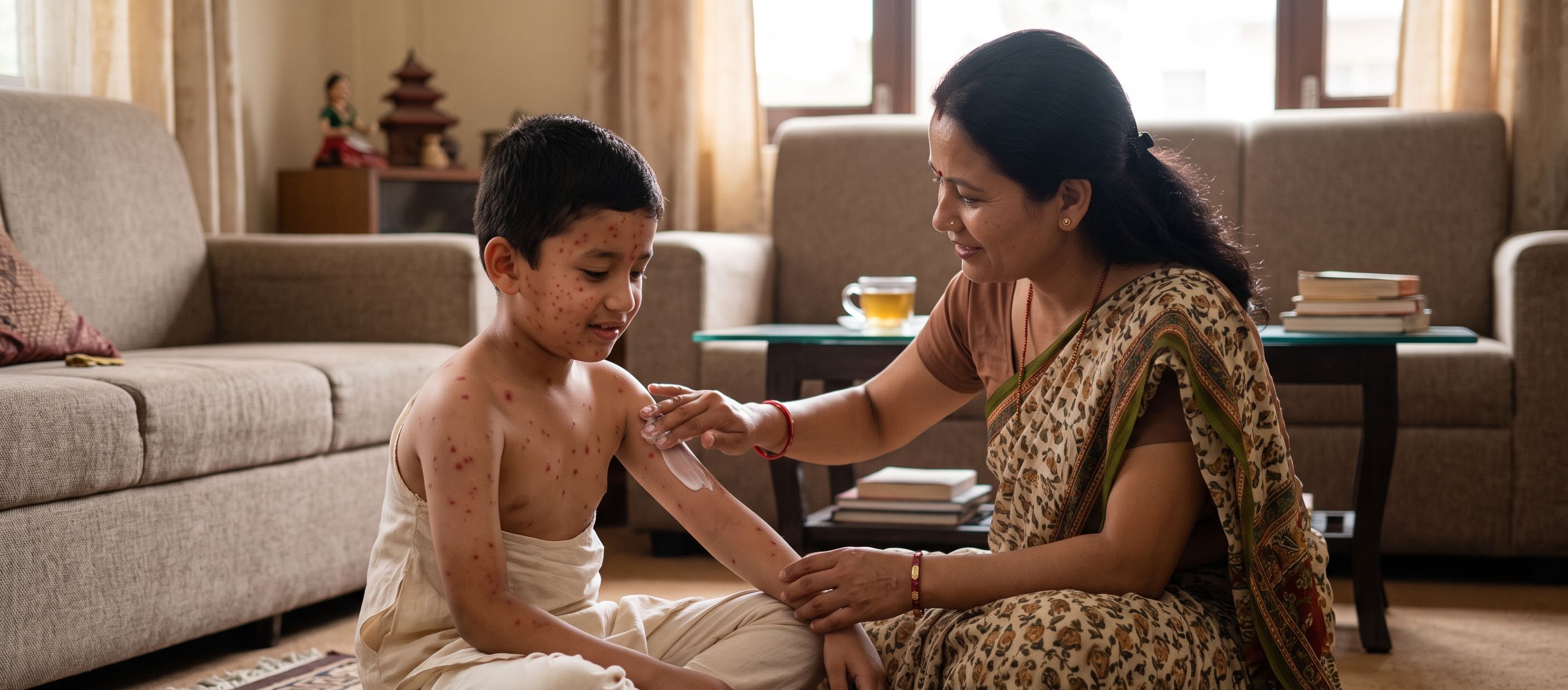
Keep nails short and clean to reduce skin damage from scratching.
Try not to scratch the spots, as this can increase scarring and infection risk.
Wear loose, cool clothing.
Use soothing lotions or antihistamines only after checking what is suitable for the person's age and health.
Use paracetamol for fever or discomfort if suitable. Follow the packet instructions or ask a pharmacist.
Avoid ibuprofen unless a doctor advises it is safe.
Stay away from school, nursery, work, and close contact with others until all blisters have dried and crusted.
Avoid close contact with pregnant people, newborn babies, and people with weakened immune systems until no longer infectious.
Treatment
Most healthy children with chickenpox do not need antiviral medicine and recover with rest, fluids, and symptom relief.
Some people may need urgent assessment or antiviral treatment, especially adults, pregnant people, newborn babies, and people with weakened immune systems. Treatment works best when started early, so high-risk people should contact a doctor quickly after exposure or when symptoms begin.
Antibiotics do not treat chickenpox itself because chickenpox is caused by a virus. They may only be needed if a bacterial skin infection or another bacterial complication develops.
Post-exposure treatment may be offered to some high-risk people after contact with chickenpox or shingles. This should be arranged by a qualified health professional.
Questions to ask your doctor
Is this definitely chickenpox, or could it be another rash illness?
Am I or my child at higher risk of complications?
Do we need antiviral treatment?
What can we use safely for fever and itching?
Should we avoid ibuprofen or aspirin?
How long should we stay away from school, work, or vulnerable people?
What signs suggest infected spots or complications?
I am pregnant or immunocompromised and have been exposed - what should I do now?
Does anyone in the household need post-exposure advice or vaccination?
Which symptoms mean we should go to hospital urgently?
Nepal pathway
In Nepal, start with your nearest health post, PHC, clinic, or hospital if symptoms are worrying, severe, worsening, or not improving. Take previous prescriptions, test reports, allergy information, and current medicines with you. Seek urgent care immediately if there are red flag symptoms.
Disclaimer
This is general health information only and does not replace medical advice, diagnosis, treatment, or emergency care.
Help improve this guide
Spotted an error or want to contact us about this guide? Send a message to the HamroSwasthya team.