
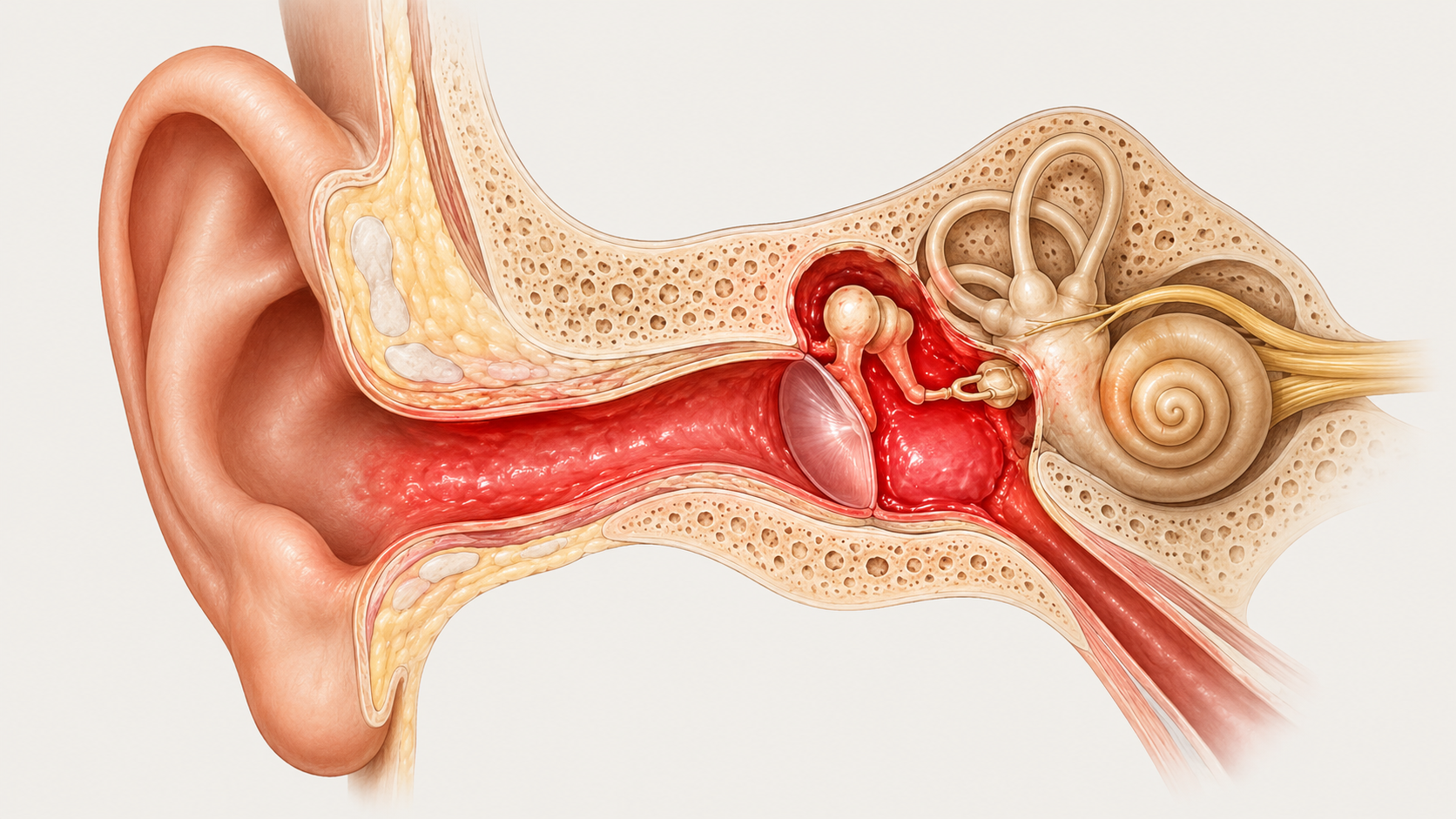
Ear infections
An ear infection can affect the middle ear behind the eardrum or the outer ear canal. Middle ear infections are common after a cold, especially in children. Outer ear infections can happen when the ear canal becomes irritated, scratched, or stays wet. Most uncomplicated ear infections improve within a few days, but some people need medical assessment or treatment.
Symptoms
Ear pain or earache
Reduced hearing or a blocked feeling in the ear
Fluid, pus, or discharge from the ear
Pressure or fullness inside the ear
Itching, irritation, or flaky skin around the ear canal
Ringing in the ear or dizziness
A child rubbing, pulling, or holding the ear
Poor feeding, crying, disturbed sleep, or irritability in babies and young children
Symptoms can overlap with earwax, dental problems, throat infection, jaw problems, injury, or foreign body in the ear.
Red flags
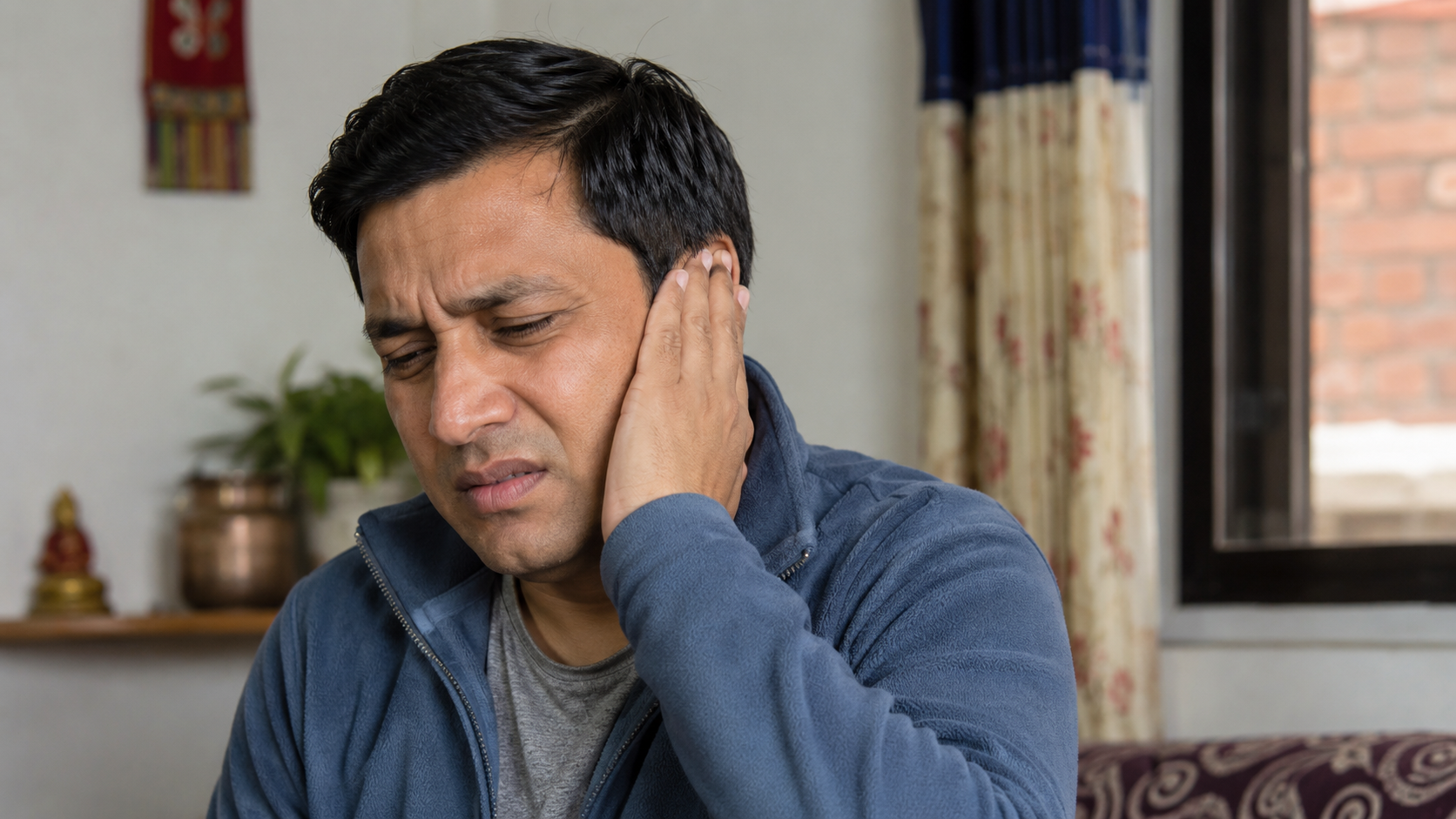
Go to the nearest hospital urgently, or call Ambulance Nepal on 102 where available, if you or your child has:
Swelling, redness, or severe tenderness behind the ear
Severe or worsening ear pain with high fever
Severe headache, neck stiffness, confusion, drowsiness, or vomiting
New facial weakness or one side of the face drooping
Sudden severe dizziness, loss of balance, or new hearing loss
Blood or pus from the ear after injury
A baby under 3 months with fever or appearing very unwell
Diabetes, weakened immunity, or poor circulation with severe ear pain or discharge
Swelling or pain behind the ear can be a sign of mastoiditis, a serious complication that needs urgent care.
Self-care
Rest and drink enough fluids.
Use suitable pain relief such as paracetamol or ibuprofen if safe for you or your child. Follow the packet instructions or ask a pharmacist.
A warm cloth held gently against the ear may ease pain.
Keep the ear dry if there is discharge or suspected outer ear infection.
Do not put cotton buds, hairpins, oil, herbal drops, or any other objects into the ear. These can scratch or damage the ear canal, push wax deeper, worsen infection, or harm the eardrum. Use ear drops only if advised by a doctor.
Do not use leftover antibiotics or someone else's ear drops.
Seek medical advice if symptoms do not improve within 2 to 3 days, become worse, or if there is discharge from the ear.
Treatment
Treatment depends on the type of ear infection, age, symptoms, and risk factors.
Many middle ear infections are caused by viruses and get better without antibiotics. A doctor may recommend no antibiotic, a delayed antibiotic, or an immediate antibiotic depending on severity, age, discharge, both ears being affected, and risk of complications.
Outer ear infection may need ear drops and advice to keep the ear dry. If the ear canal is blocked or swollen, a clinician may need to examine or clean the ear safely. Symptoms should usually start improving within a few days after suitable treatment.
Recurrent ear infections, persistent discharge, hearing problems, or suspected complications may need referral to an ear, nose, and throat specialist.
Questions to ask your doctor

Is this a middle ear infection or outer ear infection?
Is it likely to be viral or bacterial?
Do I or my child need antibiotics or ear drops?
Is the eardrum intact, or is there a perforation?
What pain relief is safe?
How long should symptoms take to improve?
Should hearing be checked after the infection?
What can I do to reduce repeated ear infections?
Which symptoms mean I should go to hospital urgently?
Nepal pathway
In Nepal, start with your nearest health post, PHC, clinic, or hospital if symptoms are worrying, severe, worsening, or not improving. Take previous prescriptions, test reports, allergy information, and current medicines with you. Seek urgent care immediately if there are red flag symptoms.
Disclaimer
This is general health information only and does not replace medical advice, diagnosis, treatment, or emergency care.
Help improve this guide
Spotted an error or want to contact us about this guide? Send a message to the HamroSwasthya team.