
Fungal nail infection
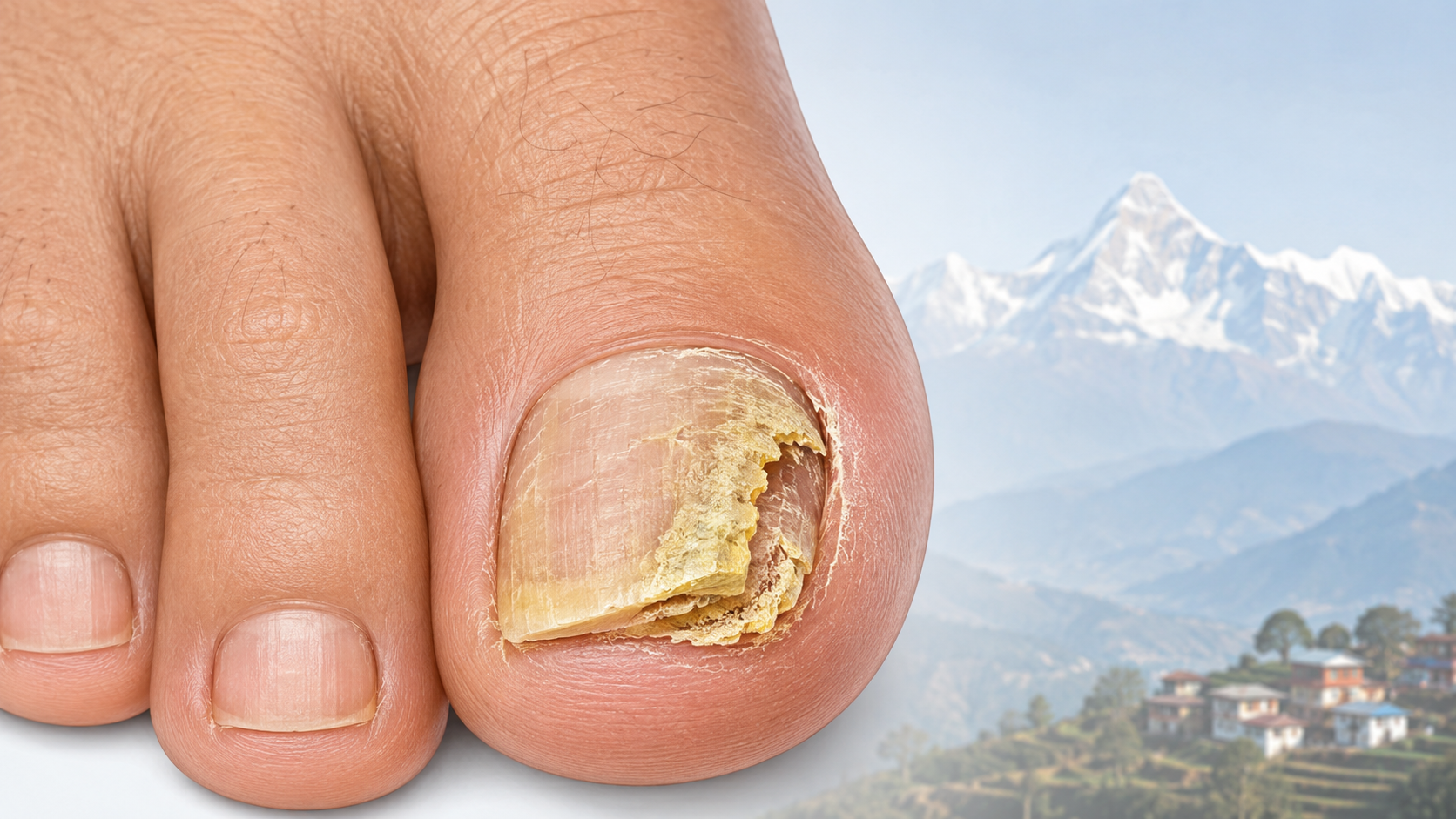
A fungal nail infection is an infection of the nail caused by fungi. It usually affects toenails, but fingernails can also be affected. The medical name is onychomycosis.
It often develops slowly and may make the nail thick, discoloured, brittle, crumbly, or distorted. It is usually not serious, but treatment can take many months and the nail may not return fully to its previous appearance.
Symptoms
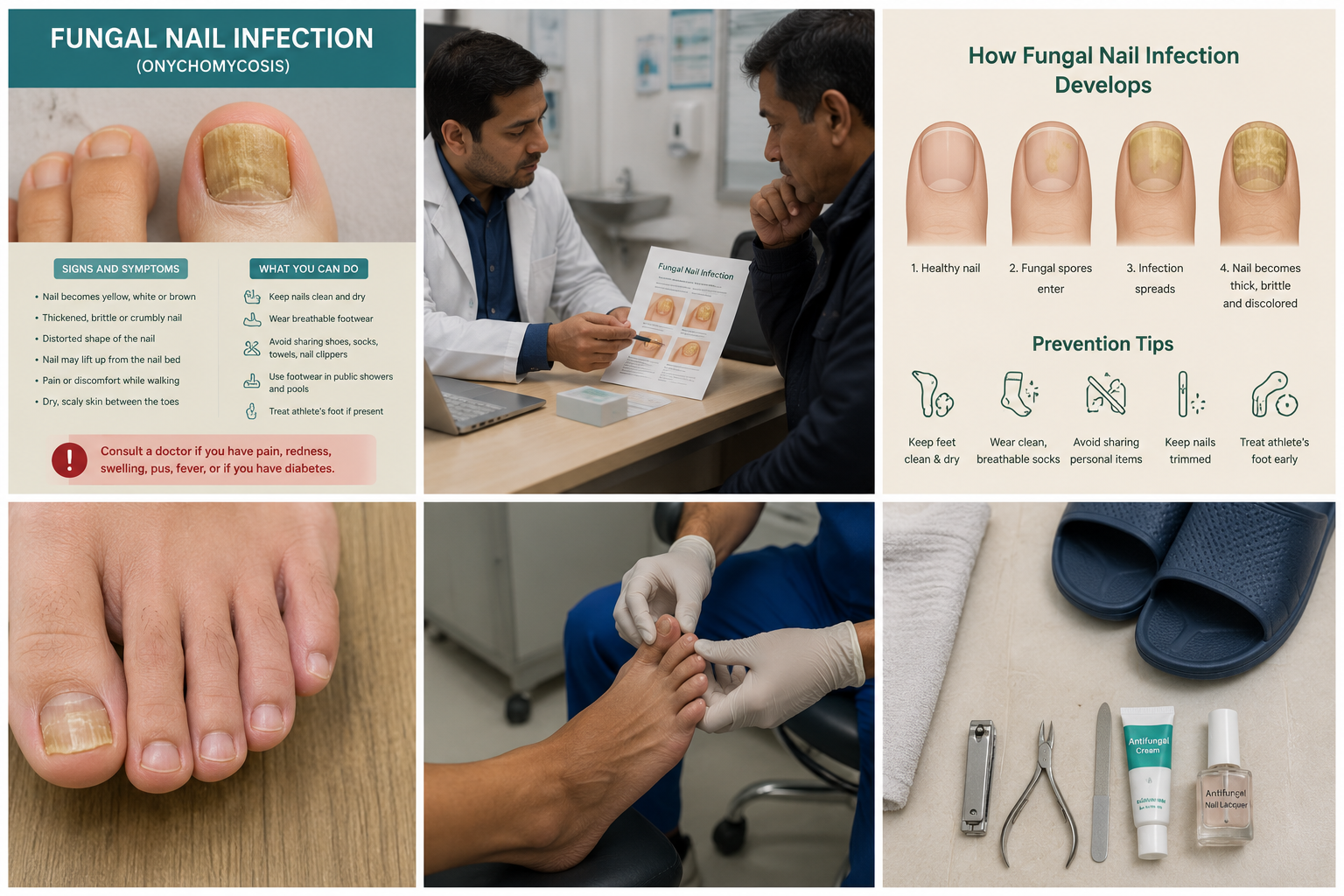
Possible signs of a fungal nail infection include:
Nail becoming yellow, white, brown, black, or greenish
Nail becoming thicker, rougher, or distorted
Brittle nail that breaks, crumbles, or lifts away from the nail bed
White or yellow material building up underneath the nail
Pain or pressure when wearing shoes or walking
Swelling, redness, or tenderness of the skin around the nail
Athlete's foot, such as itchy, flaky, cracked skin between the toes
Not every thick or discoloured nail is caused by fungus. Nail injury, psoriasis, eczema, ageing, poor circulation, or other nail conditions can look similar.
Red flags
Seek urgent medical advice or go to hospital if you have:
A painful, red, hot, swollen toe or finger with pus, fever, or feeling very unwell
Rapidly spreading redness or swelling from the nail into the foot, hand, or leg
A black or dark streak in the nail that is new, widening, or not linked to an injury
Severe pain, loss of sensation, colour change, or a cold foot or toe
Diabetes or poor circulation with a painful nail, open skin, ulcer, or signs of infection
A weakened immune system with worsening skin or nail infection
These symptoms may indicate bacterial infection, poor circulation, melanoma, or another problem that needs prompt assessment.
Self-care
Keep feet and hands clean and dry.
Dry carefully between the toes after washing.
Change socks daily and wear clean, breathable footwear.
Let shoes dry fully before wearing them again.
Avoid sharing shoes, socks, towels, nail clippers, or nail files.
Wear footwear in shared showers, swimming-pool areas, or changing rooms.
Trim nails straight across and keep thick nails gently filed if this is comfortable.
Clean nail clippers or files after use.
Treat athlete's foot promptly to reduce the risk of spread to the nails.
Do not dig under the nail, cut deeply around the skin, or use strong chemicals that damage the nail or surrounding skin.
Treatment
Mild fungal nail infection may be treated with an antifungal nail lacquer or topical treatment from a pharmacy. These treatments usually need to be used regularly for many months, often until healthy nail grows out. They may not work well if the infection affects a large part of the nail or the nail root.
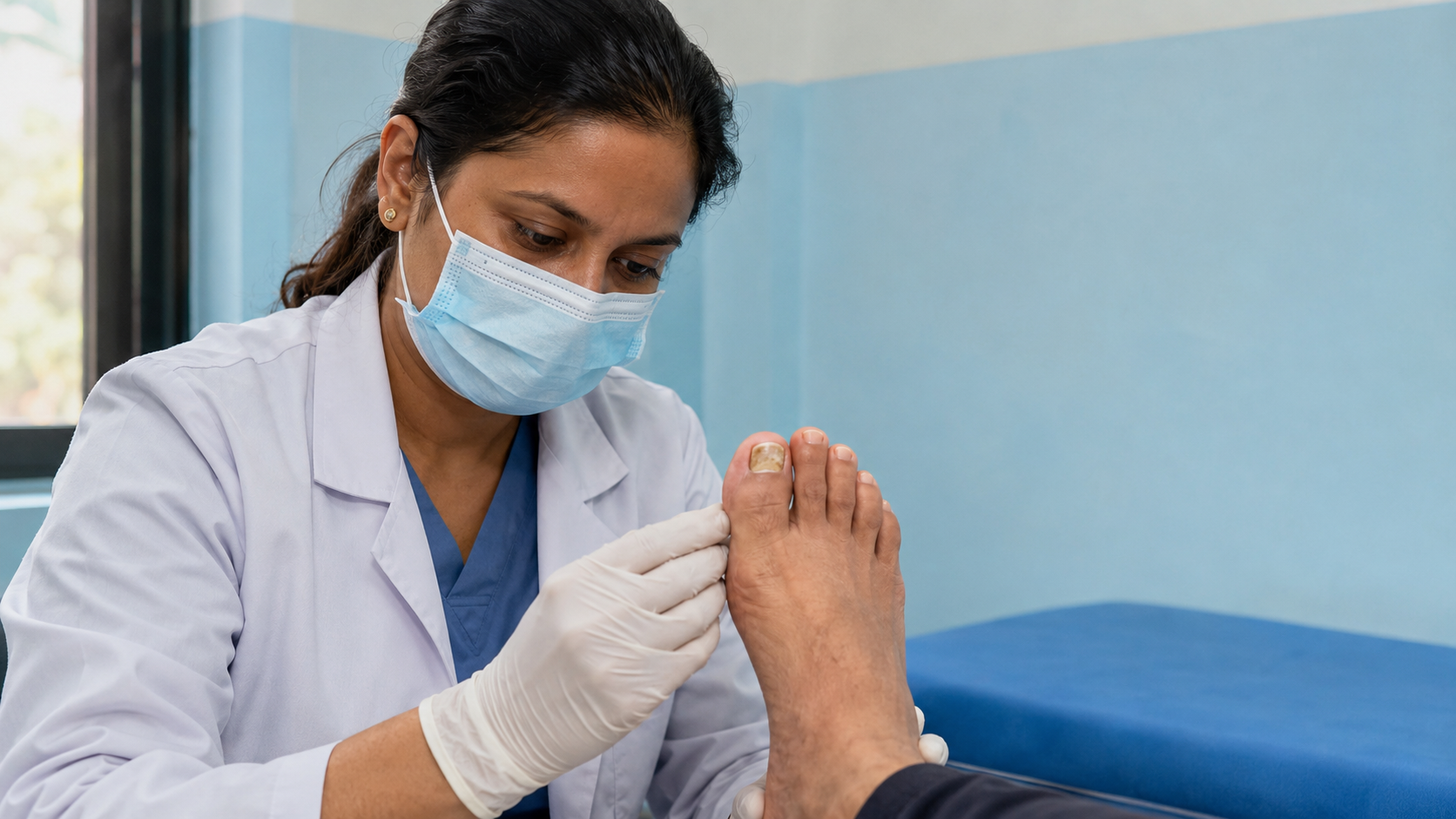
For more extensive, painful, or persistent infection, a doctor may arrange a nail clipping or sample to confirm the diagnosis before prescribing treatment. Oral antifungal tablets are often more effective than topical treatment, but they are not suitable for everyone because of possible side effects, medicine interactions, pregnancy considerations, and liver risks.
Do not take antifungal tablets bought without consultation, don't use someone else's medicines, or start long-term treatment without medical advice.
Questions to ask your doctor
- Is this definitely a fungal nail infection, or could it be psoriasis, injury, or another nail condition?
- Do I need a nail clipping or laboratory test before treatment?
- Would a cream / local application be suitable, or do I need tablets?
- How long will treatment take before I see healthy nail growing back?
- Are antifungal tablets safe with my regular medicines?
- Do I need liver blood tests before or during treatment?
- Can I use treatment if I am pregnant, breastfeeding, or planning pregnancy?
- How can I prevent the infection from returning?
- Should I also treat athlete's foot or other fungal skin infection?
Nepal pathway
In Nepal, start with your nearest health post, PHC, clinic, or hospital if symptoms are worrying, severe, worsening, or not improving. Take previous prescriptions, test reports, allergy information, and current medicines with you. Seek urgent care immediately if there are red flag symptoms.
Disclaimer
This is general health information only and does not replace medical advice, diagnosis, treatment, or emergency care.
Help improve this guide
Spotted an error or want to contact us about this guide? Send a message to the HamroSwasthya team.