
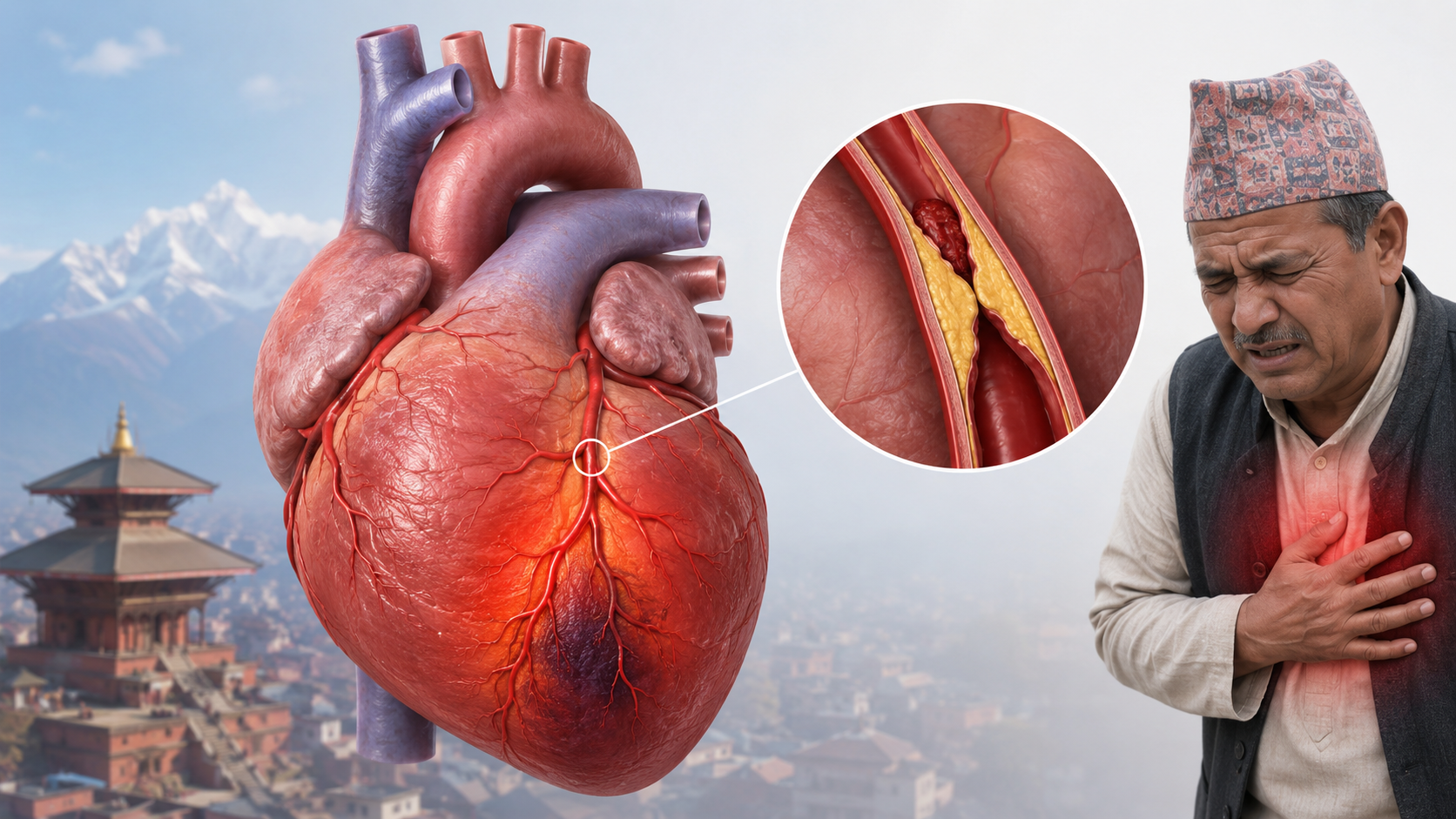
Heart attack
A heart attack happens when the blood supply to part of the heart muscle is suddenly cut off, usually because of a blockage in one of the arteries that feeds the heart. Without a steady supply of blood, the affected part of the heart muscle begins to die. This is a medical emergency that requires immediate treatment.
The most well-known warning sign is chest pain or pressure, but a heart attack can also cause symptoms such as breathlessness, nausea, sweating, and discomfort spreading to the arm, neck, or jaw. Symptoms can vary from person to person, and in some cases they may be mild or easy to mistake for something less serious.
The faster a heart attack is treated, the better the chances of limiting damage to the heart. If you think you or someone nearby may be having a heart attack, seek emergency help straight away and do not wait to see if the symptoms improve on their own.
Red flags
Seek emergency help immediately or go to the nearest emergency room if:
You feel a tight, squeezing, or crushing pain in your chest
The chest pain is spreading to your arm, neck, or jaw
You are struggling severely to breathe - gasping, choking, or unable to speak
Your lips, palms, or skin have turned pale, bluish, or grey in colour
Someone has lost consciousness and is not responding
Do not attempt to drive yourself to the hospital.
Contact a doctor, health worker, or emergency advice line urgently if:
You suddenly feel much more short of breath than normal
You have chest pain along with nausea or vomiting
You have chest pain and notice your heart beating too fast, too slowly, skipping beats, or fluttering
Symptoms
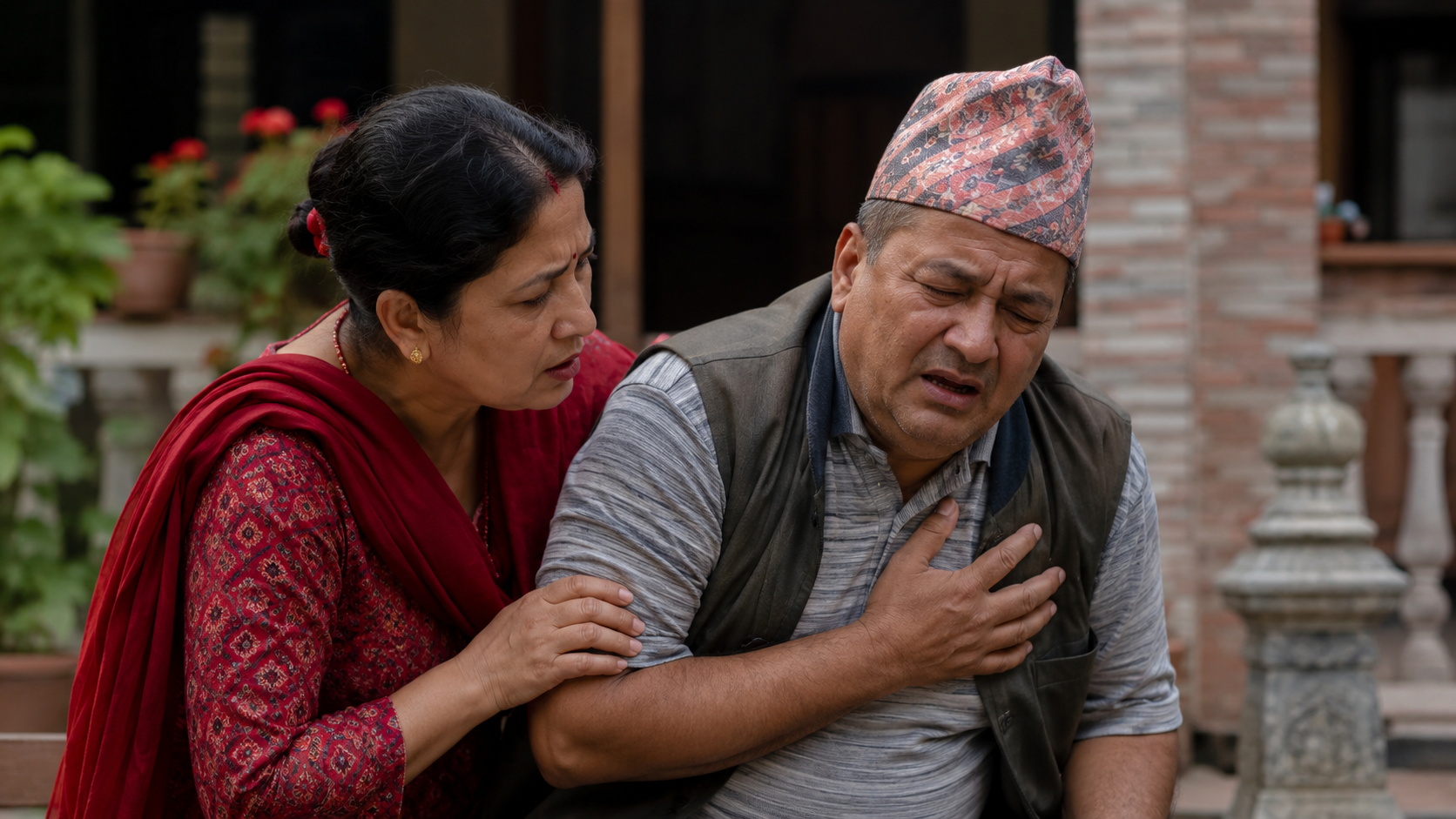
A heart attack can cause different symptoms in different people. Common warning signs include:
pain or pressure in the chest that may feel like squeezing or tightening - this pain can spread to the arm, neck, or jaw
difficulty breathing or feeling breathless
feeling queasy or actually vomiting
a burning or heavy sensation in the chest that resembles indigestion, sometimes with a feeling of fullness or bloating
breaking out in a sweat
skin that looks pale, bluish, or grey - on darker skin tones this colour change may be most noticeable on the palms of the hands
Self-care
While you wait for emergency help to arrive, there are steps you can take straight away.
1. Sit down and rest in a comfortable position - ideally on the floor with your knees bent and your back supported against a wall. If this is not possible, sitting on a chair is fine.
2. If aspirin (300mg) is available, take it - but do not give aspirin to anyone who is allergic to it.
3. If you have been diagnosed with angina and carry a glyceryl trinitrate (GTN) spray, use it as directed.
4. If someone else may be having a heart attack, stay with them and keep checking that they remain conscious and are still breathing normally.
5. If the person becomes unresponsive and stops breathing, begin CPR immediately and continue until help arrives.
Treatment
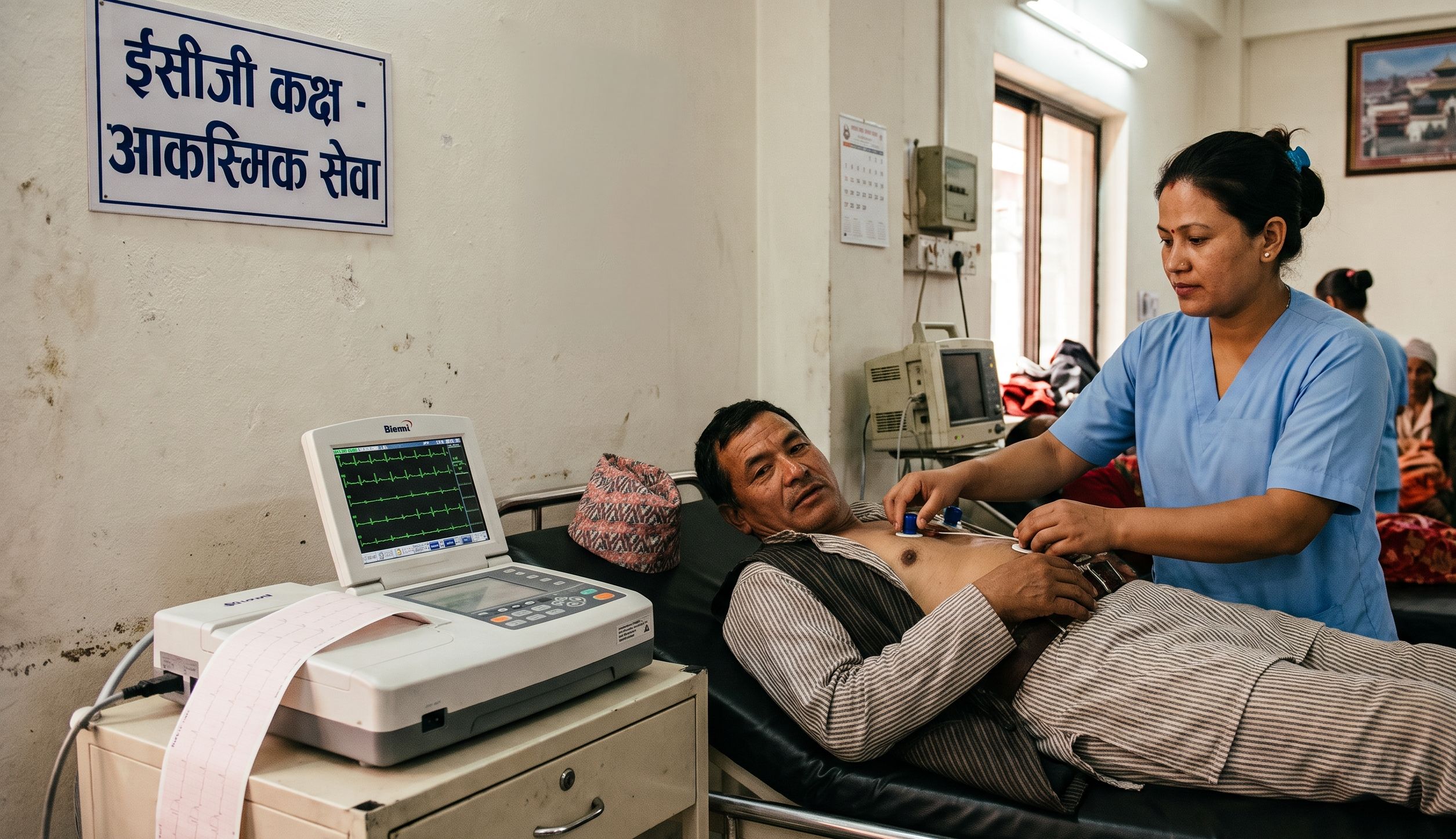
When you arrive at the hospital with a suspected heart attack, doctors will carry out an electrocardiogram (ECG) and blood tests to confirm what is happening. Depending on those results, you may need additional investigations, such as an echocardiogram to check whether your heart muscle has been affected, or a coronary angiogram to pinpoint exactly where a blockage is occurring in the arteries that supply your heart. In some cases, a blockage found during an angiogram can be treated during the same procedure. Your doctor will explain what each test result means for your situation.
A heart attack always requires hospital treatment, and the approach taken will depend on how serious your condition is. Common treatments include medicines that work to clear blockages and restore blood flow to the heart, a procedure called coronary angioplasty in which a small tube known as a stent is used to open a blocked artery, or in more complex cases, coronary artery bypass surgery, where a blood vessel taken from elsewhere in the body is used to route blood around the blocked section. It is important to understand that a heart attack is a life-threatening emergency and, despite the best medical care, it is not always possible to save every patient.
Once you have recovered enough to leave hospital, your doctor will prescribe medicines for you to take on an ongoing basis. These are intended to address the underlying causes of your heart attack and to lower the chance of another one occurring. They may include antiplatelet medicines to help keep your arteries from becoming blocked again, statins to bring down high cholesterol levels, and other medicines such as ACE inhibitors or beta-blockers to manage high blood pressure.
Questions to ask your doctor
Following a heart attack, it is natural to feel overwhelmed and full of questions. Speaking openly with your doctor is an important part of your recovery. Below are some questions that may help guide that conversation.
About your diagnosis and heart health
What kind of heart attack did I have, and how severe was it?
Has my heart sustained any damage, and to what extent?
Which tests will be done, and what information will they provide?
About your treatment
What treatment plan is recommended for me, and why is it the most suitable choice?
Will I require a procedure or surgery, or will medicines alone be enough to manage my condition?
How long am I expected to remain in hospital?
About your medicines
Which medicines will I need to take, and for how long will I need them?
What side effects should I be aware of?
What steps should I take if I accidentally miss a dose?
About recovery and lifestyle
When will it be safe for me to resume everyday activities, such as returning to work or driving?
Are there particular foods I should avoid, or should I make changes to my overall diet?
Is physical activity safe for me at this stage, and if so, what kind is most appropriate?
Should I quit smoking, and what help is available to support me in doing so?
About your ongoing care
How frequently will I need to come in for follow-up visits?
What symptoms or warning signs should lead me to seek emergency medical help immediately?
What steps can I take in my daily life to lower the chance of having another heart attack?
Nepal pathway
In Nepal, start with your nearest health post, PHC, clinic, or hospital if symptoms are worrying, severe, worsening, or not improving. Take previous prescriptions, test reports, allergy information, and current medicines with you. Seek urgent care immediately if there are red flag symptoms.
Disclaimer
This is general health information only and does not replace medical advice, diagnosis, treatment, or emergency care.
Help improve this guide
Spotted an error or want to contact us about this guide? Send a message to the HamroSwasthya team.