
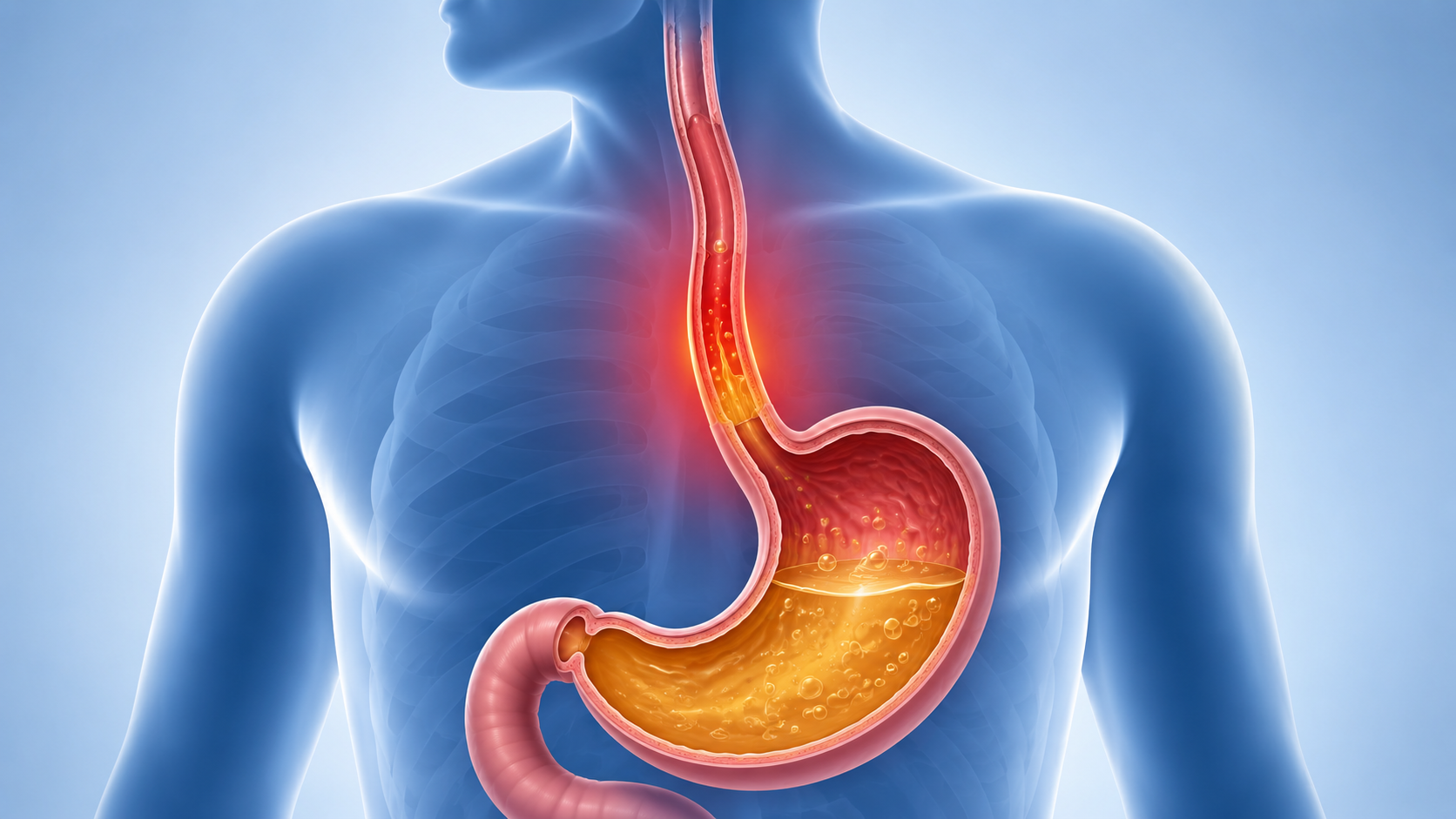
Heartburn and acid reflux
Heartburn
A burning sensation in the middle of the chest, especially after eating, is called heartburn.
Acid Reflux
When stomach acid or food flows back up into the oesophagus (food pipe) or throat, it is called acid reflux. This can cause a sour or bitter taste in the mouth.
GORD (Gastro-oesophageal Reflux Disease)
While occasional acid reflux can be normal, a condition where it happens frequently or starts causing damage to the oesophagus is known as Gastro-oesophageal Reflux Disease (GORD).
Stomach ulcers:
Acid reflux often causes heartburn or sour liquid to come up into the throat or mouth, while a stomach ulcer is a sore that forms in the lining of the stomach or the beginning of the small intestine and can cause pain in the upper abdomen. As the symptoms can be similar, see our article on stomach ulcers for more information.
Nepalese Context: In Nepal, it is very common for people to use the English loanword "Gastric" (ग्यास्ट्रिक) as a blanket term for almost any stomach or chest-related discomfort. Whether someone is experiencing simple indigestion, heartburn, acid reflux, or even gallbladder issues, they will often just say, "I have gastric." Because of this broad usage, healthcare providers in Nepal usually have to ask specific follow-up questions about the patient's exact symptoms to accurately diagnose conditions like GORD versus general indigestion.
Symptoms
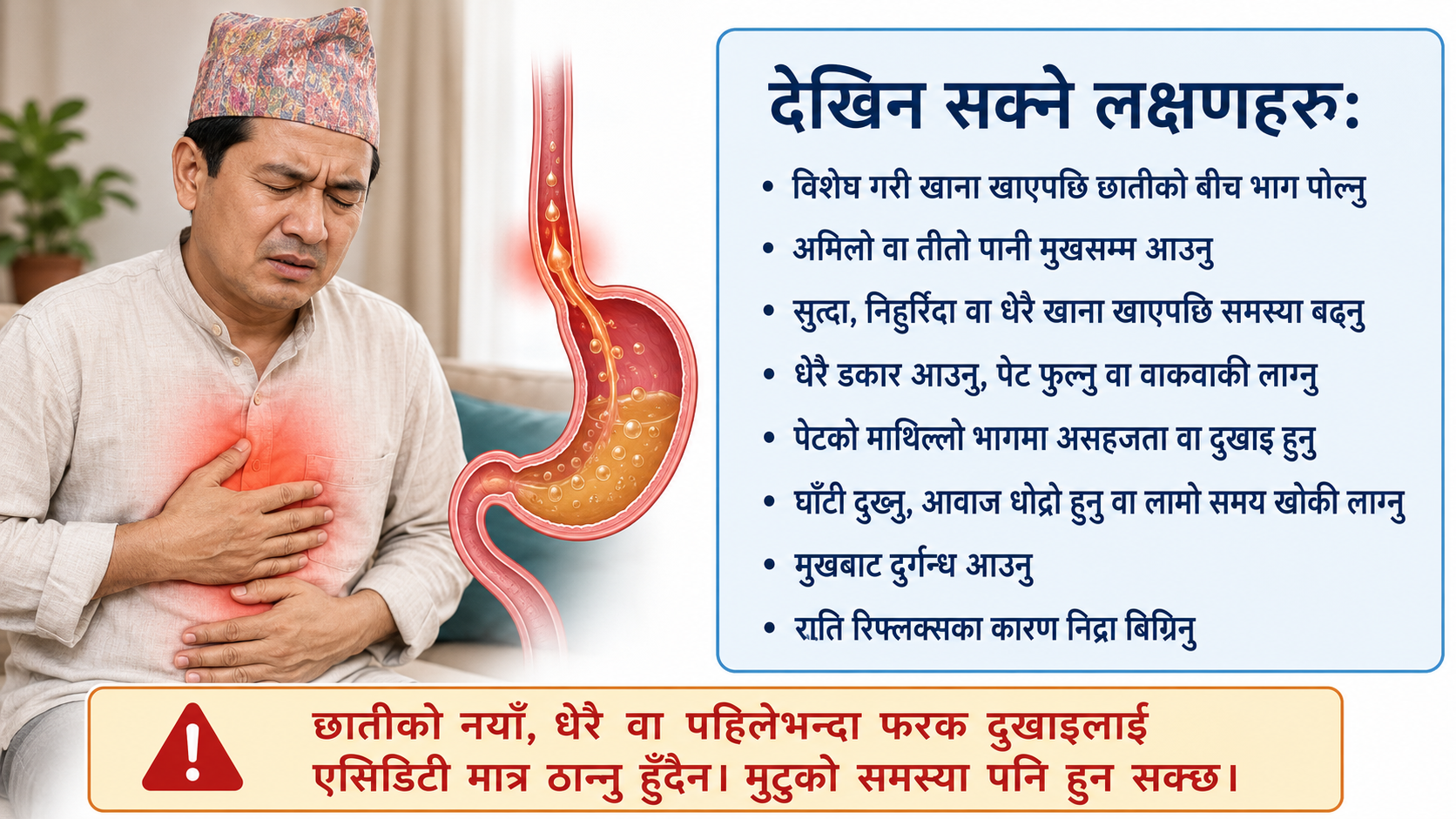
Symptoms may include:
Burning discomfort in the chest, especially after eating
Sour or bitter-tasting fluid coming into the mouth
Symptoms that worsen when lying down, bending over or after a large meal
Burping, bloating or feeling sick
Upper abdominal discomfort
A sore throat, hoarse voice or persistent cough
Bad breath
Difficulty sleeping because of nighttime reflux
Chest discomfort should not automatically be assumed to be heartburn, particularly if it is new, severe or different from usual, it can be heart problem as well.
Red flags
Seek urgent medical help if you have:
Chest pressure, tightness or heaviness, especially with breathlessness, sweating, nausea, dizziness or pain spreading to the arm, jaw, back or upper abdomen
Vomiting blood or material that looks like coffee grounds
Black, sticky stools or visible blood in the stool
Difficulty or pain when swallowing
Food repeatedly feeling stuck
Persistent vomiting or inability to keep fluids down
Severe or worsening abdominal or chest pain
Unexplained weight loss, loss of appetite, marked weakness or unusual paleness
New persistent symptoms that are becoming more frequent or severe
These symptoms may have causes other than reflux and need medical assessment.
Self-care
Eat smaller meals and avoid overeating.
Identify foods and drinks that trigger your symptoms rather than unnecessarily excluding many foods. Common triggers include alcohol, fatty or spicy food, coffee and chocolate.
Avoid eating for about three to four hours before going to bed.
Raise the head end of the bed if symptoms occur at night; using extra pillows alone may be less effective.
Work towards a healthy weight if you are overweight.
Stop smoking and reduce alcohol.
Avoid tight clothing around the abdomen.
Ask whether any medicines may be worsening your symptoms. Do not stop prescribed medicines without advice.
Treatment

A health professional may suggest an antacid or alginate for occasional symptoms. These can provide short-term relief but do not treat every underlying cause.
For frequent or persistent reflux, a doctor may recommend an acid-reducing medicine, commonly a proton pump inhibitor such as omeprazole. The choice and duration of treatment depend on the symptoms, medical history and other medicines being taken.
Further assessment may include testing for Helicobacter pylori, checking for anaemia or arranging an endoscopy when symptoms persist, treatment does not work or warning
Questions to ask your doctor
Are my symptoms caused by acid reflux or something else?
Could my chest discomfort need a heart assessment?
Could any of my medicines be making the symptoms worse?
Which treatment is safest for me, and how long should I use it?
Do I need testing for H. pylori?
Do I need blood tests or an endoscopy?
Which foods or habits are most likely to trigger my symptoms?
Which warning signs mean I should seek urgent help?
Nepal pathway
In Nepal, start with your nearest health post, PHC, clinic, or hospital if symptoms are worrying, severe, worsening, or not improving. Take previous prescriptions, test reports, allergy information, and current medicines with you. Seek urgent care immediately if there are red flag symptoms.
Disclaimer
This is general health information only and does not replace medical advice, diagnosis, treatment, or emergency care.
Help improve this guide
Spotted an error or want to contact us about this guide? Send a message to the HamroSwasthya team.