
Irritable bowel syndrome (IBS)
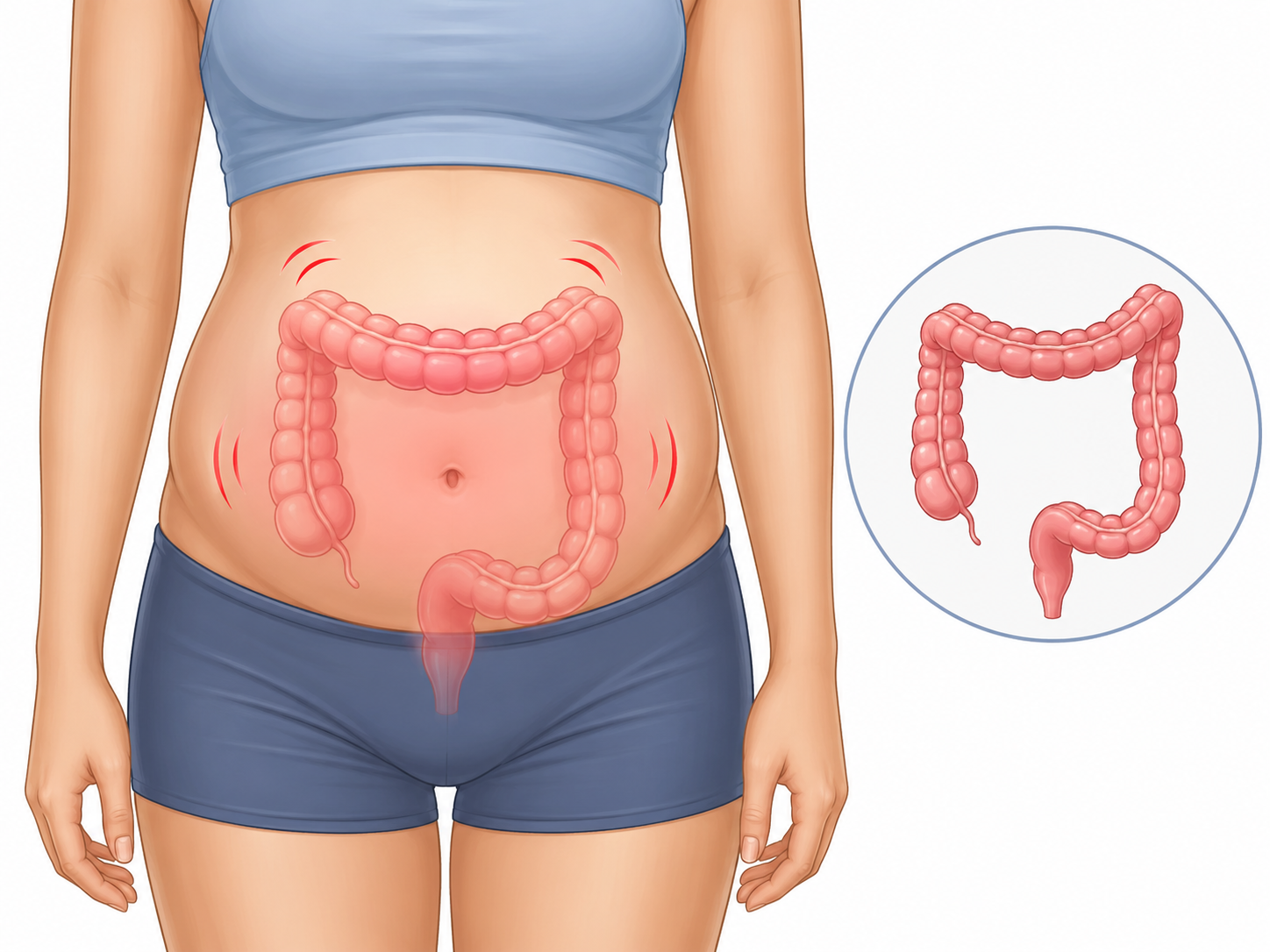
Irritable bowel syndrome, usually called IBS, is a common long-term condition that affects how the bowel works. It causes recurring abdominal pain together with changes in bowel habit, such as diarrhoea, constipation or both. Symptoms often come and go and may affect work, sleep, travel and social activities. IBS is diagnosed from the pattern of symptoms after checking for signs of other conditions.
Symptoms
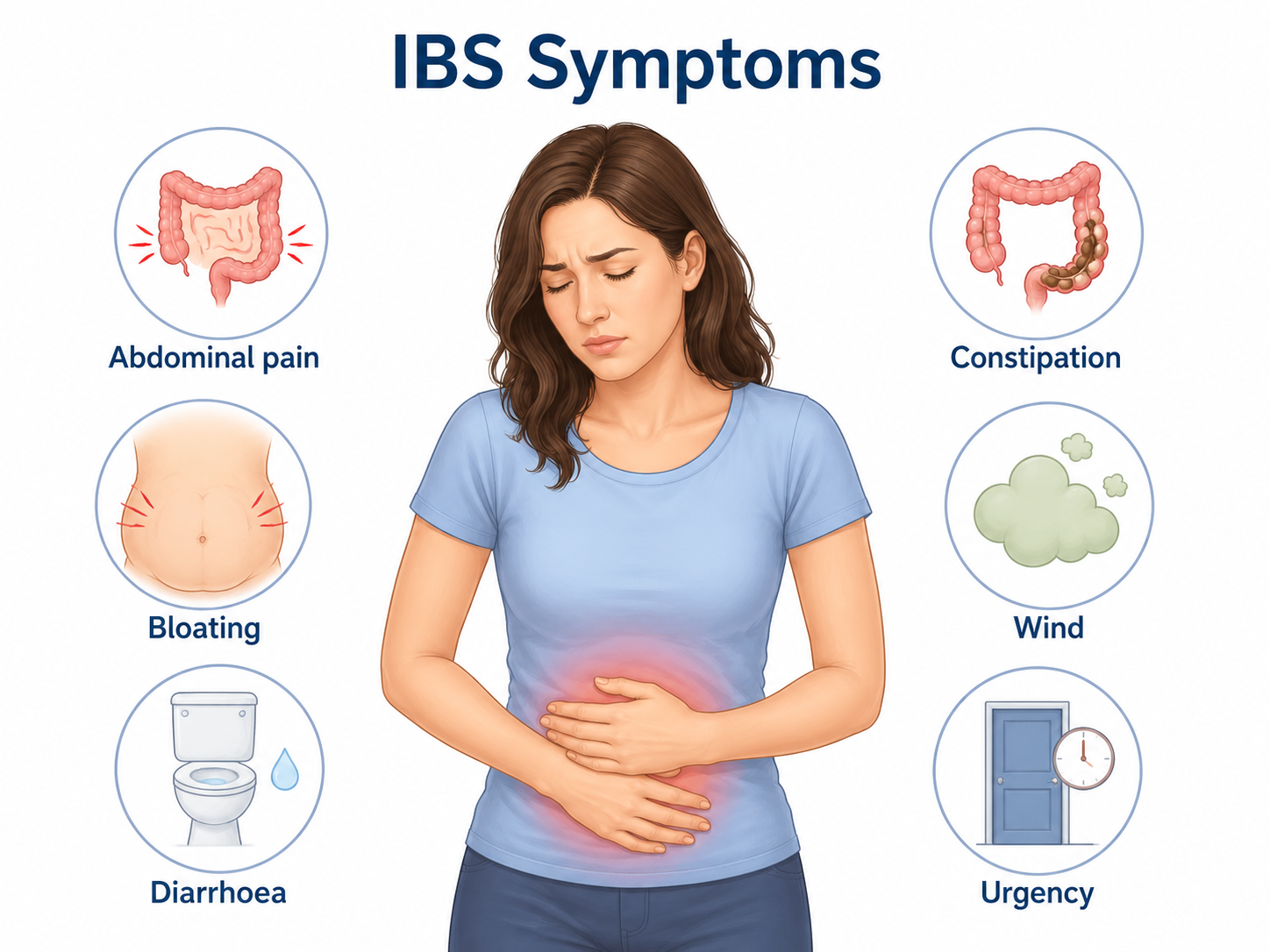
Common symptoms include:
Abdominal pain or cramps, often worse after eating and sometimes relieved after passing stool
Bloating or a swollen, tight feeling in the abdomen
Diarrhoea, urgency or difficulty reaching a toilet in time
Constipation, straining or feeling that the bowel has not emptied fully
Alternating between diarrhoea and constipation
Excess wind or mucus in the stool
Nausea, tiredness, backache or bladder symptoms
Symptoms may worsen after certain foods, caffeine, alcohol, stress or anxiety. Triggers differ between people.
Red flags
Arrange a prompt medical assessment if you have:
Blood in the stool, bloody diarrhoea or black stools
Unexplained weight loss
A persistent fever or night sweats
A hard lump or increasing swelling in the abdomen
Persistent vomiting or signs of dehydration
Unusual paleness, breathlessness or noticeable heartbeats
Symptoms that regularly wake you from sleep
New, rapidly worsening or clearly different bowel symptoms
A strong family history of bowel cancer, ovarian cancer, inflammatory bowel disease or coeliac disease
Severe sudden abdominal pain, collapse or heavy bleeding requires emergency medical care.
Self-care
Eat regular meals, take time to eat and avoid skipping meals.
Drink enough water, especially during diarrhoea.
Keep a diary of food, bowel movements, stress and symptoms to identify patterns.
Exercise regularly and make time for sleep and relaxation.
Adjust fibre according to your symptoms. Soluble fibre from oats or ispaghula may help, while grains like wheat or rice can worsen bloating in some people.
Reduce caffeine, alcohol, fizzy drinks and foods that are very fatty, spicy or heavily processed.
Avoid large amounts of sorbitol, which is found in some sugar-free sweets and drinks.
Change one part of your diet at a time. Avoid cutting out many foods without professional advice.
A low-FODMAP diet should be tried only with guidance from a dietitian or another appropriately trained professional.
Treatment
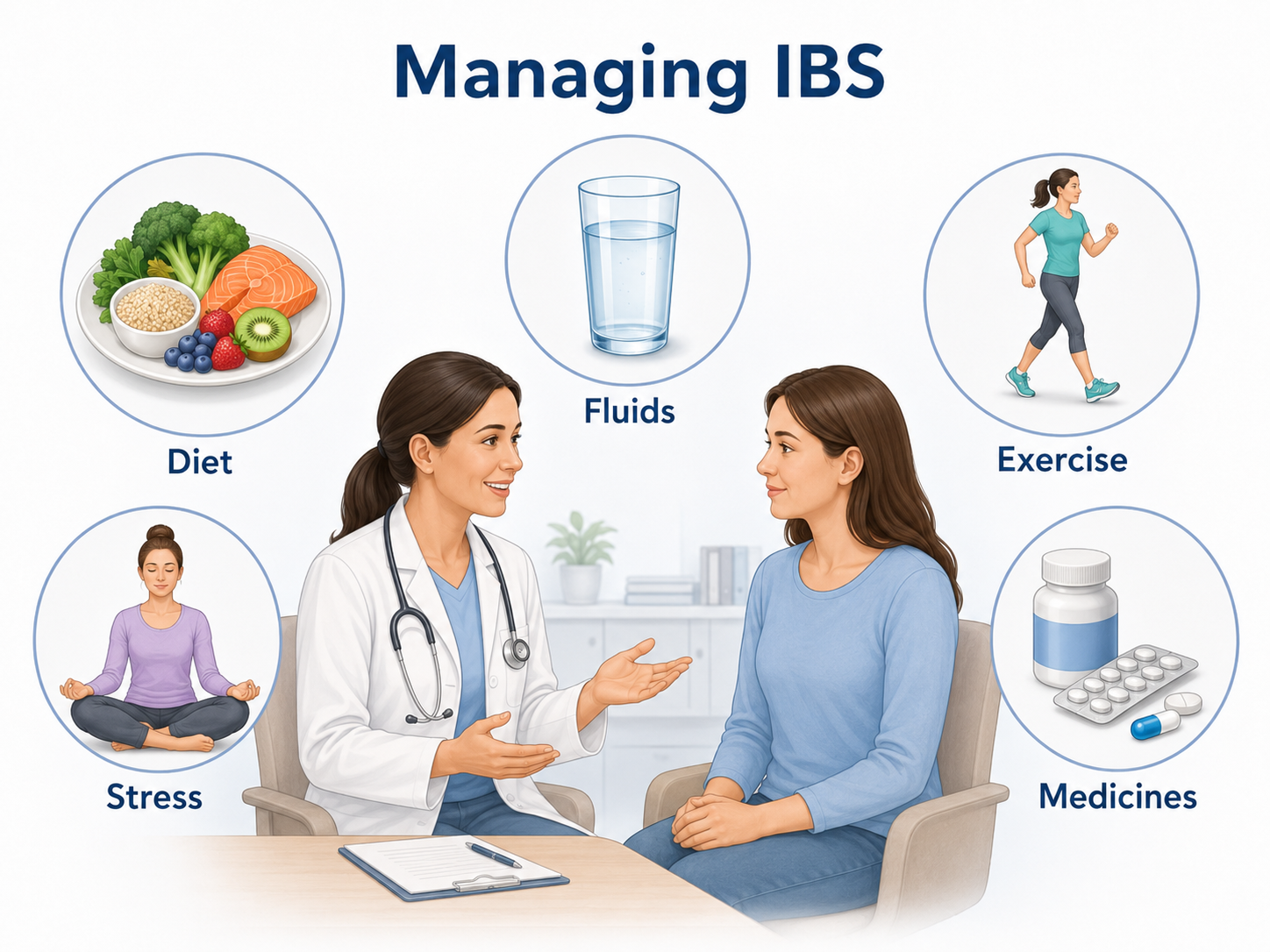
Treatment depends on the main symptoms. A doctor or pharmacist may suggest an antispasmodic or peppermint oil for cramps, a suitable laxative for constipation, or loperamide for diarrhoea. Lactulose can increase wind and bloating in some people with IBS.
If symptoms continue, a doctor may consider other prescription medicines that affect bowel movement or gut pain. A low-dose antidepressant is sometimes used for persistent bowel pain, even when the person does not have depression.
Tests may include a blood count, inflammatory markers, coeliac disease screening and sometimes a stool test for bowel inflammation. A colonoscopy is not required for everyone with typical IBS symptoms.
Questions to ask your doctor
Do my symptoms fit IBS, or could another condition be responsible?
Do I need blood or stool tests?
Is diarrhoea, constipation or pain my main IBS pattern?
Which dietary changes should I try first?
Would seeing a dietitian help?
Which medicine is suitable, and what side effects should I watch for?
Which changes should prompt me to return for another assessment?
Nepal pathway
In Nepal, start with your nearest health post, PHC, clinic, or hospital if symptoms are worrying, severe, worsening, or not improving. Take previous prescriptions, test reports, allergy information, and current medicines with you. Seek urgent care immediately if there are red flag symptoms.
Disclaimer
This is general health information only and does not replace medical advice, diagnosis, treatment, or emergency care.
Help improve this guide
Spotted an error or want to contact us about this guide? Send a message to the HamroSwasthya team.