
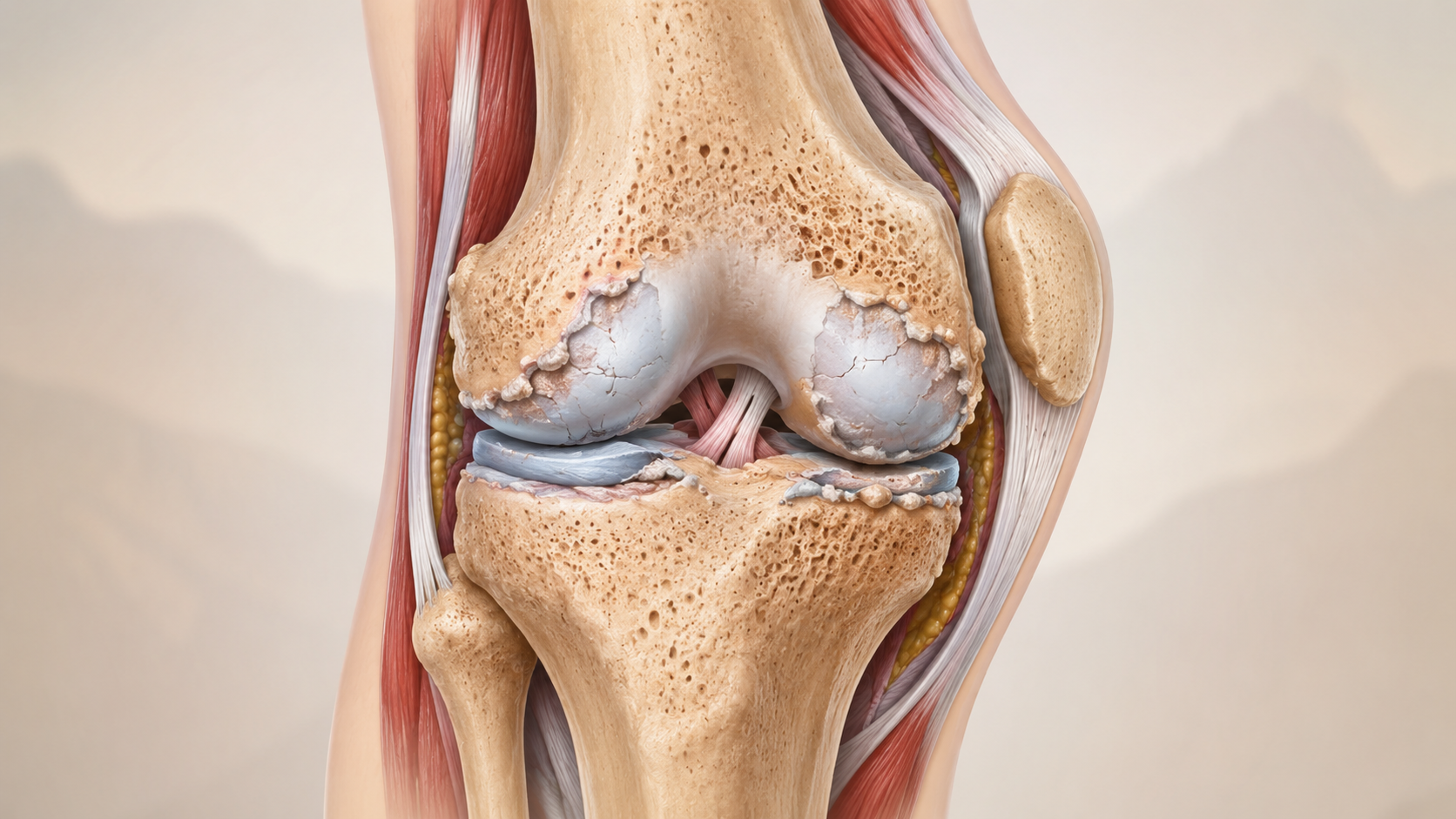
Osteoarthritis
Osteoarthritis is a long-term condition that affects the whole joint, including cartilage, bone and nearby tissues. It commonly affects the knees, hips, hands and spine, causing pain, stiffness and difficulty with movement. Symptoms may come and go and do not always steadily worsen. It is sometimes called "wear and tear", but it is more complex than simple ageing or bones rubbing together.
In Nepal, the term baath rog "बाथ रोग" is commonly used for many different problems causing joint pain, swelling or stiffness. It is not one specific diagnosis. Osteoarthritis is one type of arthritis and is different from rheumatoid arthritis, gout and other inflammatory joint conditions, which may need different treatment.
Symptoms
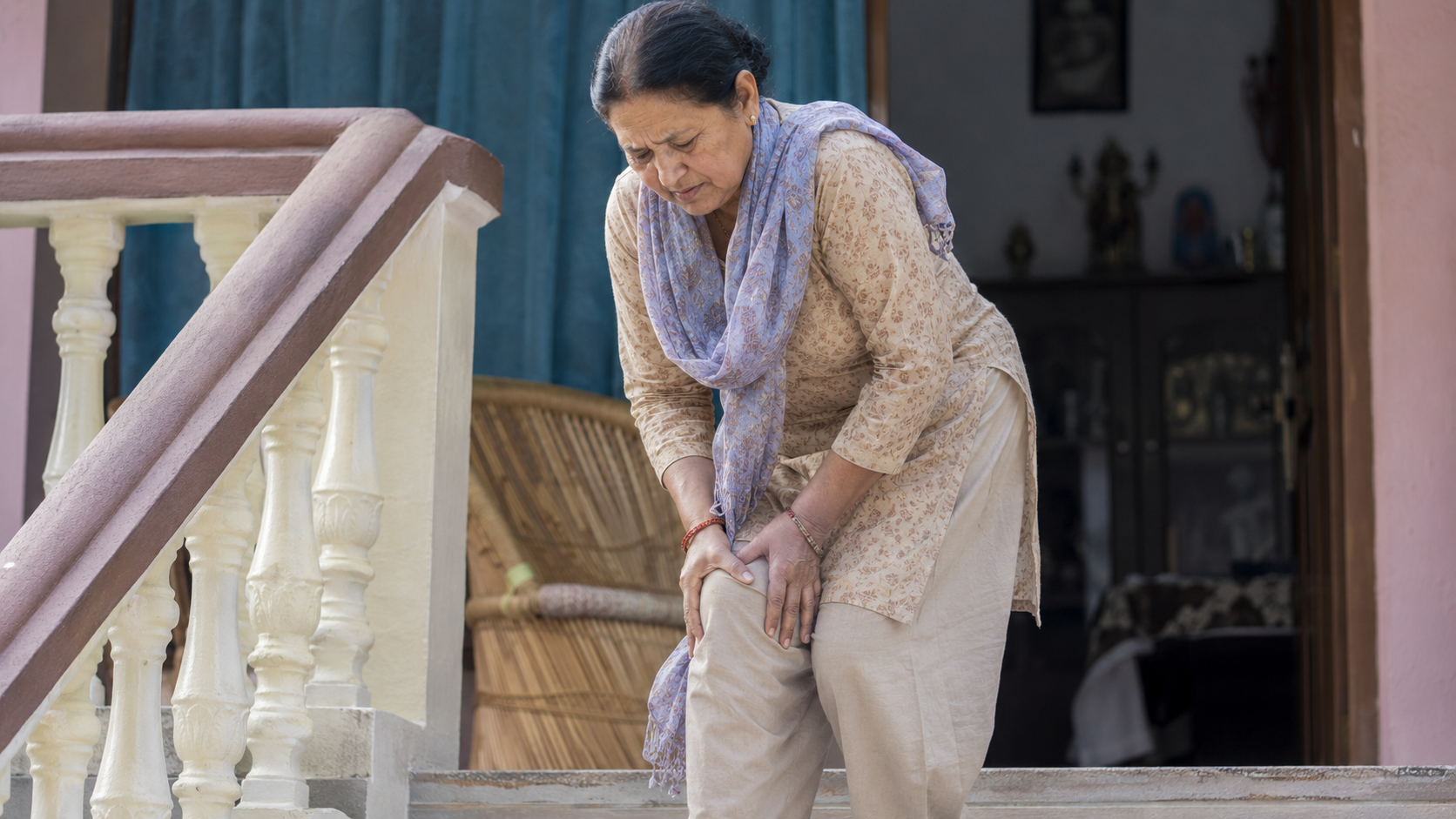
Symptoms vary according to the joint affected and may include:
Joint pain that becomes worse with movement or activity
Stiffness after resting or waking, usually lasting less than 30 minutes
Reduced movement or difficulty with everyday activities
Tenderness or mild swelling around the joint
A grating, clicking or crackling feeling during movement
Joints becoming larger, knobbly or gradually changing shape
Weakness of the muscles around the joint
Symptoms that temporarily become worse, sometimes called a flare
Knee osteoarthritis may make walking or using stairs difficult. Hip osteoarthritis often causes groin or outer-hip pain. Hand osteoarthritis commonly affects the base of the thumb and finger joints.
Red flags
Seek urgent medical assessment if you have:
A suddenly hot, red and very swollen joint, especially with fever or feeling very unwell
Severe joint pain after a fall, accident or other injury
Inability to move the joint, stand or bear weight
Rapidly worsening pain, swelling or joint deformity
Persistent severe pain at rest or during the night
Unexplained weight loss or marked general weakness
New numbness, weakness or loss of bladder or bowel control with neck or back symptoms
These features are not typical of uncomplicated osteoarthritis and may suggest infection, fracture, nerve compression, inflammatory arthritis or another serious cause.
Self-care
Keep moving and follow regular strengthening and aerobic exercises suited to the affected joint. Pain may increase slightly when exercise begins, but consistent exercise usually improves pain and function over time.
Balance activity with short periods of rest rather than avoiding movement completely.
If you are overweight, gradual weight loss can reduce pain and improve movement, particularly for knee and hip symptoms.
Wear supportive footwear and consider a walking stick or other aid if it improves safety and mobility.
Heat or a wrapped cold pack may provide temporary relief.
Avoid unproven supplements or repeated painkiller use without professional advice.
Seek review if symptoms are stopping you from sleeping, working or completing normal daily activities.
Treatment
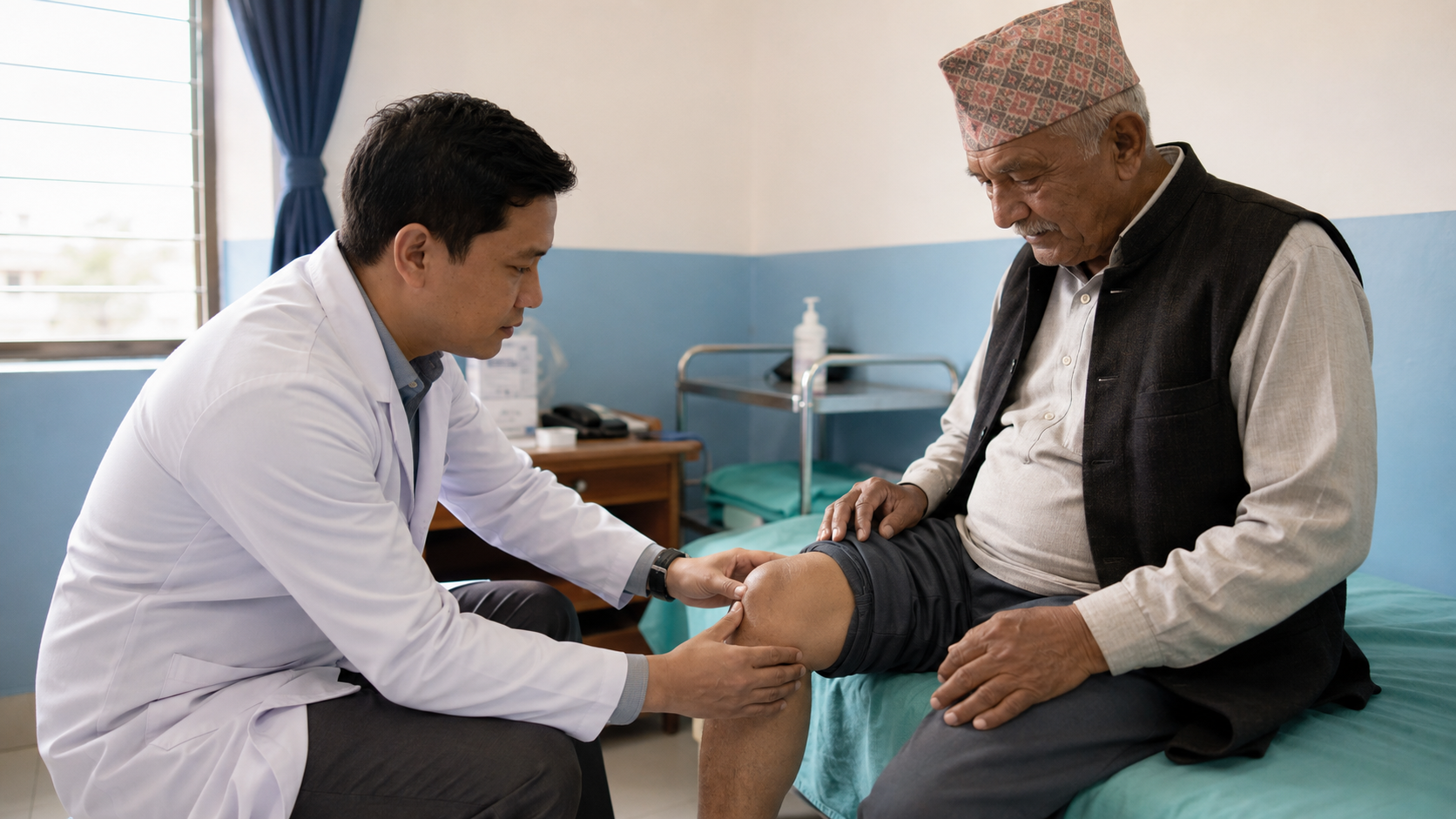
Osteoarthritis is usually diagnosed from the symptoms and examination. X-rays or scans are not routinely required unless the symptoms are unusual or another diagnosis is suspected.
The main treatments are personalised therapeutic exercise, information and support, and weight management where appropriate. Physiotherapy may help with strength, movement and confidence.
When medicine is needed, a clinician may recommend an anti-inflammatory gel, particularly for knee osteoarthritis. Anti-inflammatory tablets are not suitable for everyone because they may affect the stomach, kidneys, liver or heart. Joint steroid injections may provide short-term relief in selected cases. Joint replacement may be considered when severe pain or reduced function is substantially affecting daily life despite suitable non-surgical treatment.
Questions to ask your doctor
Is this osteoarthritis or another type of joint problem?
Do I need an X-ray, blood test or other investigation?
Which exercises are safest and most useful for my joint?
Would physiotherapy or a walking aid help?
Which pain-relief options are safe with my other health conditions?
Could any of my medicines be worsening my joint symptoms?
When should I be reviewed again?
At what point should joint injection or replacement surgery be considered?
Nepal pathway
In Nepal, start with your nearest health post, PHC, clinic, or hospital if symptoms are worrying, severe, worsening, or not improving. Take previous prescriptions, test reports, allergy information, and current medicines with you. Seek urgent care immediately if there are red flag symptoms.
Disclaimer
This is general health information only and does not replace medical advice, diagnosis, treatment, or emergency care.
Help improve this guide
Spotted an error or want to contact us about this guide? Send a message to the HamroSwasthya team.