
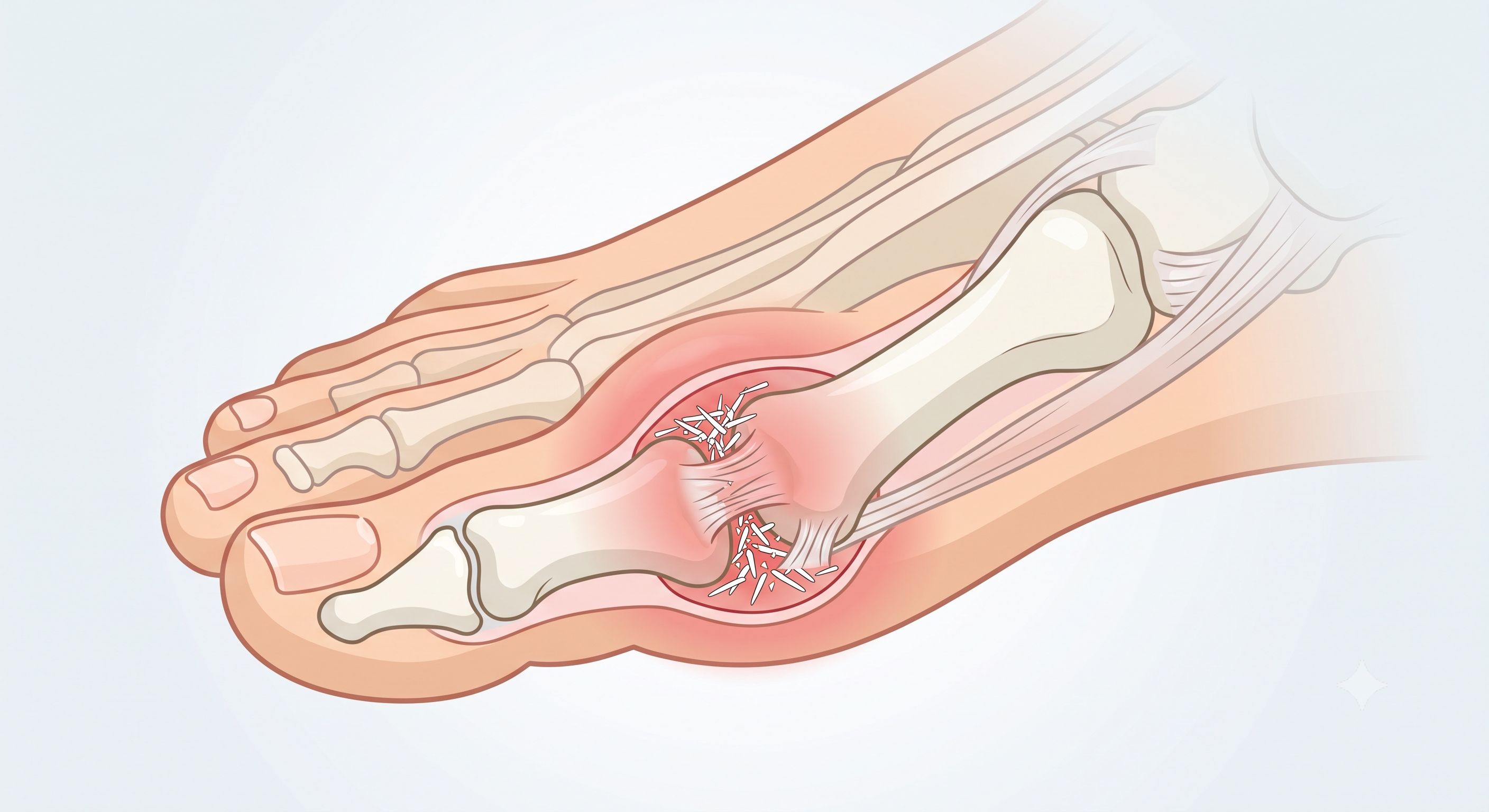
Gout
In Nepal, most people know this problem as "uric acid." In fact, uric acid is a chemical found in the blood. When its amount increases and tiny crystals begin to form in the joints, it causes sudden severe pain, swelling, redness, and heat. This condition is specifically called gout.
Gout most often appears in the big toe, but it can also occur in the ankle, knee, wrist, finger, or elbow.
Gout is not just a short-term pain. If not managed properly, urate crystals can accumulate over time, causing repeated attacks, forming a lump like a lump around the joint, and causing long-term joint damage.
Symptoms
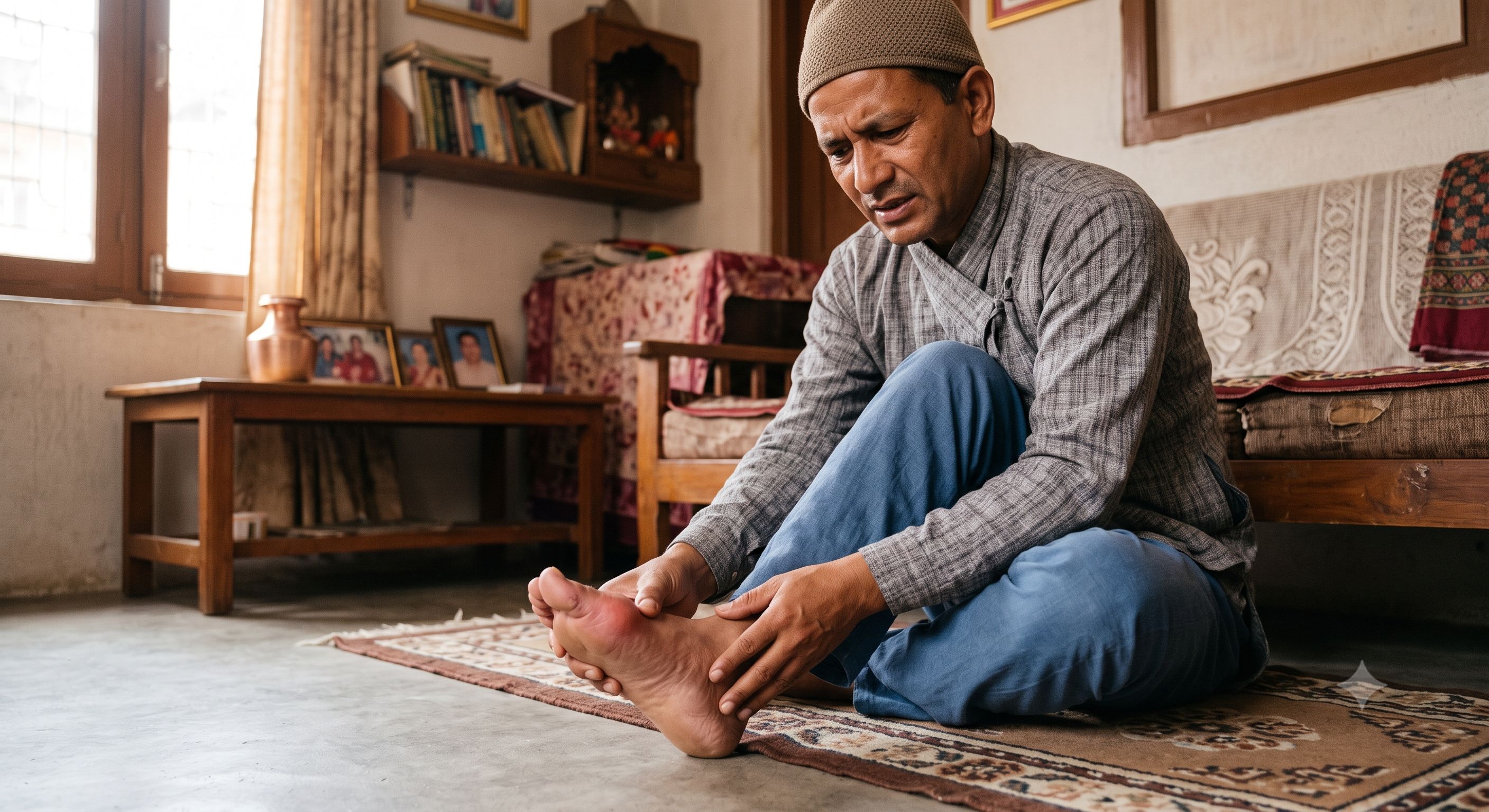
Symptoms of a gout attack may include:
Sudden severe pain in one or more joints
Swelling, redness, heat, or shiny skin over the joint
Extreme tenderness, even from light touch or bedsheets
Pain that often starts at night or early morning
Difficulty walking or using the affected joint
Attacks that settle over days to weeks, then may return later
Firm lumps under the skin near joints, called tophi, in long-standing gout
Gout can look similar to infection inside a joint, injury, or other types of arthritis.
Red flags
Seek urgent medical advice or go to the nearest hospital if you have:
Sudden painful swollen joint with fever, chills, or feeling very unwell
Joint pain that is rapidly worsening
Nausea, inability to eat, confusion, collapse, or severe weakness
A hot, red, swollen joint after injury, surgery, injection, or wound near the joint
Diabetes, kidney disease, weakened immunity, or a prosthetic joint with new joint swelling
Severe pain with inability to move or bear weight
New joint swelling in a child
These symptoms may suggest septic arthritis or another serious condition, which needs urgent assessment. NHS advice warns that sudden joint pain and swelling with high temperature, worsening pain, or feeling sick may indicate infection inside the joint.
Self-care
During a suspected gout flare:
Rest and raise the affected joint if possible.
Keep the joint cool; an ice pack wrapped in cloth may help for short periods.
Drink enough fluids, unless you have been told to restrict fluids.
Avoid alcohol during a flare, especially beer and spirits.
Avoid heavy pressure on the painful joint.
Ask a pharmacist or doctor what pain relief is safe for you.
For long-term prevention:
Maintain a healthy weight if overweight, but avoid crash dieting or fasting.
Reduce alcohol if it triggers attacks.
Limit sugary drinks and large amounts of high-purine foods if they worsen gout.
Manage blood pressure, diabetes, kidney disease, and cholesterol.
Do not stop prescribed gout medicines during a flare unless advised by a clinician.
Treatment
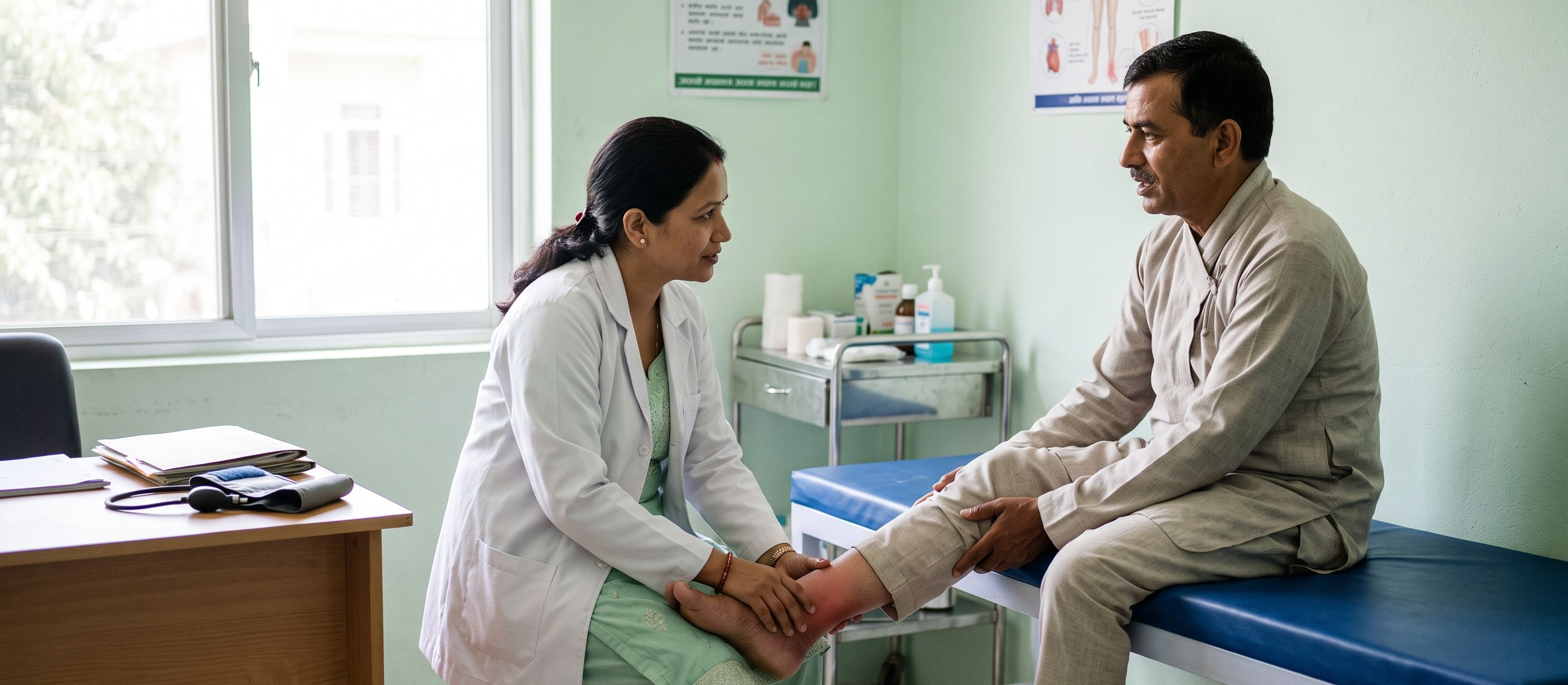
Treatment has two aims: treating painful flares and reducing future attacks.
A doctor may treat a gout flare with an anti-inflammatory medicine, colchicine, or a steroid, depending on your age, kidney function, stomach risk, other illnesses, and regular medicines.
For recurrent gout, tophi, kidney stones, chronic gouty arthritis, or high-risk patients, long-term urate-lowering treatment may be offered. Medicines such as allopurinol or febuxostat lower urate levels and help dissolve crystals over time. NICE recommends aiming for a serum urate target below 360 micromol/L, with a lower target considered in some people with severe gout.
Do not start, stop, or change gout medicines without medical advice. Some medicines need blood tests and careful dose adjustment.
Questions to ask your doctor
Is this definitely gout, or could it be joint infection or another type of arthritis?
Do I need a blood urate test, joint fluid test, X-ray, ultrasound, or other imaging?
What medicine is safest for this flare, considering my kidneys, stomach, heart, and regular medicines?
Should I start long-term urate-lowering treatment?
What urate level should I aim for?
How often should my blood tests be checked?
Should I continue gout medicine during a flare?
Could any of my medicines be increasing my urate level?
What diet, alcohol, weight, or lifestyle changes would help me most?
When should I seek urgent help for a painful swollen joint?
Nepal pathway
In Nepal, start with your nearest health post, PHC, clinic, or hospital if symptoms are worrying, severe, worsening, or not improving. Take previous prescriptions, test reports, allergy information, and current medicines with you. Seek urgent care immediately if there are red flag symptoms.
Disclaimer
This is general health information only and does not replace medical advice, diagnosis, treatment, or emergency care.
Help improve this guide
Spotted an error or want to contact us about this guide? Send a message to the HamroSwasthya team.