
Shingles
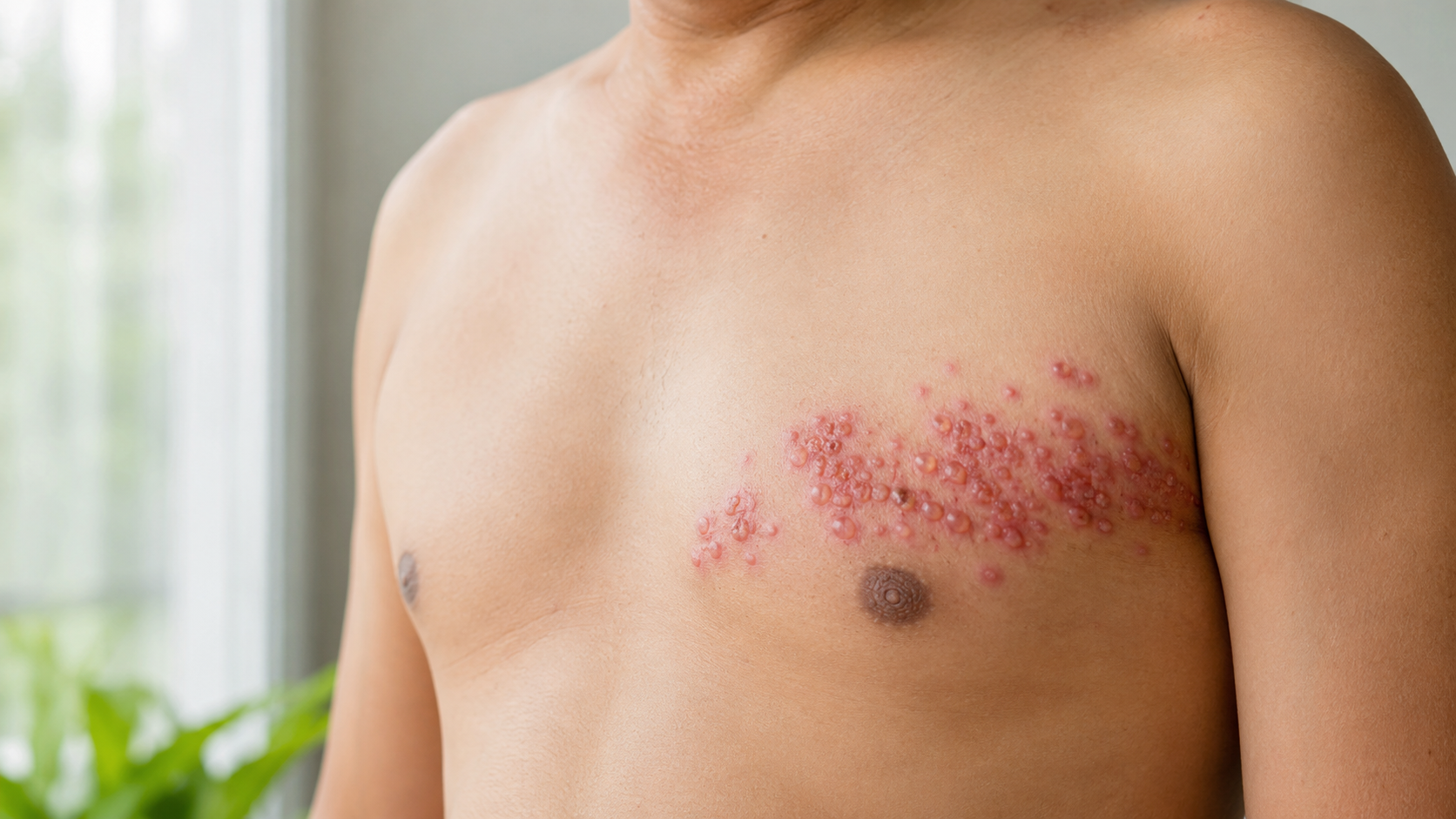
Shingles-medically known as herpes zoster and commonly referred to as "Janai Khatira" in Nepal-is a painful skin condition caused by the reactivation of the virus that causes chickenpox. Even after chickenpox clears, this virus remains dormant in the body's nerve tissue and can reactivate many years later. It is particularly common among the elderly and individuals with weakened immune systems.
This condition typically causes a painful, burning rash along with fluid-filled blisters, appearing mostly on one side of the body (especially the chest, back, abdomen, or face). While it is common in Nepal to loosely refer to various types of skin infections as "daad" (ringworm), shingles is not a common ringworm caused by fungus. Because it is caused by a virus, its treatment method is entirely different.
Symptoms
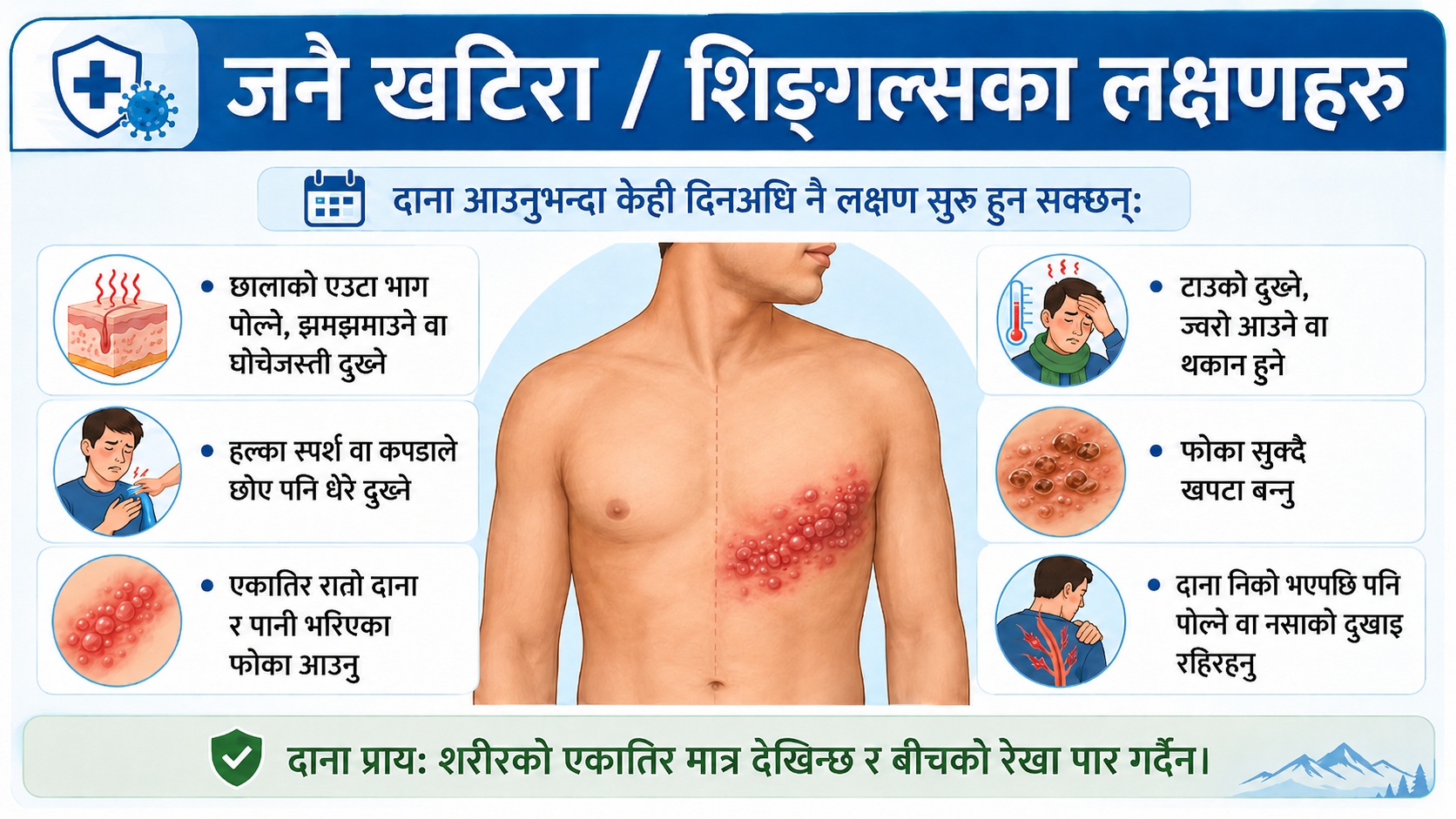
Symptoms may begin several days before the rash appears and can include:
Burning, tingling, itching or stabbing pain in one area of skin
Skin that feels unusually sensitive or painful to light touch
A red or darker patch of skin followed by grouped fluid-filled blisters
A rash forming a band on one side of the chest, back, abdomen or face
Headache, fever, tiredness or feeling generally unwell
Blisters that burst, dry and form scabs
Pain that continues after the rash has healed
Shingles usually follows the area supplied by one nerve and normally does not cross the middle of the body. Persistent nerve pain after the rash is called post-herpetic neuralgia and is the most common complication.
Red flags
Seek urgent medical assessment if:
The rash is on the forehead, nose, eyelid or around the eye
There is eye pain, redness, light sensitivity or any change in vision
Blisters are inside or around the ear, with ear pain, hearing loss, dizziness or facial weakness
The rash is widespread or affects several areas of the body
There is severe headache, confusion, neck stiffness, weakness, seizure or difficulty waking
The rash becomes increasingly red, hot, swollen, painful or produces pus
The person is pregnant, has severely weakened immunity, or is seriously unwell
A child or teenager develops suspected shingles
Shingles involving the eye can threaten vision, while facial weakness with an ear rash may indicate Ramsay Hunt syndrome. These require prompt treatment.
Self-care
Seek medical advice early, particularly if the rash started within the last few days.
Keep the rash clean, dry and lightly covered.
Wear loose clothing and use a cool compress for comfort.
Avoid scratching or bursting the blisters.
Wash your hands after touching the affected area.
Do not share towels, clothing or bedding.
Use suitable pain relief only as advised by a pharmacist or clinician.
Avoid placing adhesive dressings directly onto the blisters.
Until every blister has dried and formed a scab, avoid direct skin contact with pregnant people who have not had chickenpox, newborn babies, and people with weakened immunity.
Treatment
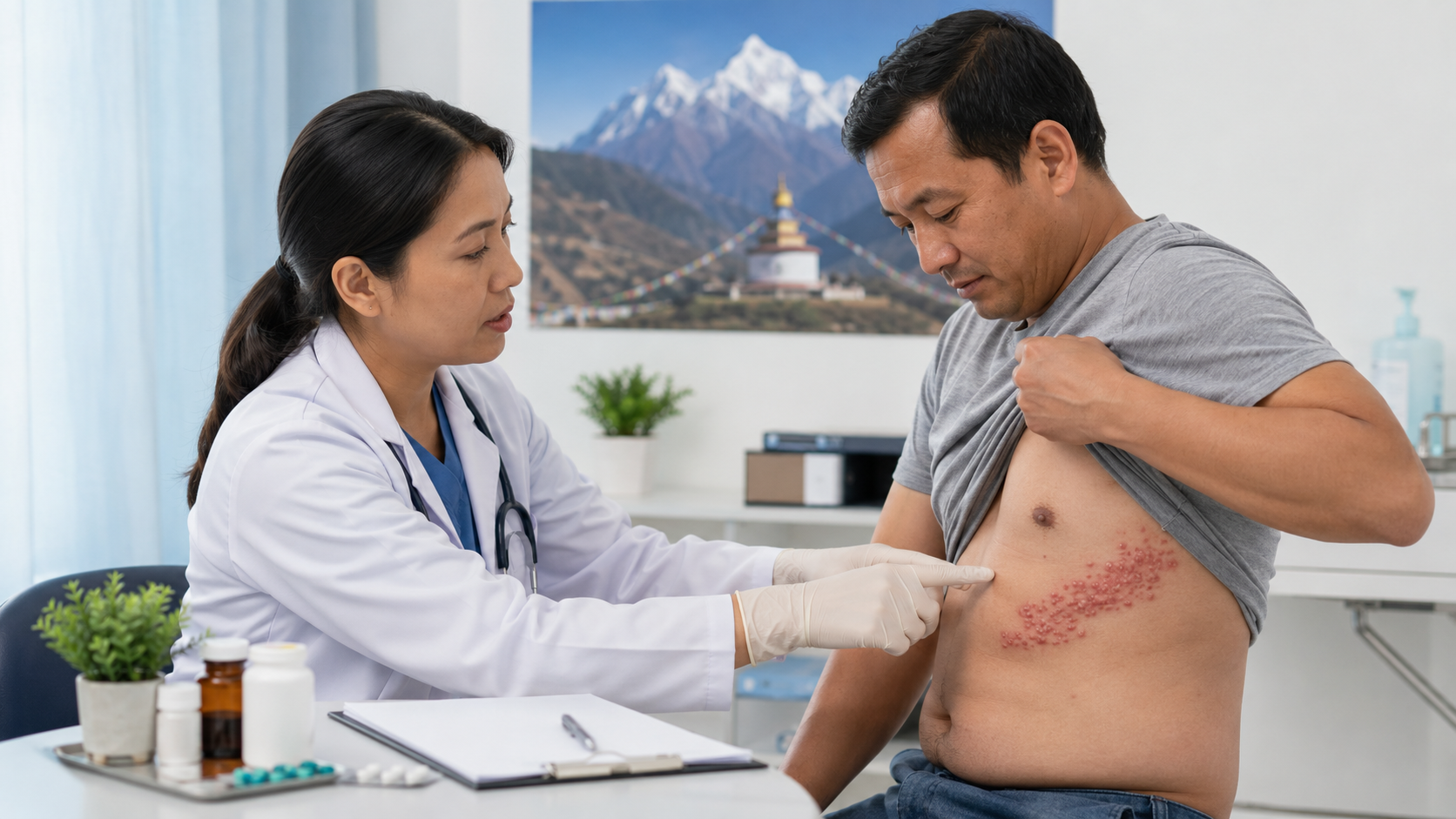
A clinician may prescribe an antiviral medicine, particularly for older adults, severe pain or rash, weakened immunity, or shingles affecting the face or eye. Antiviral treatment is most effective when started early, usually within the first few days, but may still be considered later in higher-risk cases or while new blisters are forming.
Pain treatment depends on severity and may include ordinary pain relief or medicines used for nerve pain. Antibiotics do not treat shingles but may be needed if the skin develops a bacterial infection. Long-lasting pain after the rash has healed should be reviewed, as specific treatment for post-herpetic neuralgia may help.
A shingles vaccine can reduce the likelihood and severity of future shingles. Availability and eligibility vary, so ask a local health professional about vaccination.
Questions to ask your doctor
Is this shingles or another type of rash?
Does the location of the rash put my eye, ear or facial nerve at risk?
Would antiviral treatment help me?
Which pain relief is safe with my other conditions and medicines?
How should I cover and care for the rash?
How long could I pass chickenpox to a vulnerable person?
What should I do if the pain continues after the rash heals?
Should I consider shingles vaccination in the future?
Nepal pathway
In Nepal, start with your nearest health post, PHC, clinic, or hospital if symptoms are worrying, severe, worsening, or not improving. Take previous prescriptions, test reports, allergy information, and current medicines with you. Seek urgent care immediately if there are red flag symptoms.
Disclaimer
This is general health information only and does not replace medical advice, diagnosis, treatment, or emergency care.
Help improve this guide
Spotted an error or want to contact us about this guide? Send a message to the HamroSwasthya team.