
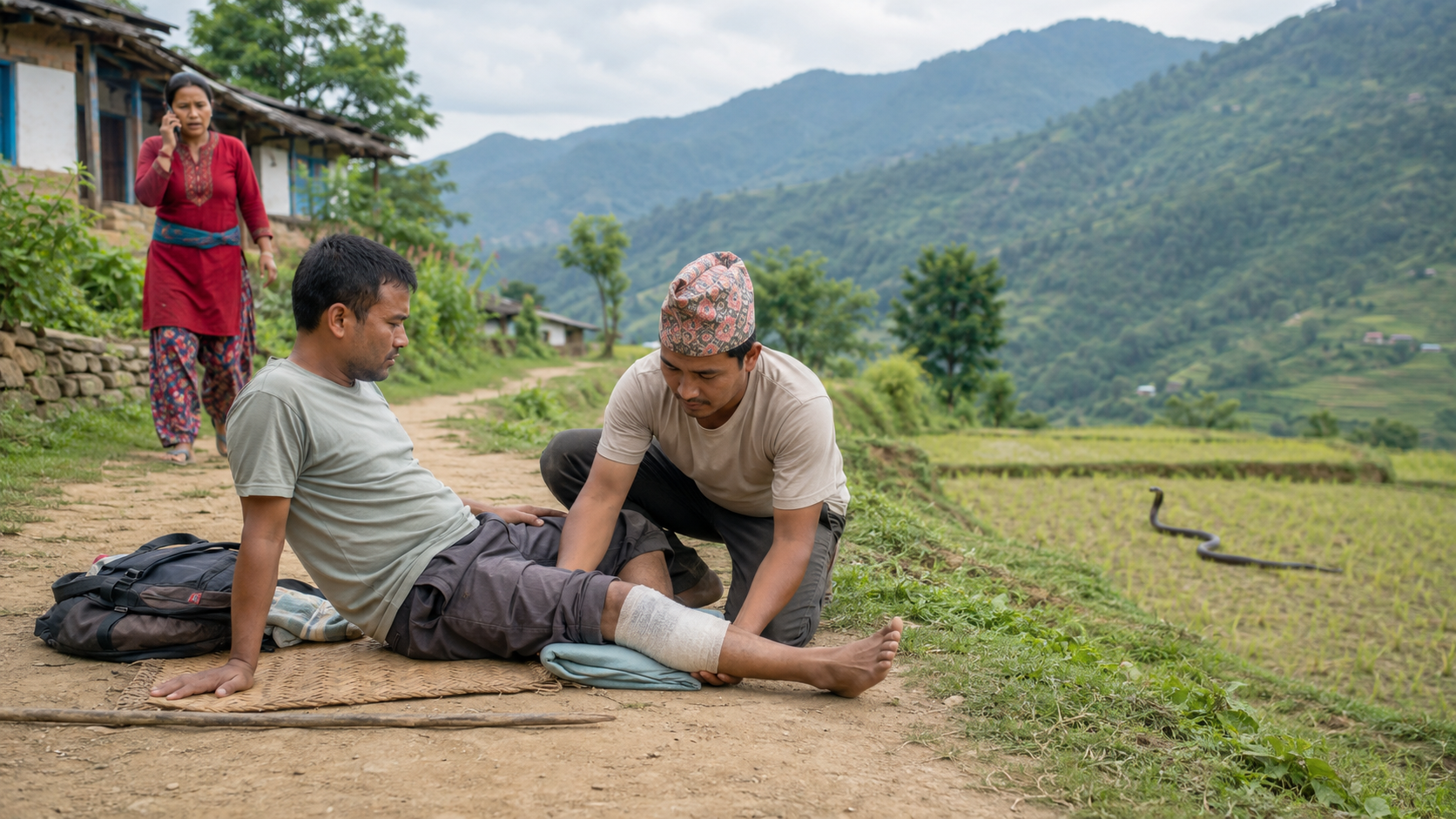
Snake bites
A snakebite should be treated as a medical emergency in Nepal, even when there is little pain, no swelling, or the snake appears harmless. Venom effects may be delayed, and it is often difficult to identify the snake reliably. Keep the person still and arrange immediate transport to the nearest hospital or recognised snakebite treatment centre. Do not wait for symptoms to develop.
Venomous bites can affect breathing and the nervous system, damage blood and tissues, cause uncontrolled bleeding, or injure the kidneys. Snakebite particularly affects rural communities, agricultural workers, women and children in Nepal.
Red flags
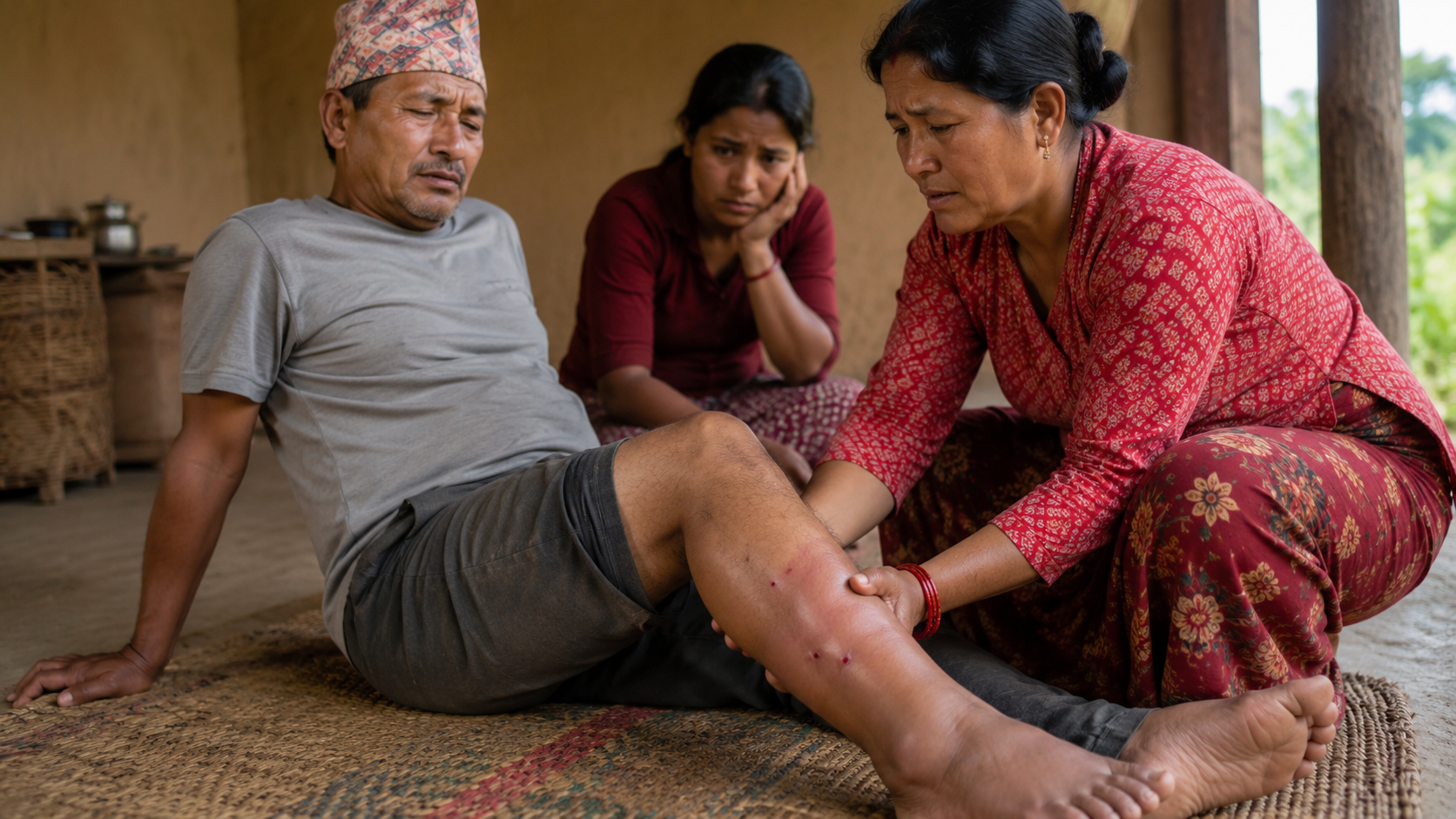
Go to hospital immediately after every suspected snakebite. Signs of severe envenoming include:
Difficulty breathing, weak breathing or gasping
Drooping eyelids or difficulty swallowing
Rapidly increasing swelling, blistering or tissue damage
Uncontrolled bleeding or blood in urine, vomit or stool
Severe weakness, paralysis, confusion or extreme drowsiness
Collapse, seizure or loss of consciousness
Passing very little urine or developing very dark urine
Do not make the person walk. Use 102 where ambulance services are available, or arrange the fastest safe transport.
Symptoms
Possible signs after a snakebite include:
Fang marks, scratches or bleeding at the bite site
Pain or swelling that may gradually spread
Blisters, bruising or darkening of the skin
Nausea, vomiting, abdominal pain or severe weakness
Drooping eyelids, blurred or double vision
Difficulty speaking, swallowing or holding the head upright
Increasing drowsiness, weakness or paralysis
Bleeding from the gums, nose, wound or injection sites
Blood in vomit, urine or stool
Very dark urine or reduced urine output
Difficulty breathing, collapse, seizure or unconsciousness
Serious poisoning can occur without marked pain or swelling, particularly after bites from snakes whose venom mainly affects the nervous system.
Self-care
While arranging urgent transport:
Move away from the snake and keep the person calm.
Lay or sit them down and keep them as still as possible.
Keep the bitten limb in a comfortable position and support it with a simple splint.
Remove rings, bangles, watches, anklets or tight clothing before swelling develops.
Monitor breathing and alertness during the journey.
Take a photograph of the snake only from a safe distance and only if this causes no delay.
Do not:
Tie a tight rope, cloth or tourniquet around the limb.
Cut, burn, squeeze or suck the bite.
Apply ice, chemicals, mud, oil, herbs or a "snake stone".
Give alcohol, electric shocks or unprescribed medicines.
Delay hospital care for traditional treatment or rituals.
Attempt to catch, handle or kill the snake.
Incorrect first aid can worsen tissue damage, bleeding and delay life-saving treatment.
Treatment
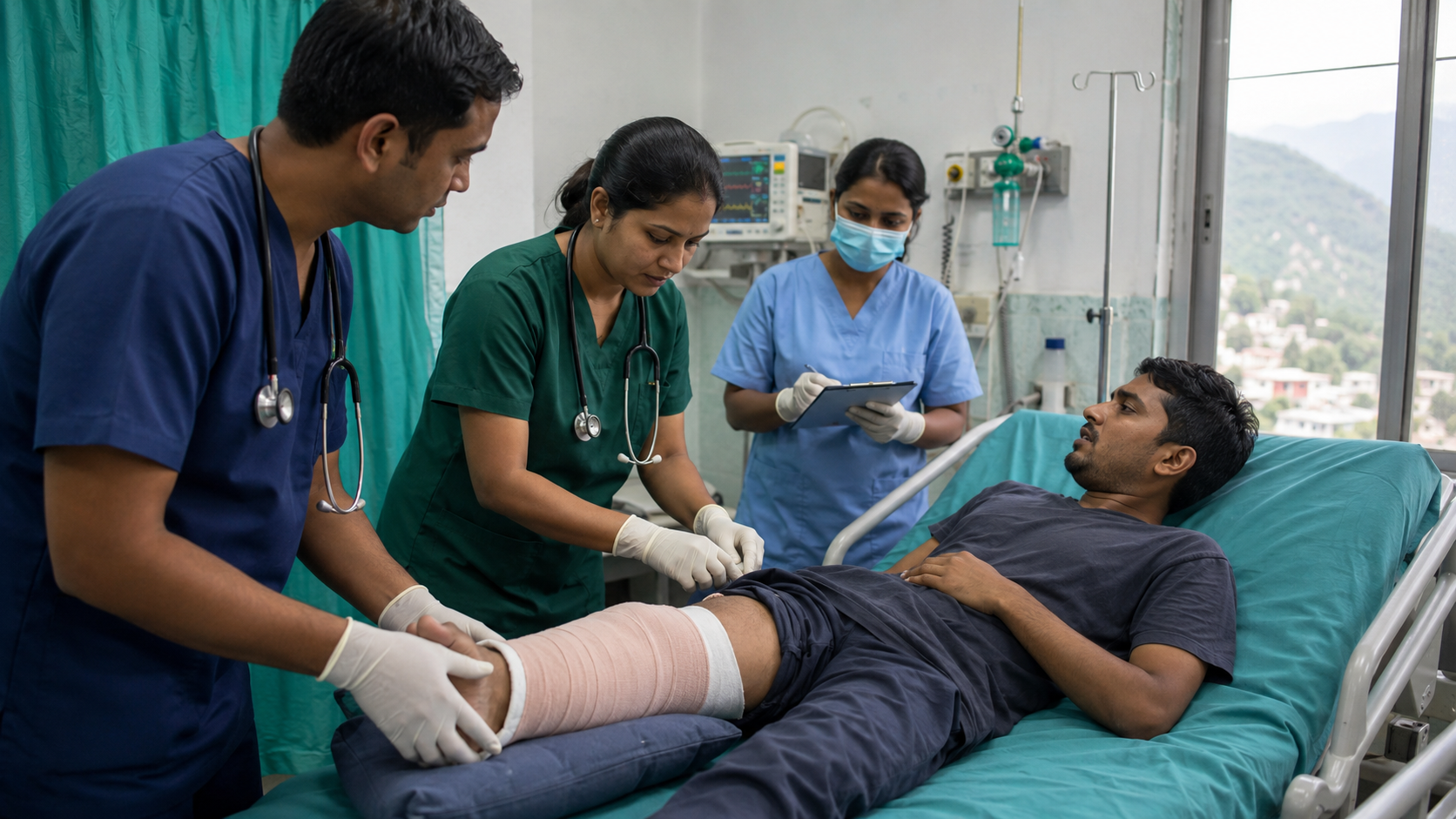
At hospital, clinicians may monitor breathing, oxygen level, blood pressure, consciousness, swelling and muscle strength. Blood and urine tests may be used to assess clotting, bleeding, muscle damage and kidney function.
Antivenom is the only specific treatment that can prevent or reverse many serious effects of snake venom. It is given when there is clinical evidence of envenoming-not automatically after every bite-and must be administered where severe allergic reactions and breathing problems can be treated. Some patients also need oxygen, assisted ventilation, intravenous fluids, wound care or treatment for kidney failure.
Questions to ask your doctor
Is there evidence that venom has entered the body?
How long will observation be needed?
Are blood-clotting or kidney tests abnormal?
Is antivenom required, and what reactions will be monitored?
Has the bite damaged the skin or muscle?
Which symptoms should prompt an immediate return after discharge?
Where is the nearest recognised snakebite treatment centre?
Nepal pathway
In Nepal, start with your nearest health post, PHC, clinic, or hospital if symptoms are worrying, severe, worsening, or not improving. Take previous prescriptions, test reports, allergy information, and current medicines with you. Seek urgent care immediately if there are red flag symptoms.
Disclaimer
This is general health information only and does not replace medical advice, diagnosis, treatment, or emergency care.
Further information
For more information and Nepal's national protocol, please visit the following link:
Help improve this guide
Spotted an error or want to contact us about this guide? Send a message to the HamroSwasthya team.