
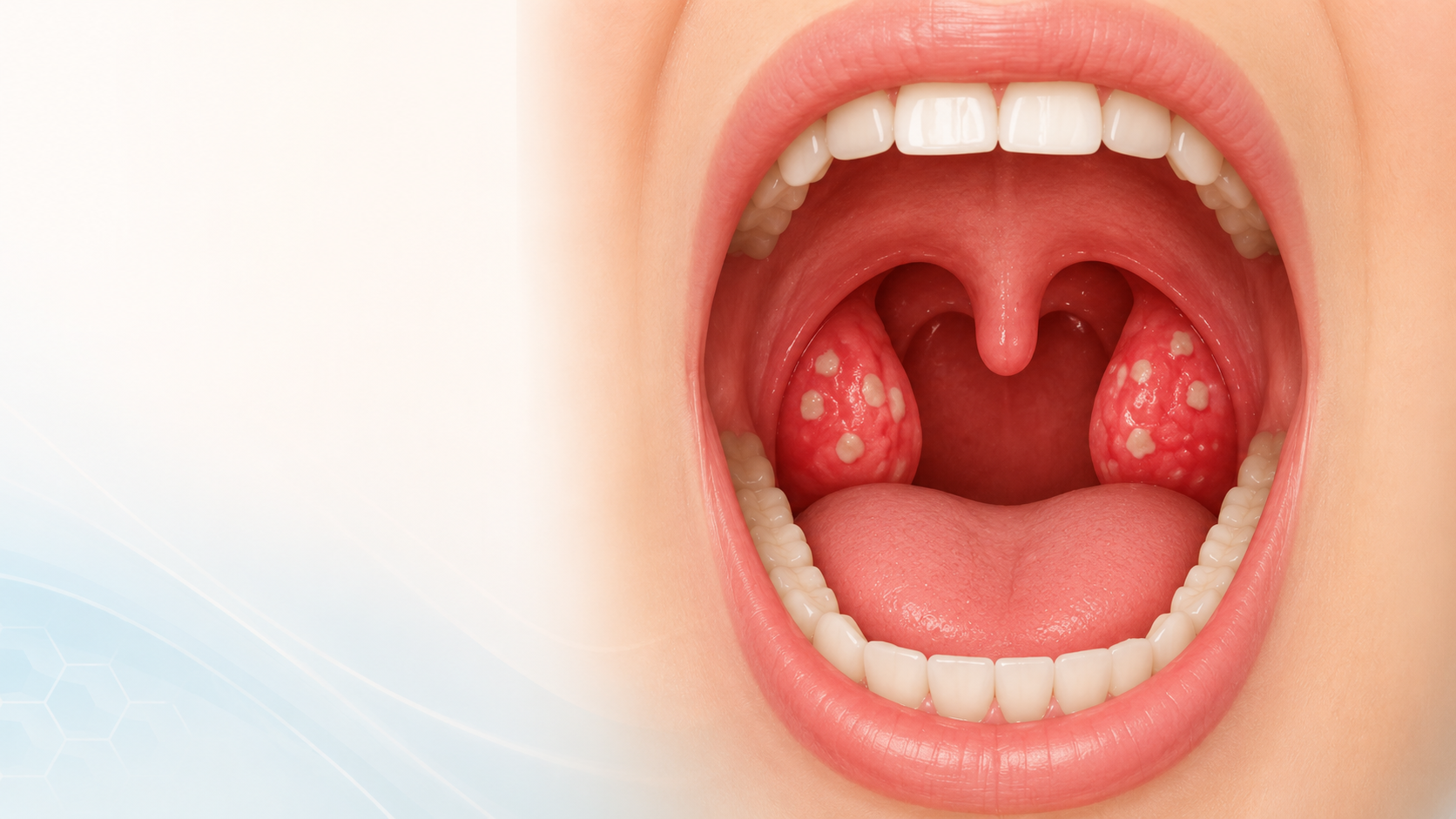
Tonsillitis
Tonsillitis is inflammation or infection of the tonsils, the two small glands at the back of the throat. It can occur as a short-term illness, often called acute tonsillitis, or it can keep returning in some people.
Most episodes are caused by viruses and improve within about a week. Some are caused by bacteria, including streptococcal infection, and may need medical assessment. People with severe or recurrent tonsillitis may occasionally need specialist review or tonsil-removal surgery.
Symptoms

Common symptoms include:
Sore throat
Pain or difficulty when swallowing
Red, swollen tonsils
White patches or pus on the tonsils
Headache
Cough
Earache
Tiredness
Swollen and painful glands in the neck
Bad breath
Feeling sick or vomiting
Symptoms can resemble other illnesses, including viral sore throat, Mononucleosis - glandular fever, COVID-19, flu, scarlet fever, or a throat abscess.
Red flags
Go to the nearest hospital urgently, or call Ambulance Nepal on 102 where available, if you or your child has:
Severe difficulty swallowing saliva or drooling
Unable to drink enough fluids
Severe throat pain that is rapidly getting worse
Swelling inside the mouth or throat
Difficulty opening the mouth
Difficulty speaking, muffled voice, or "hot potato" voice
Severe neck swelling, neck stiffness, or inability to move the neck normally
Severe drowsiness, confusion, collapse, or signs of dehydration
Blue lips, pale skin, or severe breathing difficulty
These symptoms may indicate a serious throat infection, dehydration, or a possible abscess around the tonsil, sometimes called quinsy.
Self-care
For mild symptoms:
Rest and drink plenty of fluids.
Cool drinks, ice lollies, or soft foods may soothe the throat.
Use paracetamol or ibuprofen if suitable for you or your child. Follow the packet instructions or ask a pharmacist.
Adults and older children who can gargle safely may try warm salty water gargles. Do not give salt-water gargles to young children.
Avoid smoking, second-hand smoke, and very spicy foods if they worsen symptoms.
Wash hands regularly, cover coughs and sneezes, and avoid sharing cups or cutlery.
Do not give aspirin to children under 16 years old.
Treatment

Most episodes of tonsillitis are caused by viruses and get better without antibiotics.. Antibiotics do not help viral tonsillitis and are not needed for everyone with a sore throat.
A doctor may consider antibiotics if bacterial infection is more likely, based on symptoms, examination, and sometimes clinical scoring tools such as FeverPAIN or Centor criteria. Tests such as a throat swab or blood test may be needed if symptoms are severe, unusual, or not improving.
If tonsillitis is severe and keeps returning, a specialist may discuss tonsil removal surgery, but this is not needed for most people.
Do not use leftover antibiotics or take antibiotics prescribed for someone else.
Questions to ask your doctor
- Is this likely to be viral or bacterial tonsillitis?
- Do I or my child need antibiotics?
- Is there a risk of glandular fever, scarlet fever, or another infection?
- Do we need a throat swab or blood test?
- What can be used safely for pain and fever?
- How can I prevent dehydration?
- Which symptoms mean we should go to hospital urgently?
- How long should symptoms take to improve?
- Could repeated tonsillitis need referral to an ear, nose, and throat specialist?
Nepal pathway
In Nepal, start with your nearest health post, PHC, clinic, or hospital if symptoms are worrying, severe, worsening, or not improving. Take previous prescriptions, test reports, allergy information, and current medicines with you. Seek urgent care immediately if there are red flag symptoms.
Disclaimer
This is general health information only and does not replace medical advice, diagnosis, treatment, or emergency care.
Help improve this guide
Spotted an error or want to contact us about this guide? Send a message to the HamroSwasthya team.