
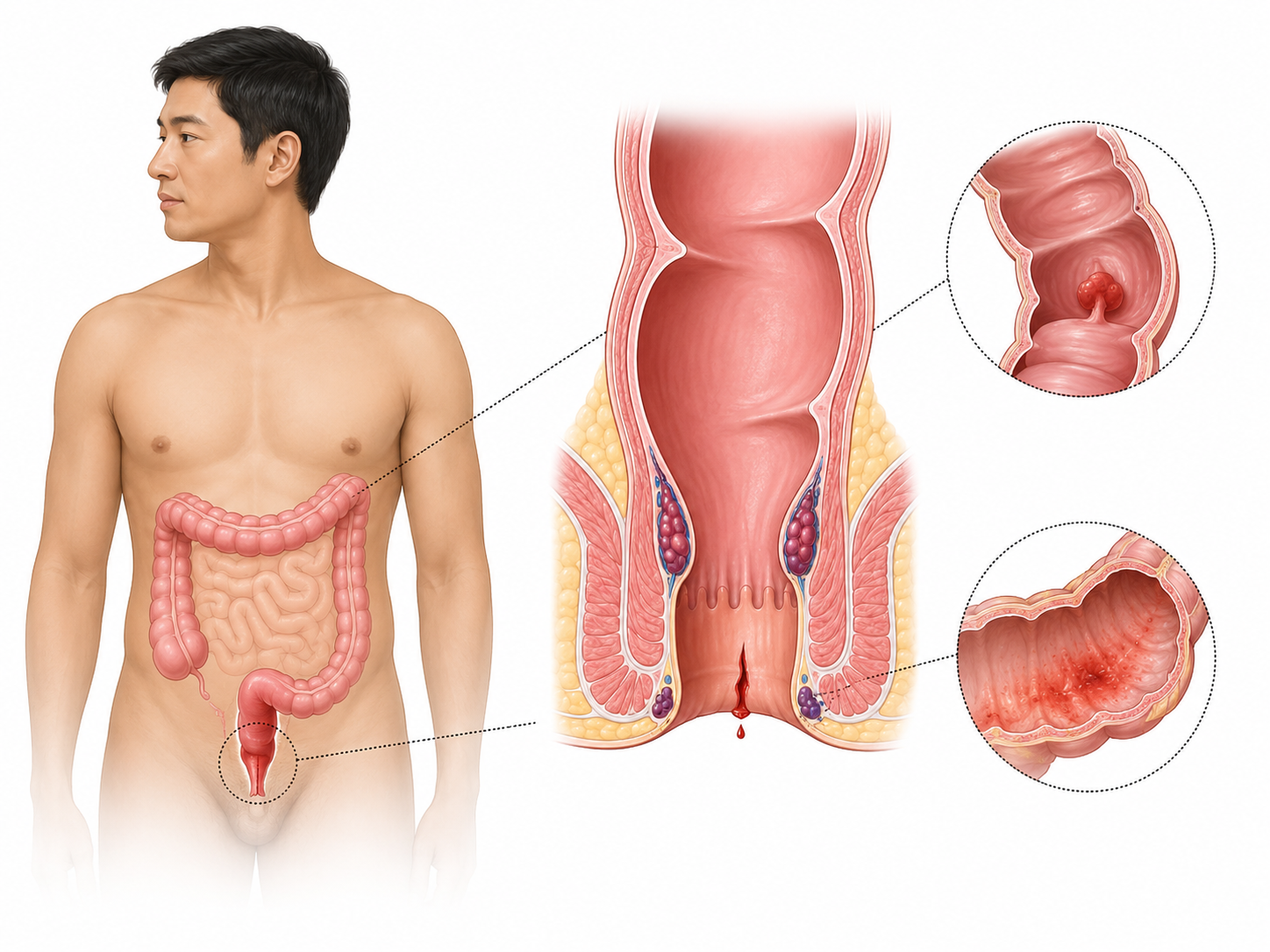
Bleeding in stool
Seeing blood in your stool, on toilet paper, or in the toilet can be worrying. Blood may be bright red, dark red, mixed with stool, or make the stool look black and sticky.
A small amount of bright-red blood can sometimes occur because of piles (haemorrhoids) or a small tear around the anus, called an anal fissure. However, bleeding can also be caused by infection, inflammation in the bowel, polyps, ulcers, medicines, or other more serious conditions.
Do not assume bleeding is caused by piles, especially if it keeps happening, changes, or occurs with other symptoms.
Emergency warning signs
Go to the nearest hospital urgently, or call an ambulance on 102 where available, if you have:
Bleeding that does not stop
A large amount of blood, blood clots, or toilet water turning red
Black, sticky, tar-like stool, or very dark-red stool
Vomiting blood or vomit that looks like coffee grounds
Sudden severe abdominal pain, or a hard and very tender abdomen
Fainting, collapse, severe dizziness, confusion, or extreme weakness
Severe bloody diarrhoea with fever, vomiting, or signs of dehydration
Chest pain, severe breathlessness, or feeling extremely unwell
Do not drive yourself if you are very unwell.
What this page cannot tell you
This page gives general information about bleeding in stool. It cannot identify where the bleeding is coming from or confirm its cause.
It cannot tell you whether the bleeding is due to piles, an anal fissure, infection, inflammation, bowel polyps, an ulcer, a medicine, or another condition. It also cannot assess how much blood you have lost or decide whether you need emergency treatment.
For diagnosis, personal advice, and treatment, please speak with a doctor or qualified health professional.
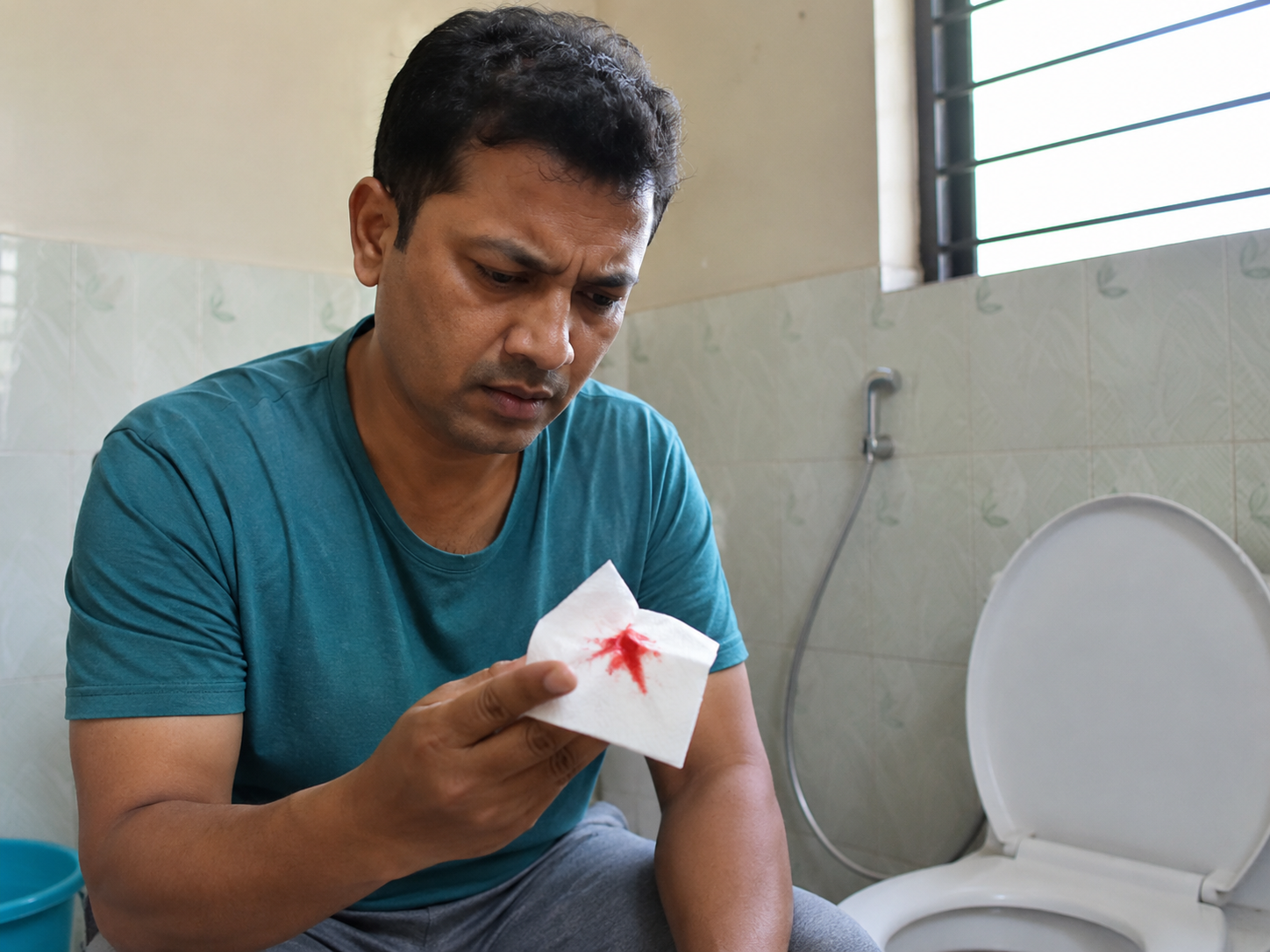
Common causes
Bleeding in stool can have several causes. Common causes include:
Piles (haemorrhoids), which may cause bright-red blood during or after passing stool
An anal fissure, which is a small tear around the anus and may cause pain with bowel movements
Constipation or straining
Bowel infection, which may cause bloody diarrhoea
Inflammatory bowel disease
Polyps or bowel cancer
Stomach or bowel ulcers
Medicines that increase bleeding risk, including aspirin, blood-thinning medicines, and some anti-inflammatory painkillers
Many causes are treatable, but it is important not to ignore persistent or unexplained bleeding. Bleeding can sometimes cause anaemia, leading to tiredness, weakness, dizziness, or shortness of breath.
What you can do yourself
If you have a small amount of bright-red blood once, with constipation or straining and no warning signs:
Drink enough fluids.
Eat fibre-rich foods such as vegetables, fruit, beans, lentils, and whole grains.
Avoid straining when passing stool and avoid sitting on the toilet for a long time.
Stay physically active where possible.
Keep the anal area clean and gently dry it after passing stool.
Ask a pharmacist or doctor before using creams, laxatives, or pain medicines.
Do not use self-care as a reason to delay medical assessment if bleeding continues, returns, or occurs with pain, weight loss, tiredness, bowel changes, or any emergency warning signs.
When to see a doctor
Arrange to see a doctor or qualified health professional if:
Bleeding happens again or continues for more than a short time
You do not know why the bleeding is happening
You have a change in bowel habit, such as ongoing diarrhoea, constipation, or narrower stools
You have abdominal pain, bloating, mucus in stool, or a lump around the anus
You have unexplained weight loss, tiredness, weakness, dizziness, or breathlessness
You are taking aspirin, blood-thinning medicines, or anti-inflammatory painkillers
You have a personal or family history of bowel disease, bowel polyps, or bowel cancer
Children with blood in their stool should be assessed by a qualified health professional, particularly if they are unwell, have abdominal pain, diarrhoea, fever, vomiting, or poor feeding.

What a doctor may check
A doctor or qualified health professional may ask about:
When the bleeding started and how often it happens
The colour and amount of blood, and whether it is on paper, on stool, or mixed with stool
Pain, itching, lumps, constipation, diarrhoea, mucus, or changes in bowel habit
Weight loss, fever, tiredness, dizziness, or abdominal pain
Your medicines, including aspirin, blood thinners, iron tablets, and painkillers
Previous bowel problems and family history
They may examine your abdomen and, where appropriate, the anal area or rectum. Depending on your symptoms, they may arrange blood tests, stool tests, a camera test of the bowel, or referral to a specialist.
Nepal context
In Nepal, visit a nearby health post, clinic, PHC, or hospital if you see blood in your stool, particularly if it is repeated, unexplained, or associated with other symptoms.
Go to the nearest hospital immediately for emergency warning signs. Ambulance Nepal can be contacted on 102 where available.
Take your current medicines, previous prescriptions, test reports, and details of any allergies with you.
Useful records to keep
Keeping a short record can help a doctor assess the problem. Note:
When bleeding started and how often it happens
The colour and amount of blood
Whether blood is on toilet paper, on the stool, or mixed with stool
Associated symptoms, such as pain, constipation, diarrhoea, fever, mucus, or weight loss
Foods, medicines, or activities that seem to make symptoms better or worse
Regular medicines, especially aspirin, blood thinners, iron tablets, and painkillers
Previous bowel problems, tests, hospital visits, and family history of bowel disease or cancer
Important notice
This information is for general health information only. It should not be used as a substitute for a doctor's advice, examination, diagnosis, treatment, or emergency services.
Help improve this guide
Spotted an error or want to contact us about this guide? Send a message to the HamroSwasthya team.