
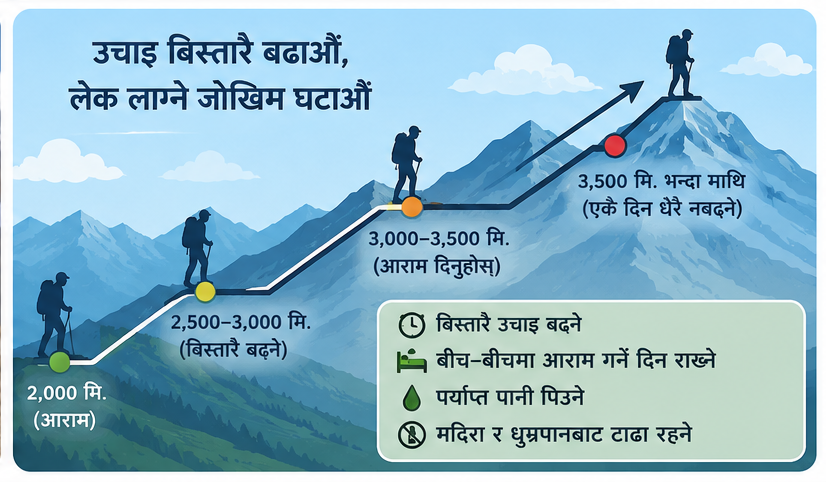
Altitude sickness
Altitude sickness happens when the body does not have enough time to adjust to the lower oxygen level at high altitude, usually above about 2,500 metres. It is more likely after climbing or travelling upwards too quickly. In Nepal, it commonly affects trekkers and travellers in high mountain areas. Fitness does not protect someone from altitude sickness.
The mildest form is acute mountain sickness. It can progress to swelling of the brain or fluid in the lungs, both of which are life-threatening emergencies.
Symptoms
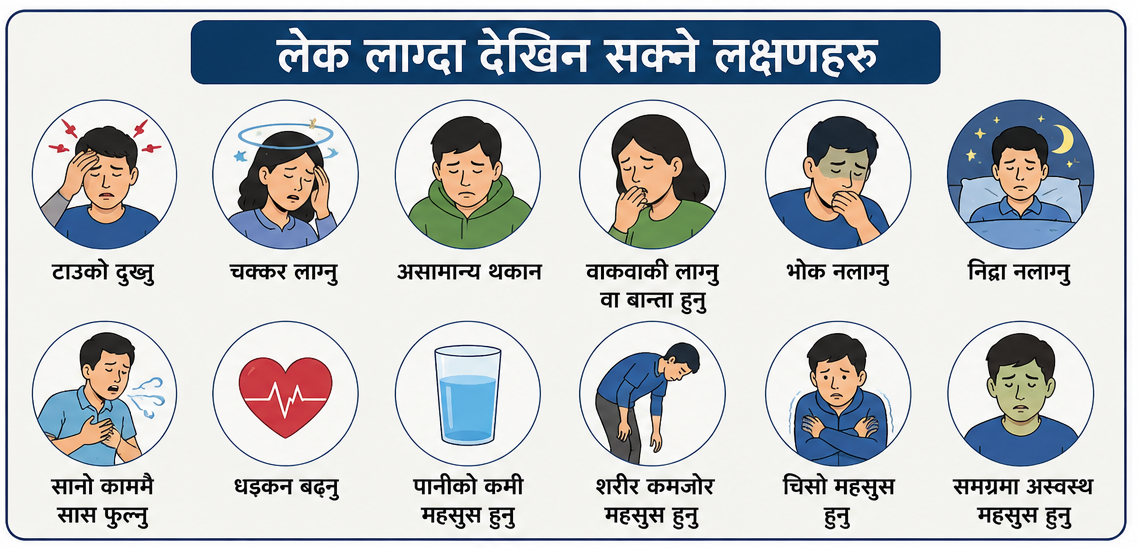
Symptoms usually begin within several hours of arriving at a high altitude or after sleeping higher than the previous night. They may include:
Headache
Dizziness or light-headedness
Unusual tiredness or weakness
Loss of appetite
Feeling sick or vomiting
Difficulty sleeping
Breathlessness during activity
Generally feeling unwell
Symptoms may resemble dehydration, exhaustion, migraine, infection or a hangover. Do not continue climbing when symptoms are present.
Red flags
Descend immediately and seek emergency medical help if the person develops:
Breathlessness while resting
A persistent cough, especially with frothy or blood-stained sputum
Chest tightness or severe weakness
Confusion, unusual behaviour or hallucinations
Difficulty walking in a straight line, poor balance or loss of coordination
Severe headache that is worsening
Extreme drowsiness or difficulty waking
Blue, grey or unusually pale lips, tongue, skin or nails
Collapse, seizure or loss of consciousness
These may indicate high-altitude pulmonary oedema or high-altitude cerebral oedema. Do not wait until morning or rely only on medicines. Descend as soon as it is safe, ideally with help, and do not leave the person alone.
Self-care
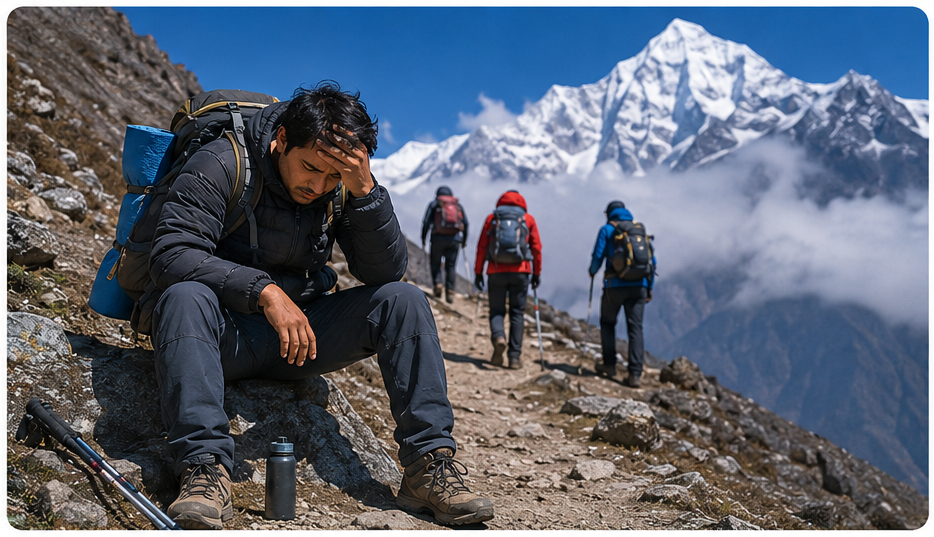
For mild symptoms:
Stop ascending and tell a companion that you feel unwell.
Rest at the same altitude and avoid heavy exertion.
Drink enough fluids, but do not force excessive amounts.
Avoid alcohol and sedating medicines.
Use only pain or anti-sickness medicines that are safe for you.
Do not climb higher until all symptoms have completely resolved.
If symptoms worsen or do not improve within about one day, descend-often by at least 300 to 1,000 metres.
Reduce the risk by ascending gradually, including rest days, and avoiding a large increase in sleeping altitude in one day. People with previous altitude illness or significant heart, lung or other medical conditions should seek travel-health advice before going to high altitude.
Treatment
The most important treatment for worsening or severe altitude sickness is descent to a lower altitude. Oxygen may be given when available. A trained health professional may use medicines such as acetazolamide, dexamethasone or other treatments depending on whether the illness affects the brain or lungs.
In remote areas, evacuation, portable oxygen or a pressure bag may be needed. Medication should never be used to continue climbing despite worsening symptoms.
Questions to ask your doctor
Is my planned route likely to put me at risk of altitude sickness?
Does my previous altitude sickness increase my risk?
Are my heart, lung or other health conditions safe for high-altitude travel?
Should I carry preventive or emergency medicine?
Which medicines should I avoid at altitude?
What symptoms mean I must stop climbing or descend immediately?
What emergency and evacuation arrangements should I make?
Nepal pathway
In Nepal, start with your nearest health post, PHC, clinic, or hospital if symptoms are worrying, severe, worsening, or not improving. Take previous prescriptions, test reports, allergy information, and current medicines with you. Seek urgent care immediately if there are red flag symptoms.
Disclaimer
This is general health information only and does not replace medical advice, diagnosis, treatment, or emergency care.
Help improve this guide
Spotted an error or want to contact us about this guide? Send a message to the HamroSwasthya team.