
Migraine
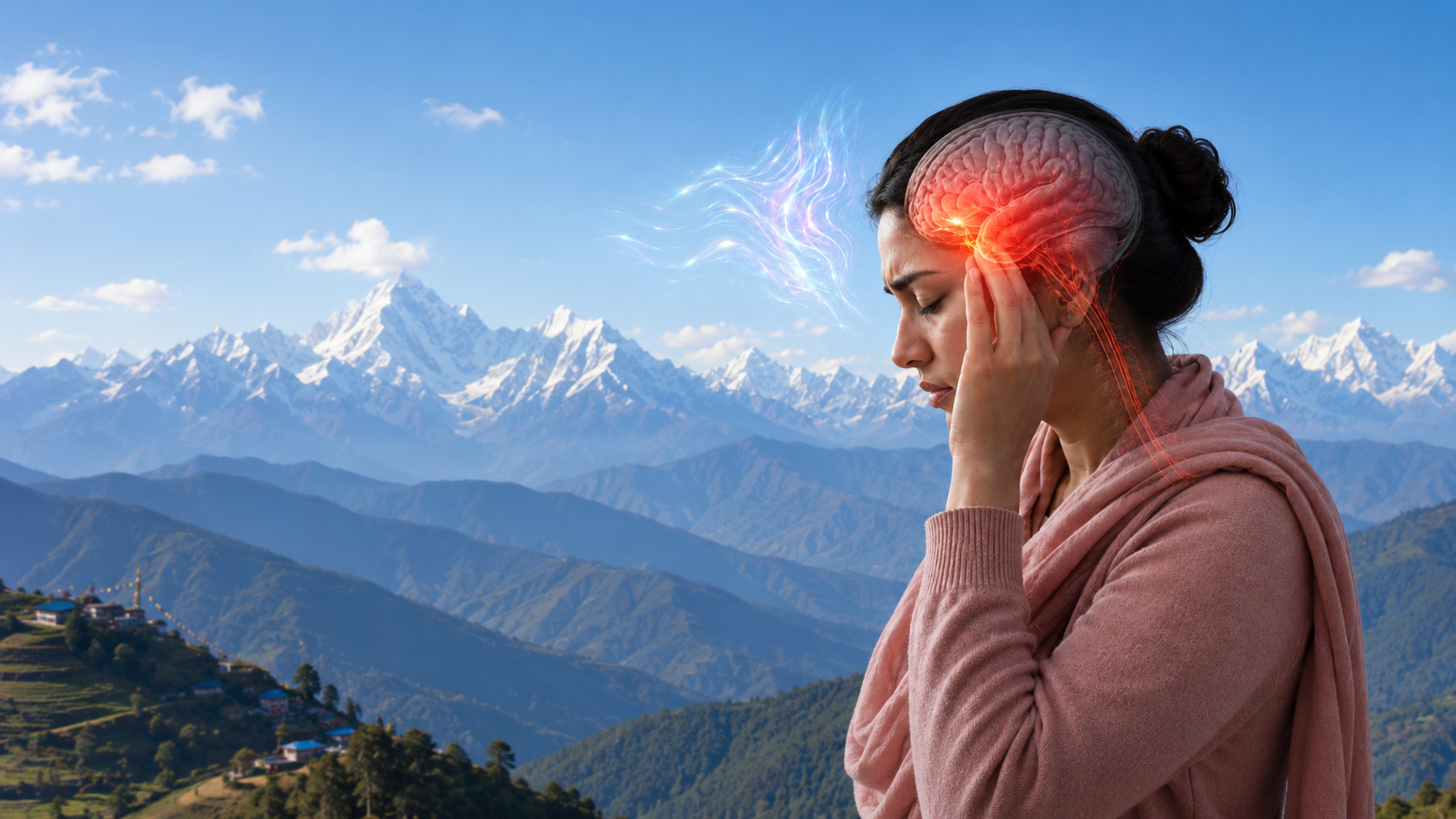
Migraine is a common neurological condition that can cause repeated episodes of headache and other symptoms. The headache is often throbbing, moderate to severe, and may affect one side of the head, but migraine can also affect both sides, the face, or the neck. It is not just a "normal headache". Many people also feel sick, vomit, or become sensitive to light, sound, smell, or movement.
Some people get warning symptoms before or during migraine, called aura. Aura can include flashing lights, zigzag lines, blind spots, tingling, dizziness, or difficulty speaking. New, unusual, or prolonged symptoms should not be assumed to be migraine without medical advice.
Symptoms
Migraine symptoms can vary from person to person. The headache is often throbbing or pulsating and commonly affects one side of the head, although both sides can be involved. Movement, walking, climbing stairs, or normal daily activities may make the pain worse.
Migraine commonly occurs in two forms:
Migraine without aura:
The headache begins without specific warning symptoms. It may be accompanied by:
Feeling sick or vomiting
Sensitivity to light, loud sounds, or strong smells
Pain that becomes worse with movement
Needing to rest in a quiet, dark room
Difficulty concentrating or marked tiredness
Migraine with aura:
Temporary neurological symptoms develop before or around the start of the headache. They usually build gradually and resolve within several minutes to an hour. Symptoms may include:
Flashing lights, zigzag lines, or shimmering shapes
Blurred vision or a missing area in the field of vision
Tingling or numbness affecting the face, hand, or one side of the body
Difficulty speaking or finding the right words
Dizziness or a feeling of poor balance
The headache may follow the aura, although some people experience aura without developing a headache.
A migraine episode can last from several hours to two or three days. Before the headache, some people notice tiredness, mood changes, frequent yawning, or food cravings. After the pain settles, tiredness, weakness, or difficulty concentrating may continue for a while.
Seek urgent medical assessment if aura-like symptoms occur for the first time, are different from usual, last longer than one hour, or include weakness, facial drooping, or unclear speech. Do not assume these symptoms are caused by migraine. Because these can be signs of a serious and life-threatening medical emergency like a stroke.
Red flags
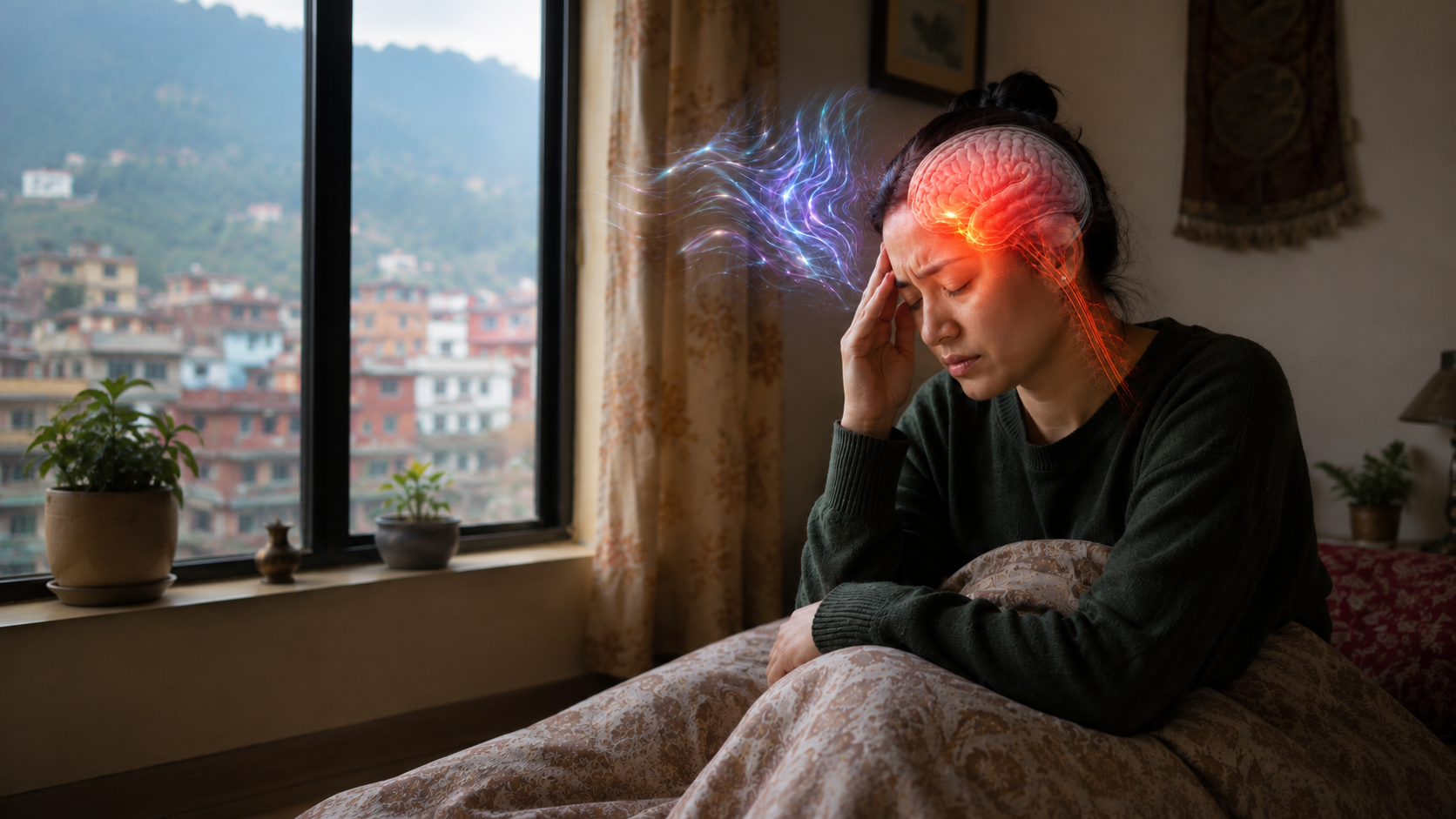
Seek urgent medical help or go to the nearest hospital if you have:
A sudden, extremely severe headache
Headache with weakness, numbness, facial droop, speech difficulty, confusion, seizure, or collapse
New vision loss, double vision, or severe eye pain
Headache with fever, stiff neck, rash, repeated vomiting, or severe drowsiness
Headache after a head injury
A new or unusual headache during pregnancy or soon after delivery
Headache that is rapidly worsening or different from your usual migraine
Aura symptoms lasting longer than usual or not fully improving
New headache in someone with cancer, HIV, very low immunity, or serious long-term illness
Headache in a child who is very unwell, drowsy, vomiting repeatedly, or has abnormal behaviour
Call Ambulance Nepal on 102 where available if symptoms are severe or the person is seriously unwell.
Self-care
During a migraine episode: (if confirmed it's migraine)
Rest in a quiet, dark room if possible.
Drink fluids, especially if you have vomited.
Avoid bright light, loud noise, strong smells, alcohol, and known triggers.
Eat regularly and avoid skipping meals if that triggers your migraine.
Take only medicines that are safe for you, and follow advice from a doctor.
Avoid using painkillers too often, as this can make headaches more frequent and harder to treat.
Keep a migraine diary: date, time, symptoms, possible triggers, period dates, medicines used, and how long it lasted. It will help you understand your illness and finding better solution.
Treatment
Treatment depends on how severe and frequent the migraine episodes are, your age, pregnancy status, other illnesses, and regular medicines.
For an acute migraine episode, a doctor may suggest suitable pain relief, an anti-sickness medicine, or a migraine-specific medicine such as a triptan. NICE guidance for people over 12 includes triptan treatment with an NSAID or paracetamol as an option, depending on suitability.
If migraines are frequent, severe, or affecting school, work, sleep, or daily life, preventive treatment may be considered. This may include lifestyle changes, trigger management, and regular medicines to reduce the number or severity of episodes. Some people need specialist review if the diagnosis is unclear or treatment is not working.
Questions to ask your doctor

Is this migraine, or could it be another type of headache?
Do I have migraine with aura or without aura?
Are any of my symptoms red flags?
Which medicine is safest for me during an episode?
Do I need anti-sickness medicine or migraine-specific medicine?
Am I using painkillers too often?
Should I start preventive treatment?
Could stress, sleep, periods, food, dehydration, or medicines be triggering this?
Do I need an eye check, blood tests, scan, or specialist referral?
What should I do if my symptoms are different next time?
Nepal pathway
In Nepal, start with your nearest health post, PHC, clinic, or hospital if symptoms are worrying, severe, worsening, or not improving. Take previous prescriptions, test reports, allergy information, and current medicines with you. Seek urgent care immediately if there are red flag symptoms.
Disclaimer
This is general health information only and does not replace medical advice, diagnosis, treatment, or emergency care.
Help improve this guide
Spotted an error or want to contact us about this guide? Send a message to the HamroSwasthya team.