
Pneumonia
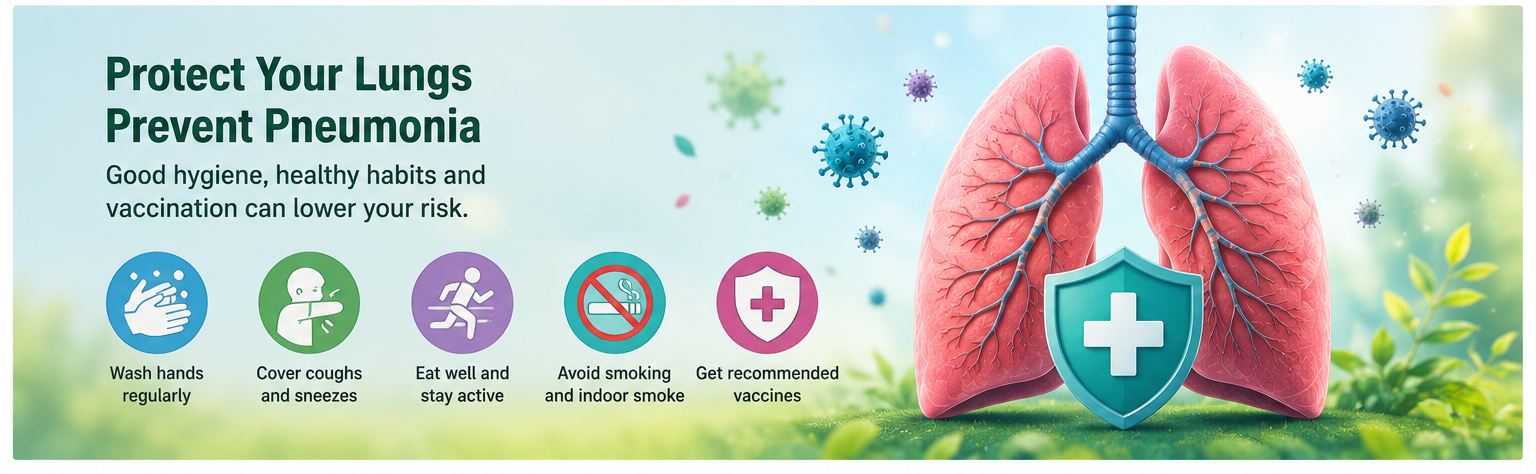
Pneumonia is an infection that inflames the small air sacs in one or both lungs. These air sacs can fill with fluid or pus, making breathing difficult and reducing the amount of oxygen reaching the body. Pneumonia may be caused by bacteria, viruses or, less commonly, fungi. It can affect anyone, but babies, older adults, smokers, and people with long-term heart, lung or immune conditions have a higher risk of serious illness.
Symptoms
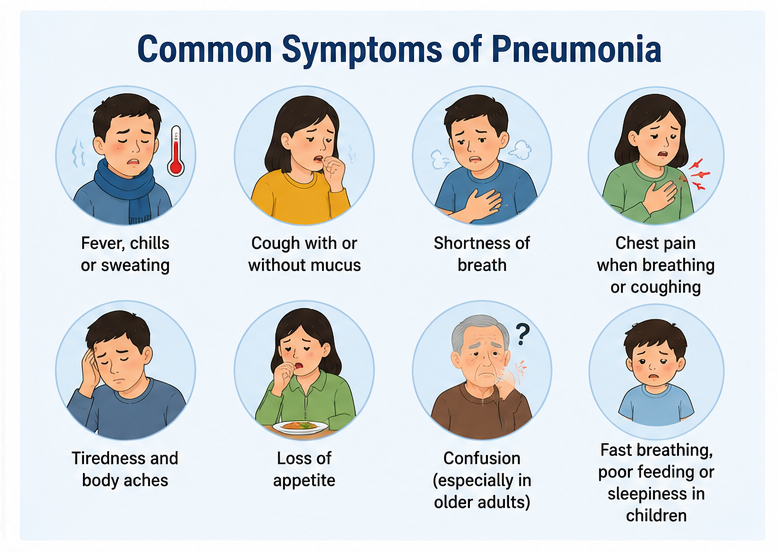
Symptoms may develop quickly over one or two days or more gradually. They can include:
Cough, which may be dry or produce yellow, green or blood-stained mucus
Fever, sweating, chills or shivering
Shortness of breath or faster breathing
Chest pain that becomes worse when breathing deeply or coughing
Severe tiredness, weakness or body aches
Loss of appetite
Headache
Nausea, vomiting or diarrhoea
Confusion or unusual drowsiness, particularly in older adults
Babies and young children may breathe rapidly, pull in the skin between or below the ribs, grunt, feed poorly or appear unusually sleepy. Some older adults may develop confusion without having a high fever.
Red flags
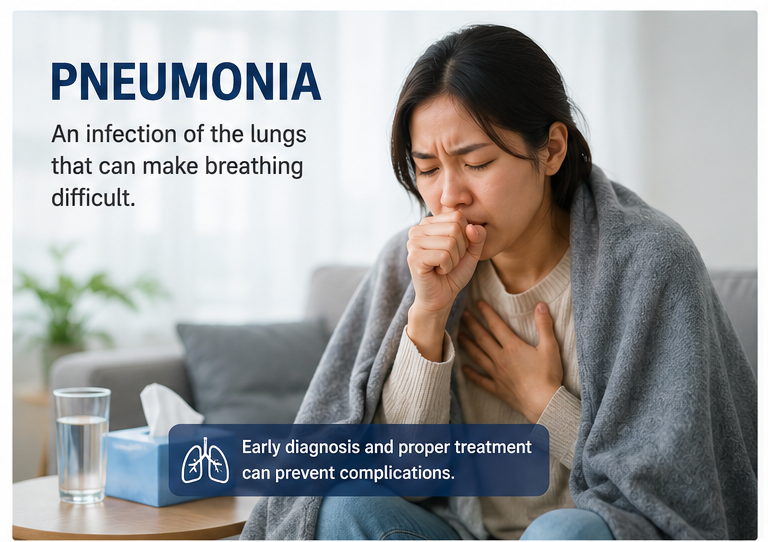
Seek urgent medical help or go to the nearest hospital if the person has:
Severe difficulty breathing, gasping or being unable to speak normally
Very fast breathing or the ribs pulling inward with each breath
Blue, grey or unusually pale lips, tongue, face or skin
Severe or worsening chest pain
Confusion, collapse, seizure, extreme drowsiness or difficulty waking
Coughing up more than small streaks of blood
Inability to drink, repeated vomiting or signs of severe dehydration
A very fast or irregular heartbeat with dizziness or severe weakness
A baby who is struggling to breathe, cannot feed, is floppy or difficult to wake
Symptoms that are rapidly worsening or not improving after treatment
These signs may indicate low oxygen, sepsis, severe pneumonia or another serious condition. Call 102 where ambulance services are available.
Self-care
Rest and avoid strenuous activity while recovering.
Drink enough fluids unless a clinician has advised fluid restriction.
Use suitable fever or pain relief only as directed on the packet or by a pharmacist or doctor.
Do not smoke, vape or stay around indoor smoke.
Cover coughs, wash hands regularly and avoid close contact with vulnerable people while infectious.
Complete any prescribed antibiotic course, even if symptoms begin to improve.
Do not use leftover antibiotics or share antibiotics with another person.
Seek review if breathing worsens, fever persists, confusion develops or symptoms fail to improve as expected.
A cough and tiredness can continue after the infection begins to settle, but worsening breathlessness or renewed fever needs reassessment.
Treatment
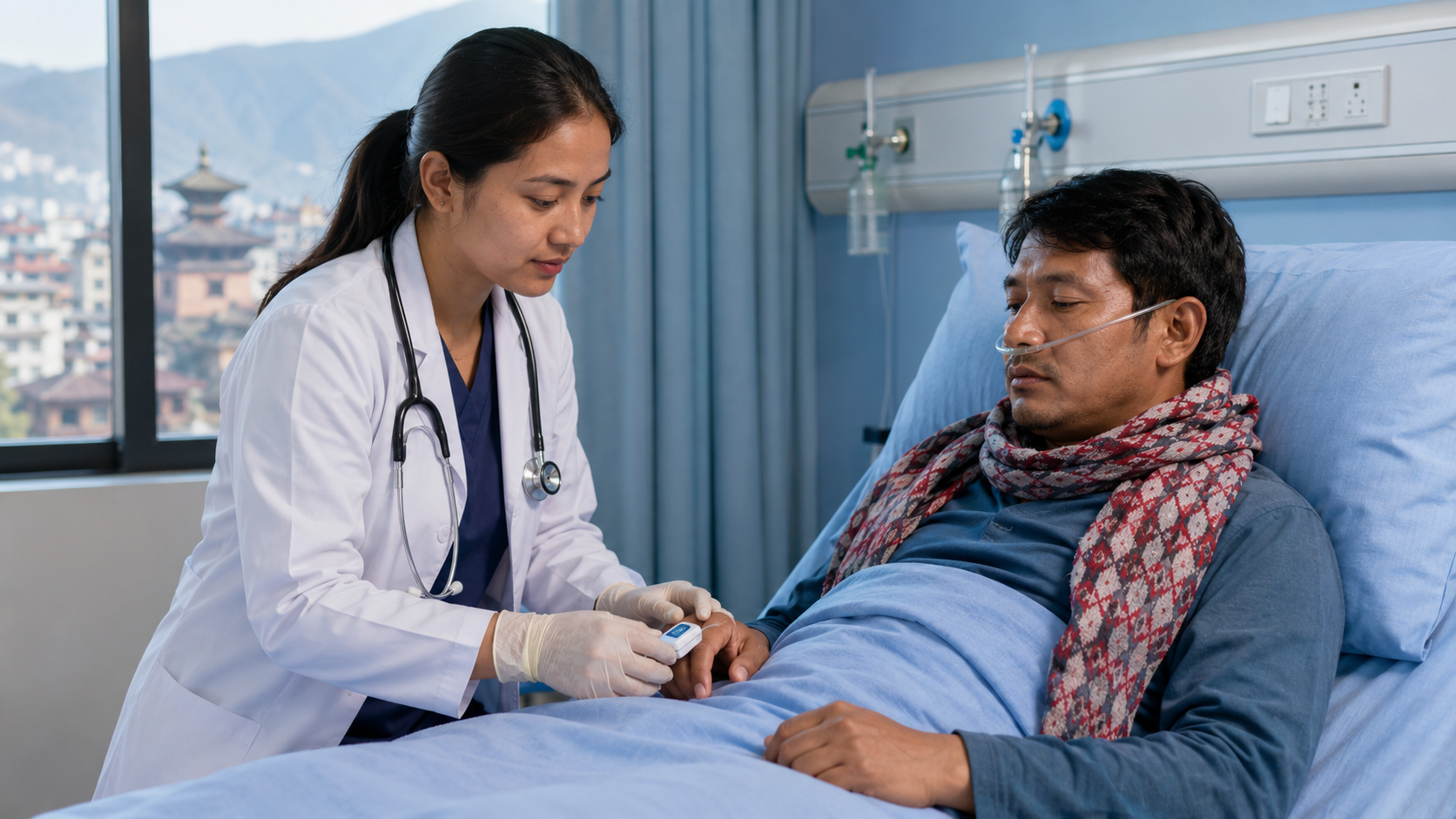
A healthcare professional may diagnose pneumonia from the symptoms and chest examination. Depending on the severity and setting, tests may include oxygen measurement, blood tests, a chest X-ray, sputum testing or other imaging. A chest X-ray is commonly used in hospital but is not required for every person treated outside hospital.
Bacterial pneumonia is treated with antibiotics. Antibiotics do not treat viral pneumonia unless a secondary bacterial infection is suspected. People with severe illness may need hospital care, oxygen, fluids and closer monitoring. Treatment decisions depend on age, breathing, oxygen level, blood pressure, confusion, other illnesses and the ability to eat, drink and manage safely at home.
Vaccination against infections such as pneumococcal disease, influenza and measles can reduce the risk of some types of pneumonia and serious complications.
Questions to ask your doctor
Is this pneumonia or another chest infection?
How severe is it, and is my oxygen level normal?
Do I need a chest X-ray, blood test or sputum test?
Is the likely cause bacterial or viral?
Do I need antibiotics or hospital treatment?
When should I expect symptoms to start improving?
Which symptoms mean I should return to hospital urgently?
When can I safely return to work, school or normal activity?
Do I need any vaccinations to reduce my future risk?
Nepal pathway
In Nepal, start with your nearest health post, PHC, clinic, or hospital if symptoms are worrying, severe, worsening, or not improving. Take previous prescriptions, test reports, allergy information, and current medicines with you. Seek urgent care immediately if there are red flag symptoms.
Disclaimer
This is general health information only and does not replace medical advice, diagnosis, treatment, or emergency care.
Help improve this guide
Spotted an error or want to contact us about this guide? Send a message to the HamroSwasthya team.