
Severe dehydration
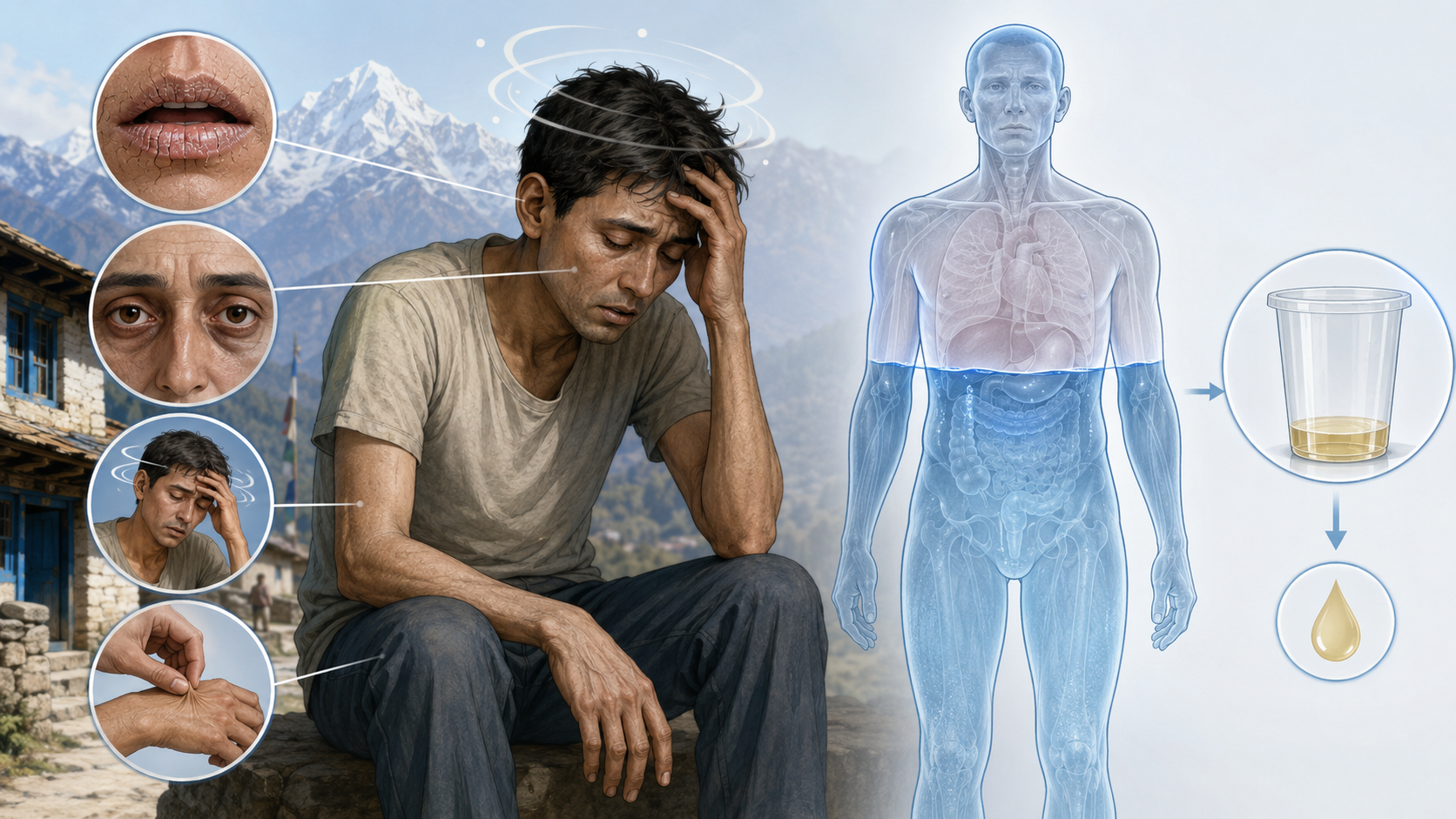
Dehydration happens when the body loses more fluid than it takes in. Severe dehydration is an emergency because it can reduce blood flow to vital organs and lead to shock, kidney injury, confusion, seizures, or collapse.
It can occur with diarrhoea, vomiting, fever, heat exposure, heavy sweating, poor fluid intake, uncontrolled diabetes, some medicines, or serious infection. Babies, young children, older adults, pregnant people, and people with kidney, heart, or long-term health conditions can become dehydrated more quickly.
Emergency warning signs
Go to the nearest hospital immediately, or call Ambulance Nepal on 102 where available, if a person has:
Very little or no urine
Extreme thirst but is unable to drink enough
Repeated vomiting or cannot keep fluids down
Fainting, collapse, severe dizziness, confusion, unusual sleepiness, or difficulty waking
Fast breathing, rapid heartbeat, cold hands or feet, or very pale/grey skin
Sunken eyes, very dry mouth and tongue, or very dry skin
Severe weakness, inability to stand, or becoming less responsive
Blood in vomit or stool, black stool, or severe diarrhoea
High fever, severe abdominal pain, severe headache, or signs of serious infection
A baby or child who is not feeding, has very few wet nappies, no tears when crying, is floppy, unusually sleepy, or difficult to wake
Do not delay hospital care if severe dehydration is suspected.
What this page cannot tell you
This page gives general information about dehydration. It cannot tell you how severe dehydration is, what caused it, or whether a person needs oral rehydration, intravenous fluids, blood tests, or urgent hospital treatment.
It cannot confirm whether symptoms are due to dehydration, heat illness, infection, diabetes, kidney disease, bleeding, poisoning, or another medical condition.
Why it matters
Common causes include:
Diarrhoea or vomiting
Fever or infection
Hot weather, heat exposure, or heavy sweating
Not drinking enough fluids
Diabetes with very high blood sugar
Medicines that increase urine output, such as some water tablets
Alcohol use
Difficulty swallowing, confusion, frailty, or dependence on others for drinks
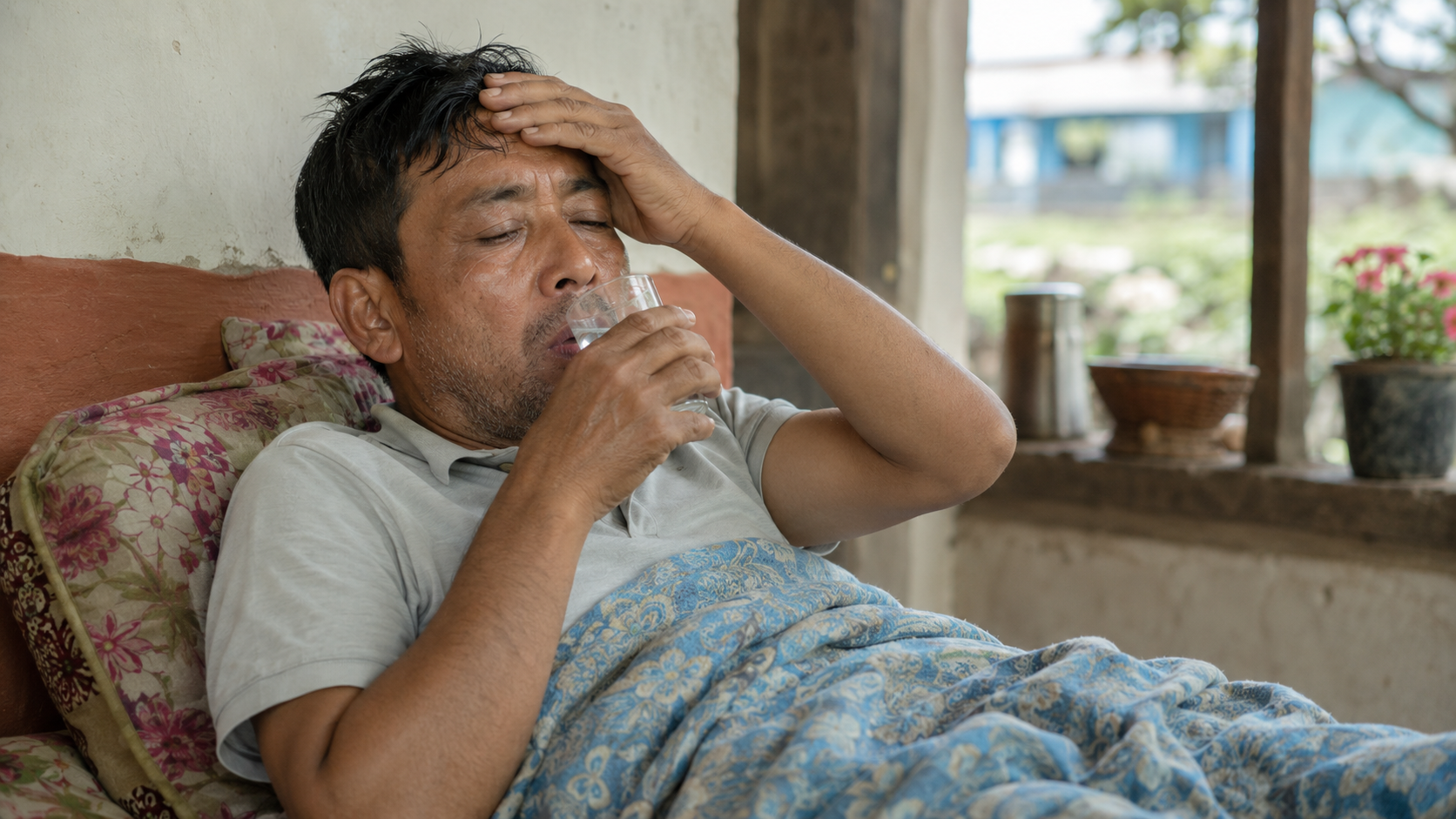
Severe dehydration matters because it can affect blood pressure, kidneys, brain function, and circulation. It can become life-threatening, especially in babies, older adults, and people who are already unwell.
What you can do yourself
For mild dehydration only, when the person is awake, able to drink, and has no emergency warning signs:
Give frequent small sips of clean water, soup, or other suitable fluids.
Use oral rehydration solution (ORS) if dehydration is due to diarrhoea or vomiting.
Continue breastfeeding for babies and young children.
Offer small amounts often rather than large drinks at once.
Avoid alcohol.
Keep the person cool if heat exposure is contributing.
Do not force fluids into someone who is drowsy, confused, vomiting repeatedly, choking, unable to swallow safely, or unconscious. They may need urgent medical treatment instead. WHO recommends ORS for dehydration from diarrhoea when oral fluids are safe and possible.
When to see a doctor
Arrange medical assessment urgently if:
Symptoms are not improving within a few hours despite drinking fluids
You have ongoing diarrhoea, vomiting, fever, or poor fluid intake
Urine remains dark, strong-smelling, or much less frequent than usual
You are pregnant, older, have diabetes, kidney disease, heart failure, or take regular water tablets
A baby, young child, or older adult has any signs of dehydration
You have repeated episodes of dehydration
You are unsure whether the cause is infection, heat illness, diabetes, or another condition
What a doctor may check
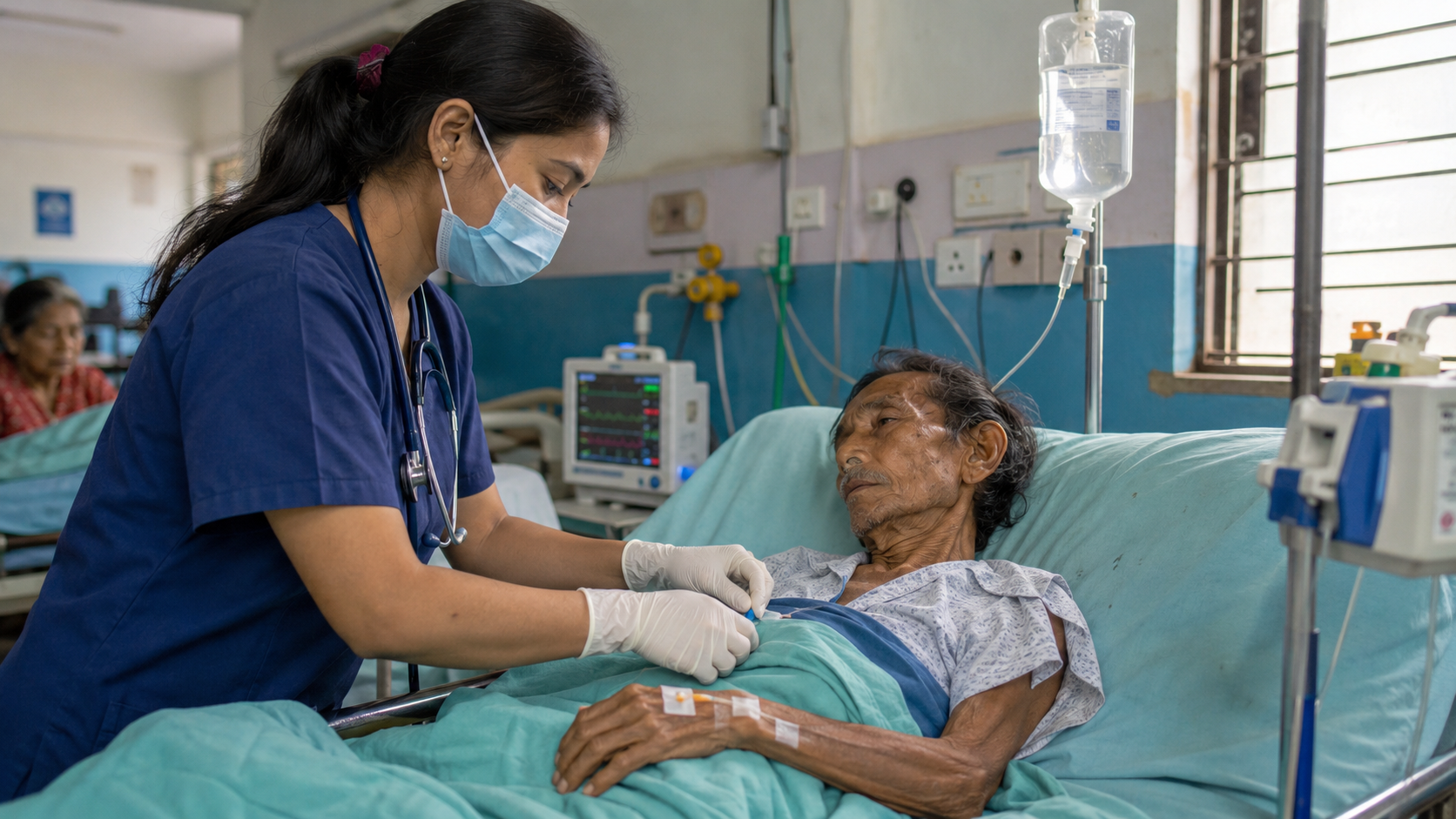
A doctor or qualified health professional may check:
Heart rate, blood pressure, temperature, breathing rate, and oxygen level
Alertness, confusion, weakness, and ability to stand or walk
Mouth dryness, sunken eyes, skin condition, and capillary refill
Urine output and urine colour
Signs of infection, diarrhoea, vomiting, bleeding, diabetes, or heat illness
Medicines and underlying health conditions
Tests may include blood sugar, urine tests, blood tests for kidney function and salts, and other investigations depending on the cause.
Nepal context
In Nepal, go directly to the nearest hospital if severe dehydration is suspected, especially in babies, children, older adults, pregnant people, or anyone with repeated vomiting, profuse diarrhoea, fever, confusion, collapse, or very little urine.
ORS sachets may be available from pharmacies, health posts, clinics, and hospitals. Prepare ORS exactly according to the packet instructions using safe drinking water. Do not make the solution too concentrated.
Call Ambulance Nepal on 102 where available.
Useful records to keep
Keep a short record of:
When symptoms started
Number of diarrhoea or vomiting episodes
Approximate fluid intake
Urine frequency and colour
Fever, weight changes, dizziness, fainting, or confusion
Recent travel, heat exposure, food or water exposure, and sick contacts
Regular medicines, especially diuretics, diabetes medicines, and blood-pressure medicines
Previous kidney disease, diabetes, heart disease, or hospital admissions
Important notice
This information is for general health information only. It should not be used as a substitute for a doctor's advice, examination, diagnosis, treatment, or emergency services.
Help improve this guide
Spotted an error or want to contact us about this guide? Send a message to the HamroSwasthya team.