
Flu/ Influenza
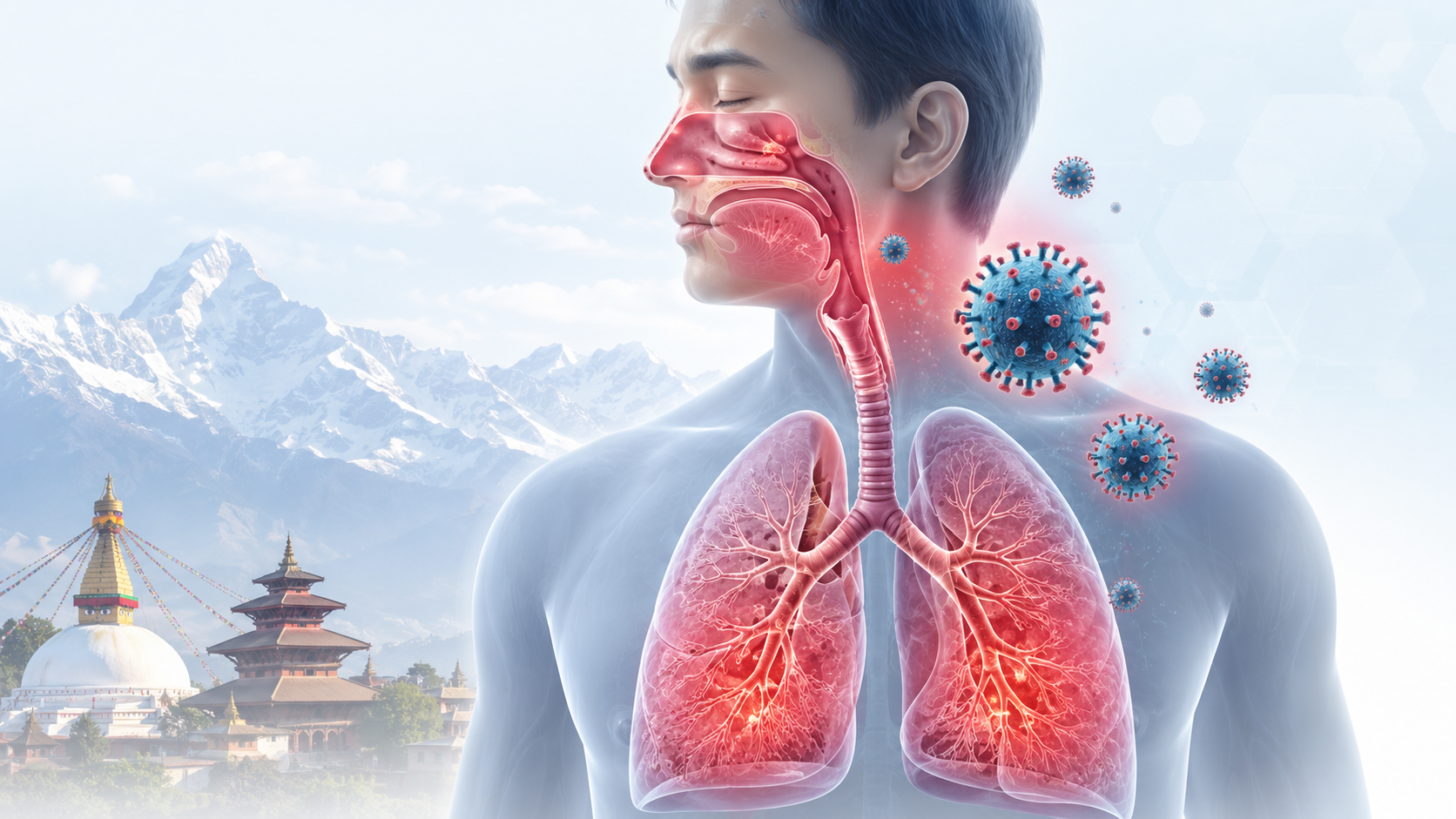
Flu, also called influenza, is a viral infection that affects the nose, throat, and lungs. It often starts suddenly and can make you feel much more unwell than a common cold.
Most people recover within about a week, but flu can lead to serious complications such as pneumonia, particularly in young children, older adults, pregnant people, and people with long-term health conditions or weakened immune systems.
Symptoms
Common flu symptoms include:
Sudden fever or feeling hot, cold, or shivery
Dry cough
Sore throat
Runny or blocked nose
Headache
Muscle and joint aches
Feeling very tired or exhausted
Loss of appetite
Difficulty sleeping
Feeling sick, vomiting, diarrhoea, or abdominal pain, especially in children
Flu symptoms often come on quickly and may be more severe than a typical cold.
Red flags
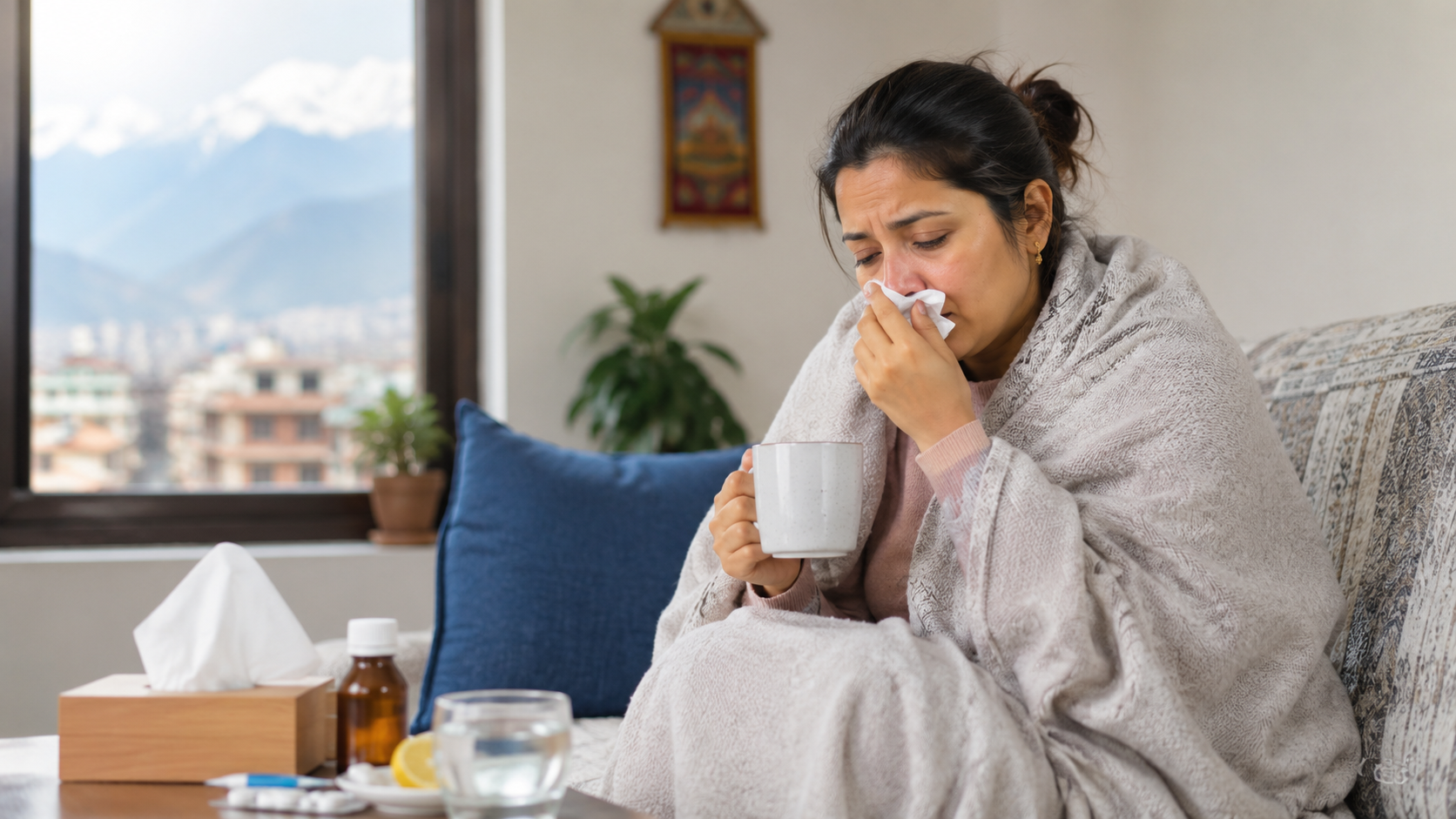
Go to the nearest hospital urgently, or call Ambulance Nepal on 102 where available, if you or your child has:
Severe difficulty breathing, rapid breathing, or blue lips
Chest pain, severe chest tightness, or coughing blood
Severe drowsiness, confusion, collapse, seizure, or difficulty waking
Signs of severe dehydration, such as very little urine, inability to drink, very dry mouth, or marked dizziness
Fever with a severe headache, stiff neck, rash, or repeated vomiting
Symptoms that suddenly become much worse after seeming to improve
A child who is floppy, unusually sleepy, not feeding, struggling to breathe, or passing much less urine
Pregnancy with severe flu symptoms, breathlessness, chest pain, or reduced foetal movements
Self-care
For mild flu symptoms:
Rest and drink enough fluids.
Take paracetamol or ibuprofen for fever and body aches if suitable for you. Follow the packet instructions or ask a pharmacist.
Eat light meals if you can, but focus on fluids if your appetite is low.
Stay at home and avoid close contact with others while you have fever or feel too unwell for normal activities.
Wash hands regularly, cover coughs and sneezes, and avoid sharing cups, bottles, or utensils.
Avoid smoking and vaping, as these can worsen breathing symptoms.
Do not give aspirin to children under 16 years old. Antibiotics do not treat flu because flu is caused by a virus.
Treatment
Most people with flu only need rest, fluids, and treatment for fever or pain.
Antiviral medicines, such as oseltamivir, may be considered for some people who are at higher risk of complications or who are severely unwell. These medicines work best when started early and must be prescribed by a qualified health professional.
Antibiotics are not used for flu itself. They may only be needed if a doctor suspects a secondary bacterial infection, such as pneumonia.
Flu vaccination can reduce the risk of getting flu and severe complications. Ask a doctor, clinic, or local health authority about vaccine availability and whether it is suitable for you.
Questions to ask your doctor

- Could this be flu, COVID-19, pneumonia, dengue, malaria, or another infection?
- Am I at higher risk of complications from flu?
- Do I need antiviral treatment?
- Do I need a chest examination, oxygen check, or chest X-ray?
- Could I have developed pneumonia or another bacterial infection?
- Which medicines are safe for fever and body aches?
- When can I return to work, school, or normal activities?
- Should I get the flu vaccine in future?
- Which warning signs mean I should seek urgent help?
Nepal pathway
In Nepal, start with your nearest health post, PHC, clinic, or hospital if symptoms are worrying, severe, worsening, or not improving. Take previous prescriptions, test reports, allergy information, and current medicines with you. Seek urgent care immediately if there are red flag symptoms.
Disclaimer
This is general health information only and does not replace medical advice, diagnosis, treatment, or emergency care.
Help improve this guide
Spotted an error or want to contact us about this guide? Send a message to the HamroSwasthya team.