
Impetigo
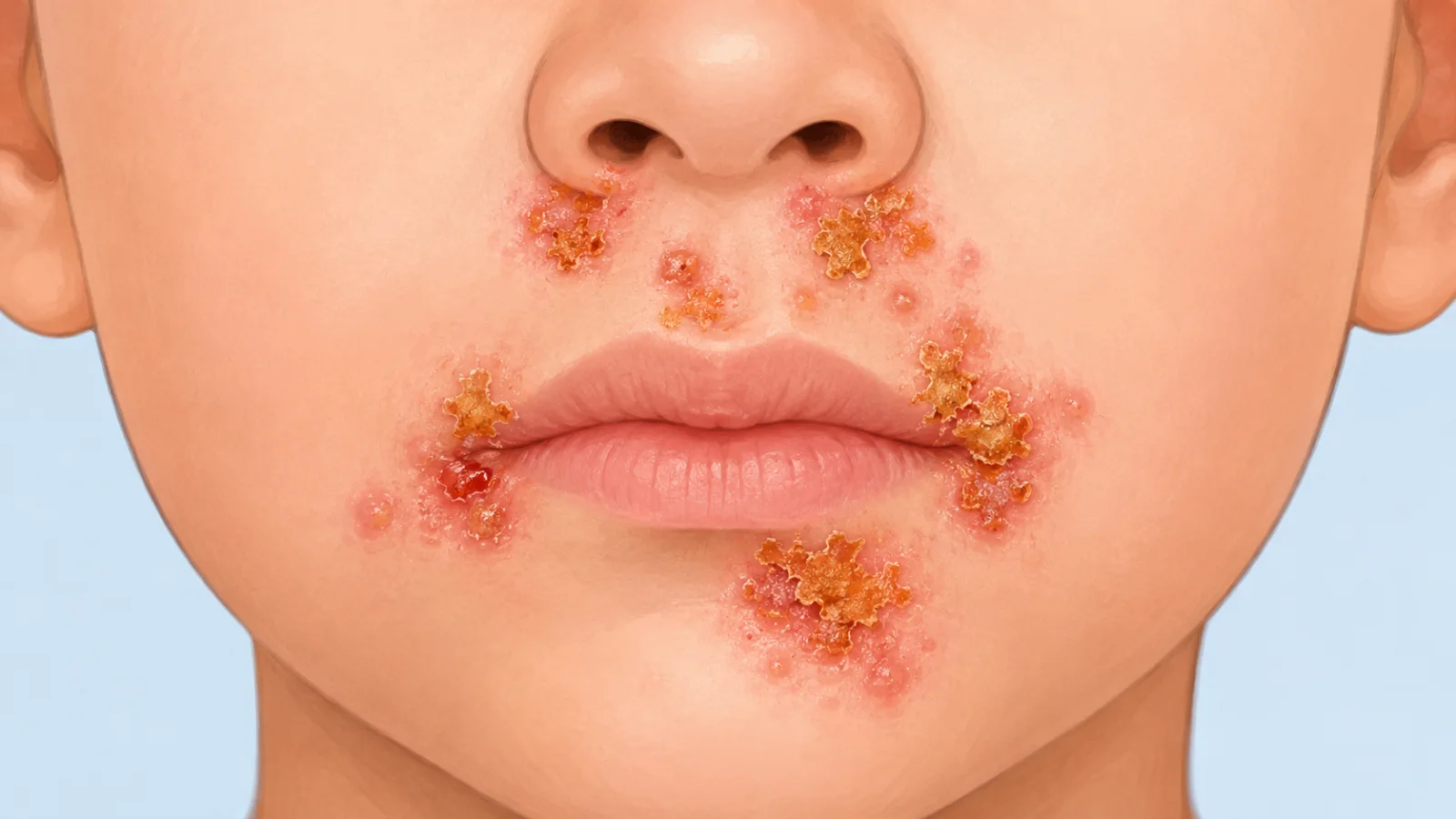
Impetigo is a common, highly contagious bacterial infection affecting the surface of the skin. It is most common in young children but can affect people of any age. The infection often begins around the nose or mouth, although it can occur anywhere, especially where the skin has been scratched, bitten or affected by eczema. It is usually not serious, but treatment can shorten the illness and reduce spread to others.
Symptoms
Impetigo may cause:
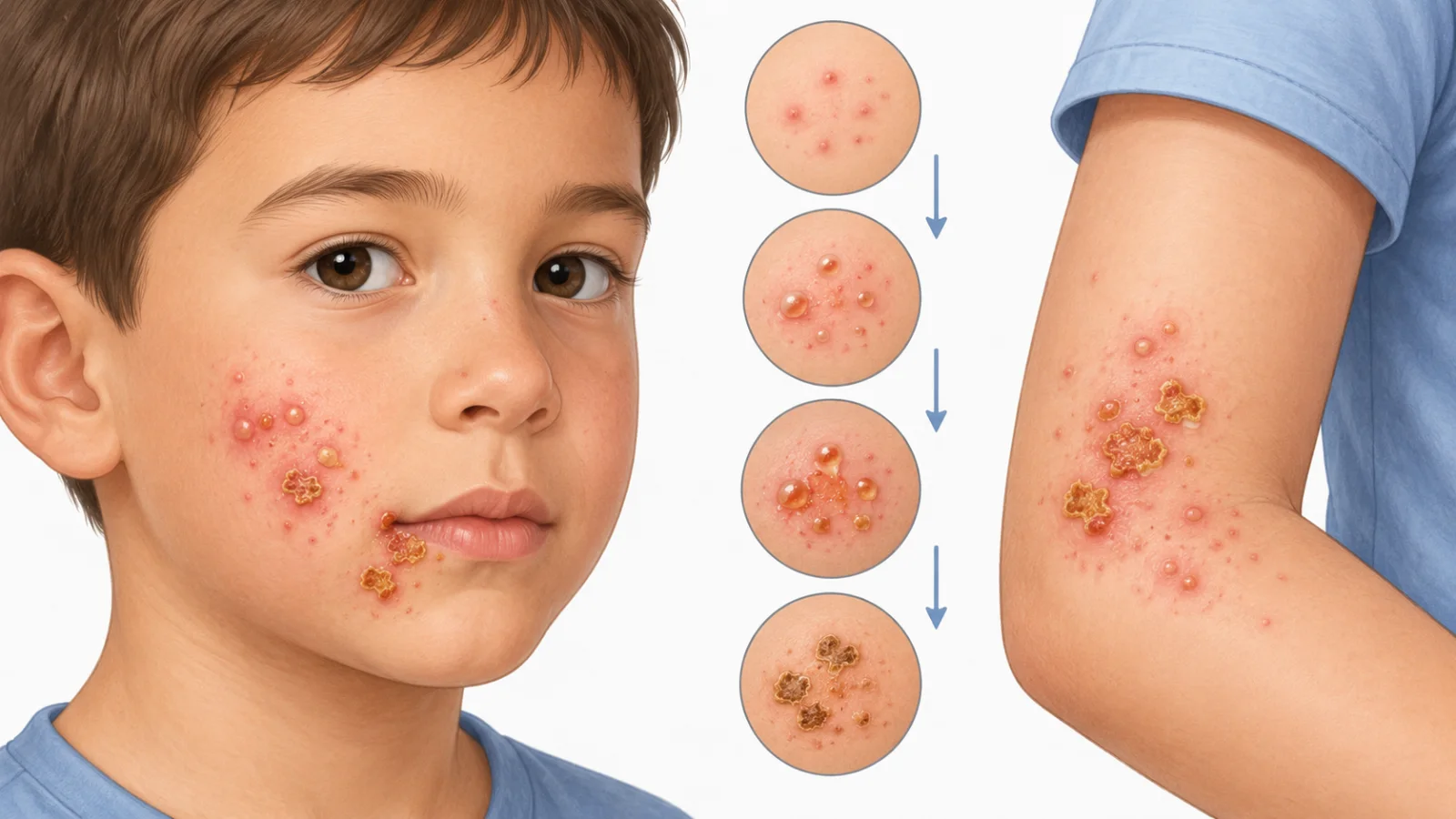
Small red, itchy or sore patches that quickly develop into blisters or open sores
Clear fluid or pus leaking from the sores
Golden-yellow or honey-coloured crusts forming over the affected skin
Several spots joining together or spreading to nearby areas
Larger, soft blisters, particularly on the trunk or in skin folds
Mild itching, soreness or swollen glands nearby
The redness may be harder to see on brown or darker skin. Impetigo usually affects exposed areas such as the face, arms and legs, but it can develop anywhere.
Red flags
Seek prompt medical assessment if:
The person has fever, marked tiredness or appears generally unwell
The redness, pain, heat or swelling is spreading rapidly
There is severe pain, extensive blistering or large areas of affected skin
The infection is close to the eyes
A newborn baby develops blisters or suspected impetigo
The person has weakened immunity, poorly controlled diabetes or another condition increasing infection risk
Treatment has been started but the infection continues to spread or does not begin to improve
Impetigo keeps returning
These features may suggest extensive impetigo, cellulitis, another skin disorder or a higher risk of complications.
Self-care
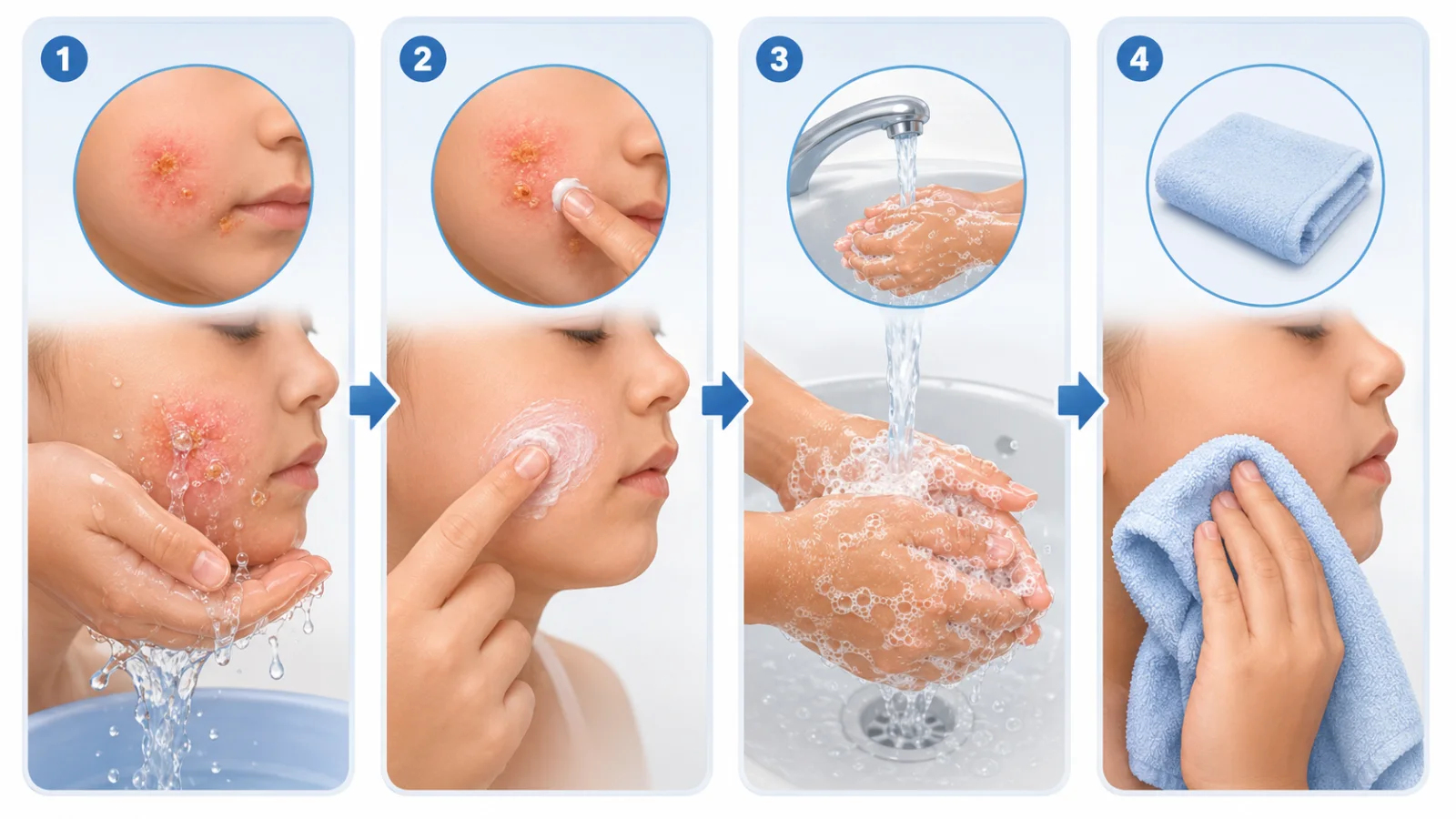
Wash the affected skin gently with soap and clean water, then pat it dry.
Avoid scratching, picking crusts or bursting blisters.
Wash hands regularly, especially after touching the affected area or applying treatment.
Keep fingernails short and clean.
Use separate towels, clothes, pillowcases and bedding, and wash them regularly.
Do not share face cloths, razors, clothing or personal items.
Keep sores lightly covered when practical, especially if they may touch other people.
Clean frequently touched surfaces and washable toys.
Children should stay away from school or nursery until the sores have crusted and healed, or until 48 hours after starting antibiotic treatment. Avoid close-contact sports until the infection is no longer contagious.
Treatment
Treatment depends on whether the infection is localised or widespread, whether blisters are present, and whether the person is generally unwell.
For a small area of non-bullous impetigo, a clinician may recommend a topical antiseptic or an antibiotic cream. More widespread infection, larger blisters, or illness affecting the whole body may require an oral antibiotic. Topical and oral antibiotics are not normally used together.
A skin swab is not always needed, but it may be arranged if the infection is recurring, has not responded to treatment or resistant bacteria are suspected. Treatment should be used exactly as advised and completed for the recommended period. Repeated or unnecessary antibiotic use can contribute to antibiotic resistance.
Questions to ask your doctor
Is this impetigo or another skin condition?
Is it the type that causes small crusted sores or larger blisters?
Does the infection need a cream or an oral antibiotic?
How should I clean and cover the affected area?
When will it no longer be contagious?
When can my child return to school or nursery?
Is a skin swab needed?
Why does the infection keep returning?
Which signs mean the infection may be spreading?
Nepal pathway
In Nepal, start with your nearest health post, PHC, clinic, or hospital if symptoms are worrying, severe, worsening, or not improving. Take previous prescriptions, test reports, allergy information, and current medicines with you. Seek urgent care immediately if there are red flag symptoms.
Disclaimer
This is general health information only and does not replace medical advice, diagnosis, treatment, or emergency care.
Further information
For more clinical photographs of impetigo, visit the DermNet page:
Help improve this guide
Spotted an error or want to contact us about this guide? Send a message to the HamroSwasthya team.