
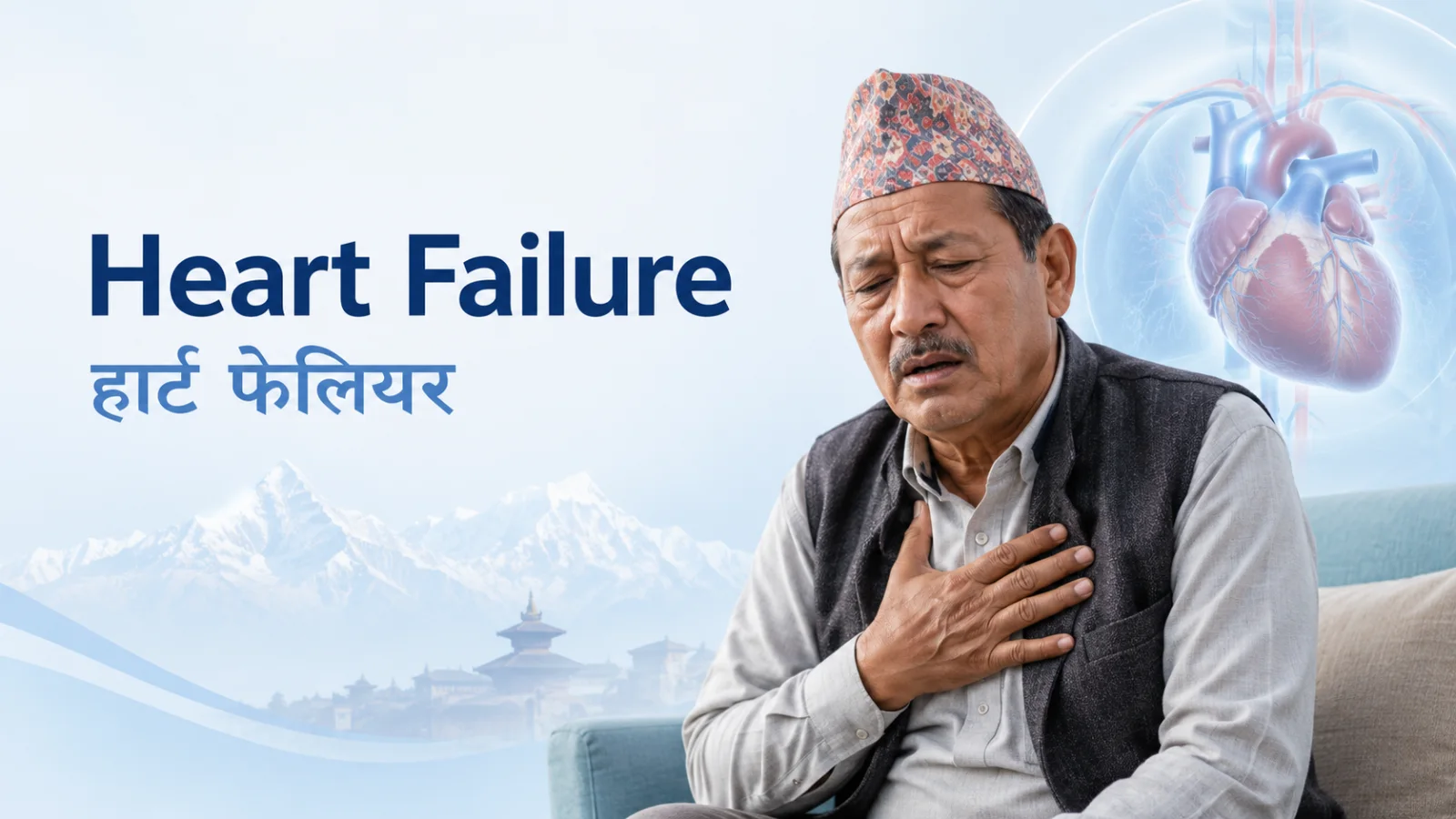
Heart failure
Heart failure happens when the heart cannot pump blood around the body as effectively as it should. It does not mean that the heart has stopped. The heart muscle may be too weak, too stiff, or affected by a valve or rhythm problem. Common causes include coronary heart disease, previous heart attack, high blood pressure, heart-valve disease, abnormal heart rhythms and cardiomyopathy.
Heart failure is usually a long-term condition, but treatment can reduce symptoms, slow worsening and help many people remain active for years.
Symptoms

Symptoms may develop gradually or worsen suddenly. They can include:
Breathlessness during activity or while resting
Difficulty breathing when lying flat or needing extra pillows at night
Waking suddenly at night feeling short of breath
Swelling of the feet, ankles, legs or abdomen
Rapid weight gain caused by fluid build-up
Persistent tiredness, weakness or reduced ability to exercise
A persistent cough or wheeze, sometimes worse at night
A fast, pounding or irregular heartbeat
Reduced appetite, nausea or feeling full quickly
Dizziness, faintness or difficulty concentrating
Older people may mainly develop increasing tiredness, confusion, reduced mobility or loss of appetite.
Red flags
Seek immediate emergency medical care if you experience any of the following severe warning signs:
Sudden or Severe breathing difficulty, especially at rest or waking up gasping for air
Chest pain, tightness, or pressure, particularly if it spreads to your neck, jaw, back, or arms
Fainting, collapse, or sudden loss of consciousness
Coughing up pink, frothy, or bloody mucus
If any of these occur, go to the nearest hospital emergency department immediately.
Self-care
Heart failure cannot be managed with home care alone. However, alongside the treatment recommended by your healthcare team, the following daily habits can help control symptoms and reduce the risk of the condition worsening:
Weigh yourself daily: Check your weight every morning after using the toilet and before eating. A sudden weight increase over a few days can mean your body is holding extra fluid.
Eat less salt: Reduce the amount of salt you add to food and avoid high-sodium snacks to help prevent fluid buildup.
Watch your fluids: Follow any advice your doctor gives you regarding how much liquid you should drink each day.
Take your medicines: Take all prescribed medicines consistently at the same times each day, even when you feel well.
Stay active safely: Do light, regular physical activity as recommended by your doctor, and take breaks to rest whenever needed.
Avoid tobacco and alcohol: Stop smoking or using tobacco products, and avoid or limit alcohol.
Treatment

Heart failure is usually a lifelong condition, but medical treatment can help keep it under control and improve your quality of life. Treatment options managed by your doctor or specialist may include:
Prescription medicines: Your doctor may prescribe a combination of medicines to help your heart work more effectively. These may include water pills (diuretics) to help your body remove extra fluid, as well as medicines to lower blood pressure, steady your heart rhythm, and reduce strain on the heart muscle.
Implanted devices: In some cases, a specialist may recommend a device placed in your chest, such as a pacemaker, to help your heart beat regularly and pump blood effectively.
Surgery or medical procedures: If an underlying problem is causing heart failure, procedures to open blocked arteries or surgery to repair or replace damaged heart valves may be advised.
Regular medical reviews: Frequent check-ups with your healthcare provider are essential to monitor your heart health, adjust your treatment plan, and ensure your medicines remain safe and effective.
Questions to ask your doctor
Here are some practical questions you can ask your doctor during your consultation:
What is the main cause of my heart failure?
Exactly how much fluid and salt should I have each day?
How much weight gain over a few days means I need to contact you?
What level of physical activity or exercise is safe for me?
What are the main side effects of my prescribed medicines?
How often do I need to come back for regular check-ups?
Nepal pathway
In Nepal, start with your nearest health post, PHC, clinic, or hospital if symptoms are worrying, severe, worsening, or not improving. Take previous prescriptions, test reports, allergy information, and current medicines with you. Seek urgent care immediately if there are red flag symptoms.
Disclaimer
This is general health information only and does not replace medical advice, diagnosis, treatment, or emergency care.
Help improve this guide
Spotted an error or want to contact us about this guide? Send a message to the HamroSwasthya team.