
Pregnancy danger signs
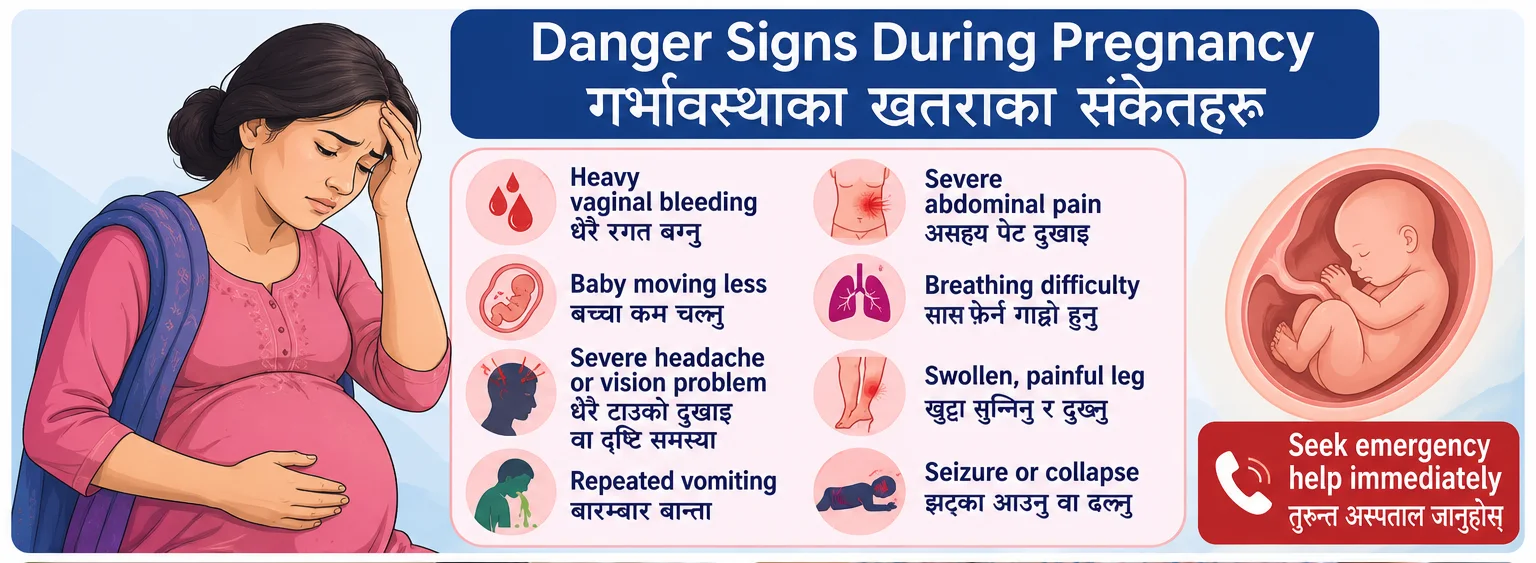
Most pregnancies progress safely, but certain symptoms can indicate a serious problem affecting the pregnant person, the baby, or both. Heavy bleeding, severe abdominal pain, seizure, breathing difficulty, collapse, or markedly reduced baby movements require immediate hospital assessment. Do not wait for the next antenatal appointment or for symptoms to improve overnight.

Emergency warning signs
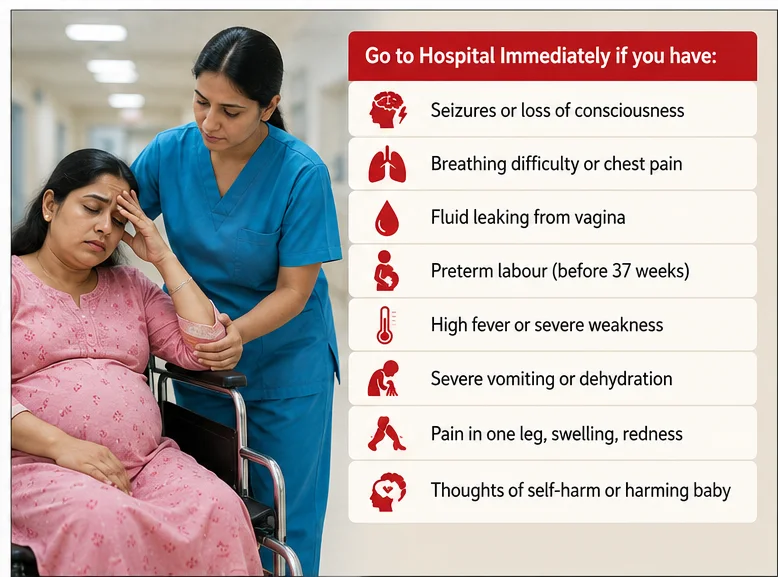
Go immediately to the nearest hospital with maternity or emergency services, or call 102 where an ambulance is available, if any of the following occur:
Heavy vaginal bleeding, passing clots, or bleeding with severe pain, dizziness or fainting
Severe or persistent abdominal pain, especially pain mainly on one side in early pregnancy
Shoulder-tip pain together with abdominal pain, bleeding, dizziness or collapse
A seizure, loss of consciousness, severe confusion or difficulty waking
Severe breathing difficulty, chest pain, coughing blood, collapse, or a very fast heartbeat
One leg becoming suddenly swollen, painful, warm or red
A severe headache that does not settle, blurred vision, flashing lights or loss of vision
Severe pain below the ribs, repeated vomiting, or sudden swelling of the face, hands or feet
The baby moving less than usual, stopping moving, or a clear change in the usual movement pattern
Fluid suddenly leaking or continuously trickling from the vagina
Regular painful contractions or suspected labour before 37 weeks
High fever, shivering, severe weakness, confusion or feeling extremely unwell
Persistent vomiting with inability to keep fluids down or very little urine
Thoughts of suicide, self-harm, harming the baby, or hearing or seeing things that others do not
Severe headache, visual disturbance, pain below the ribs, vomiting and sudden swelling can be symptoms of pre-eclampsia. Vaginal bleeding, reduced baby movements and possible rupture of the waters also require prompt assessment and should not be left until the next day.
What this page cannot tell you
This page cannot determine whether symptoms are caused by miscarriage, ectopic pregnancy, placental problems, pre-eclampsia, infection, premature labour, a blood clot or another condition.
Some serious pregnancy complications initially cause mild or unclear symptoms. A healthcare professional may need to examine you, check the baby and arrange blood tests, urine tests, ultrasound or monitoring.
Why it matters
Bleeding in early pregnancy with one-sided pain, shoulder-tip pain, dizziness or fainting can indicate an ectopic pregnancy with internal bleeding. Later in pregnancy, bleeding may be related to the placenta and can endanger both the pregnant person and the baby.
Pre-eclampsia can affect the brain, liver, kidneys, blood clotting and placenta. Reduced or changed fetal movement can sometimes indicate that the baby needs urgent assessment. Severe infection, blood clots and premature labour can also worsen quickly without treatment.
What you can do yourself
While arranging urgent assessment:
Sit or lie somewhere safe and ask another person to stay with you.
Use a sanitary pad rather than a tampon if bleeding or fluid leakage occurs.
Note the colour and approximate amount of bleeding or leaking fluid.
Note when the baby was last moving normally.
Bring your antenatal records, scan reports and list of medicines if readily available.
Use the safest available transport and avoid driving yourself when faint, severely unwell or in significant pain.
Do not:
Do not wait until morning if there is bleeding, reduced baby movement or another warning sign.
Do not use a home Doppler to reassure yourself that the baby is well.
Do not insert anything into the vagina when bleeding or leaking fluid.
Do not take aspirin, ibuprofen, antibiotics or herbal remedies for these symptoms unless a qualified clinician has advised them.
Do not eat or drink large amounts if emergency surgery may be required; follow instructions from the emergency team.
Do not stay alone if you feel faint, confused, unsafe or at risk of self-harm.
When to see a doctor
Seek urgent same-day maternity or medical assessment for:
Any fresh vaginal bleeding during pregnancy
New or worsening abdominal or pelvic pain
Persistent headache, visual symptoms or sudden swelling
Fever, painful or Burning urine or feeling significantly unwell
Repeated vomiting or inability to drink normally
Itching that is severe, particularly on the palms or soles
Possible leakage of the waters
Painful contractions before 37 weeks
Any reduction or clear change in the baby's usual movements
Do not wait for a fixed number of movements if you feel the baby is moving less than usual. Trust your concern and seek assessment promptly.
What a doctor may check
The healthcare team may assess:
Blood pressure, pulse, temperature, breathing and oxygen level
The amount of bleeding and the location or severity of pain
Urine for protein, infection and dehydration
Blood count, blood group, liver and kidney function, and blood clotting
The baby's heartbeat, movement and growth
Ultrasound findings and the position of the pregnancy or placenta
Whether the waters have broken or labour has started
Signs of pre-eclampsia, infection, blood clots or internal bleeding
Emotional wellbeing and immediate mental-health safety
The tests needed depend on the stage of pregnancy and the symptoms.
Nepal context
In Nepal, go to the nearest hospital providing maternity and emergency care. A birthing centre or small health post may provide initial help, but severe bleeding, seizures, breathing difficulty, suspected ectopic pregnancy, pre-eclampsia, premature labour or reduced fetal movements may require urgent referral to a larger hospital.
Plan transport before the expected delivery date, keep emergency money and antenatal records accessible, and identify a backup hospital in case the nearest facility cannot provide surgery, blood transfusion or newborn care. Do not delay because of distance, family decision-making, cost concerns, traditional treatment or fear of being examined.
Useful records to keep
Keep or note:
Number of weeks pregnant and estimated due date
Blood group and rhesus status, if known
Previous pregnancies, miscarriages, caesarean births or complications
When the symptoms started
Amount and colour of bleeding or leaking fluid
Timing and pattern of pain or contractions
When the baby was last moving normally
Blood-pressure readings, if available
Fever, vomiting, headache, visual changes or swelling
Current medicines, allergies and antenatal test results
Important notice
This information is for general health information only. It should not be used as a substitute for a doctor's advice, examination, diagnosis, treatment, or emergency services.
Help improve this guide
Spotted an error or want to contact us about this guide? Send a message to the HamroSwasthya team.