
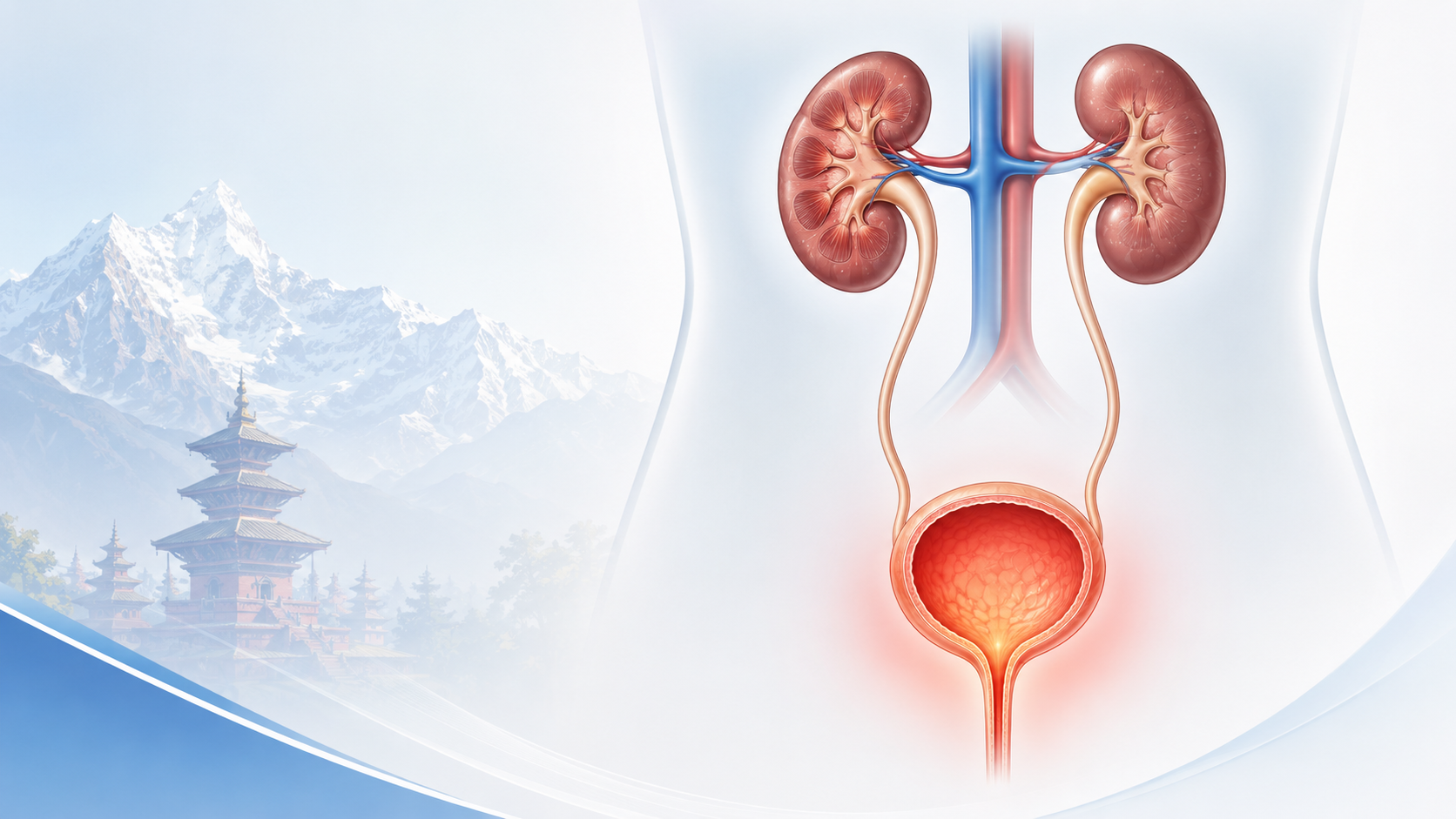
Burning urine
Burning, stinging, or pain when passing urine is a common symptom. It is often caused by a urinary tract infection (UTI), but it can also occur with sexually transmitted infections, prostate problems, kidney stones, dehydration, or other urinary conditions.
Burning urine is not always a simple UTI. The cause may depend on your age, sex, pregnancy status, other symptoms, medicines, and sexual history.
Emergency warning signs
Go to the nearest hospital urgently, or call Ambulance Nepal on 102 where available, if burning urine occurs with:
Fever, chills, shivering, or feeling severely unwell
Pain in the back or side below the ribs
Repeated vomiting or being unable to keep fluids down
Confusion, collapse, severe dizziness, or extreme weakness
Inability to pass urine, severe lower abdominal pain, or a swollen lower abdomen
Visible blood in urine with severe pain or feeling unwell
Pregnancy with fever, back pain, or urinary symptoms
Severe pain in the testicles, scrotum, or lower abdomen
A child who is very unwell, sleepy, not drinking, vomiting, or passing much less urine
These symptoms may suggest a kidney infection, urinary blockage, sepsis, stone, or another serious condition.
What this page cannot tell you
This page gives general information about burning urine. It cannot confirm whether the cause is a UTI, kidney infection, STI, kidney stone, prostate problem, vaginal infection, irritation, or another condition.
It cannot tell you whether antibiotics are needed, which antibiotic would be suitable, or whether urine tests, STI tests, blood tests, scans, or urgent hospital treatment are required.
Please speak with a doctor or qualified health professional for diagnosis and personal treatment advice.

Common causes
Common causes of burning urine include:
A bladder or lower urinary tract infection
A kidney infection
Sexually transmitted infections, such as chlamydia or gonorrhoea
Vaginal infection, dryness, irritation, or reaction to soaps and products
Prostate infection or inflammation
Kidney or bladder stones
Dehydration, which can make urine more concentrated and irritating
Injury or irritation around the urethra
Some medicines or recent urinary procedures
Burning urine matters because infections can sometimes spread to the kidneys or bloodstream. Symptoms in men, pregnant people, children, older people, and people with diabetes may need earlier assessment.
What you can do yourself
For mild symptoms while arranging medical advice:
Drink enough water to avoid dehydration, unless you have been advised to limit fluids.
Pass urine when you need to; do not hold it for long periods.
Keep the genital area clean using plain water or a mild non-perfumed product.
Avoid scented soaps, sprays, bubble baths, or products that seem to irritate the area.
Avoid sex until you have been assessed if you have discharge, genital sores, possible STI exposure, or pain during sex.
Ask a pharmacist or doctor about suitable pain relief.
Do not use leftover antibiotics, borrow antibiotics, or start antibiotics without advice from a qualified health professional.
When to see a doctor
Arrange to see a doctor or qualified health professional as soon as possible if:
Burning urine lasts more than a day or two
Symptoms are getting worse or keep returning
You need to pass urine more often, urgently, or at night
Your urine is cloudy, smelly, dark, or blood-stained
You have lower abdominal pain, pelvic pain, back pain, or fever
You have vaginal discharge, penile discharge, genital sores, or possible STI exposure
You are pregnant
You are male, a child, older, or have diabetes, kidney disease, a catheter, or a weakened immune system
You have had repeated UTIs or previous kidney stones
Symptoms started after a new sexual partner or unprotected sex

What a doctor may check
A doctor or qualified health professional may ask about:
When the burning started and whether it happens every time you pass urine
Frequency, urgency, night-time urination, difficulty passing urine, or incomplete emptying
Fever, back pain, lower abdominal pain, blood in urine, discharge, itching, sores, or genital pain
Pregnancy, sexual history, recent new partners, contraception, and possible STI exposure
Previous UTIs, stones, prostate problems, kidney problems, diabetes, or urinary procedures
Regular medicines, allergies, and recent antibiotic use
They may examine the abdomen, back, genital area, or prostate where appropriate. Tests may include a urine dipstick or culture, pregnancy test, STI tests, blood tests, ultrasound, or other scans depending on the symptoms.
Nepal context
In Nepal, visit a nearby health post, clinic, PHC, or hospital if you have burning urine, especially if symptoms are persistent, severe, recurrent, or associated with fever, back pain, blood in urine, pregnancy, or discharge.
Go directly to a hospital for emergency warning signs. Ambulance Nepal can be contacted on 102 where available.
Take your current medicines, previous prescriptions, urine test reports, scan reports, and allergy information with you.
Useful records to keep
Keep a short record of:
When symptoms started and how often they occur
Whether there is fever, back pain, lower abdominal pain, blood in urine, discharge, or genital sores
How often you pass urine and whether you can empty the bladder fully
Recent sexual contact, new partners, condom use, or possible STI exposure
Water intake and any products that seem to irritate symptoms
Previous UTIs, kidney stones, pregnancy-related urine infections, or urinary procedures
Regular medicines, previous antibiotics, medicine allergies, and test results
Important notice
This information is for general health information only. It should not be used as a substitute for a doctor's advice, examination, diagnosis, treatment, or emergency services.
Help improve this guide
Spotted an error or want to contact us about this guide? Send a message to the HamroSwasthya team.