
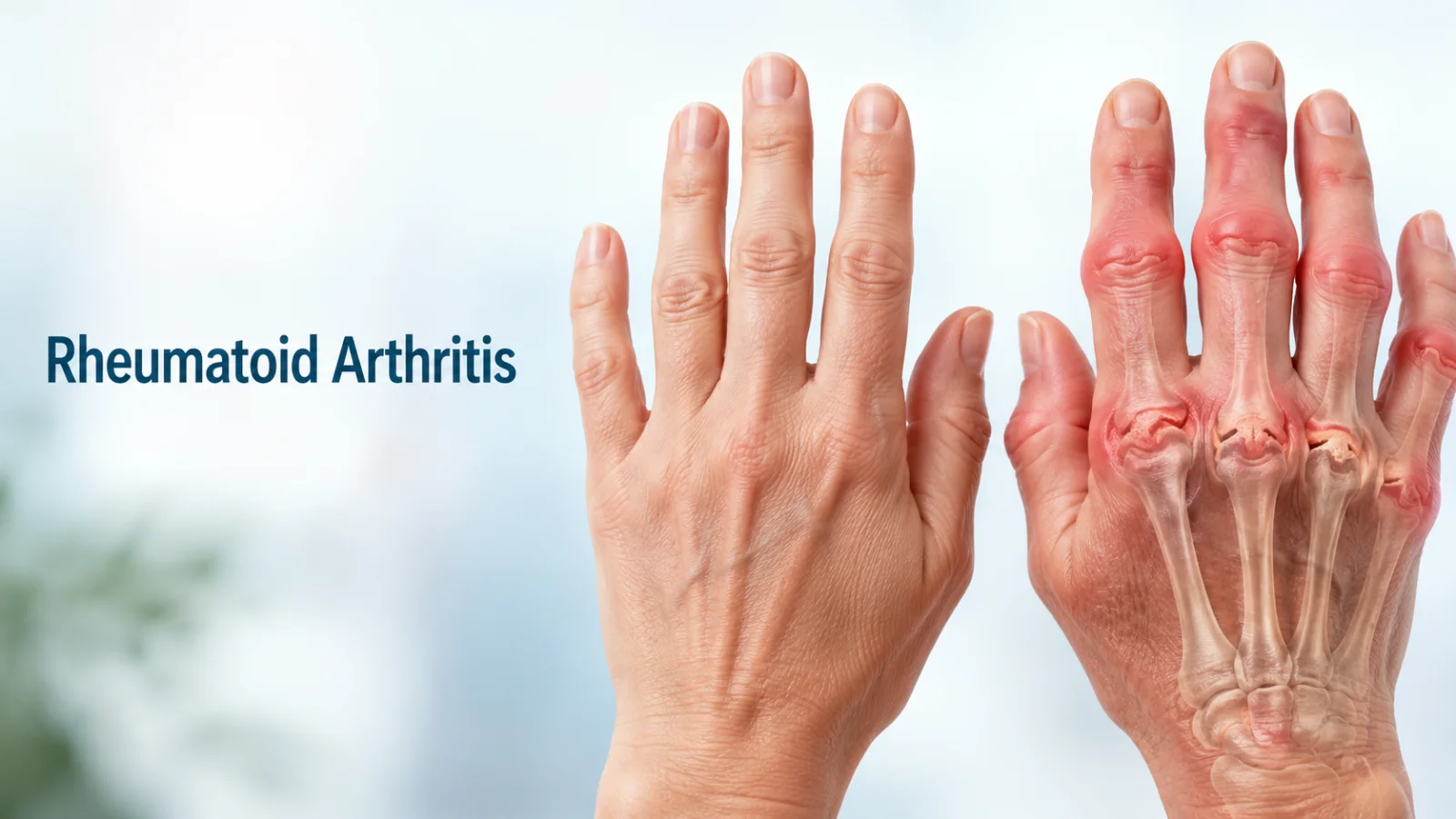
Rheumatoid arthritis
Rheumatoid arthritis is a long-term autoimmune inflammatory disease. It develops when the immune system mistakenly attacks the lining of the joints, causing pain, swelling and stiffness. It commonly affects the small joints of the hands, wrists and feet, often on both sides of the body, but it can affect other joints and occasionally the eyes, lungs, heart, blood vessels or nerves.
Rheumatoid arthritis is different from osteoarthritis, which is mainly associated with changes in joint cartilage and surrounding tissues over time. Early assessment and treatment are important because ongoing inflammation can permanently damage joints, whereas disease-modifying treatment can slow or prevent this damage.
Symptoms
Symptoms may develop gradually over several weeks or, less commonly, appear more quickly. They can vary from day to day, with periods when the disease becomes more active, known as flares.
Possible symptoms include:
Pain, swelling, warmth or tenderness in several joints
Stiffness that is often worse in the morning or after resting
Morning stiffness lasting longer than would usually be expected with ordinary aches
Symptoms affecting similar joints on both sides, particularly the fingers, knuckles, wrists, toes or feet
Difficulty making a fist, gripping objects, opening containers, walking or completing everyday tasks
Persistent tiredness or low energy
Feeling generally unwell
Reduced appetite or unintentional weight loss
Mild fever or sweating during active inflammation
Firm lumps under the skin near pressure points, called rheumatoid nodules
Reduced movement or changes in joint shape if the disease remains uncontrolled
Rheumatoid arthritis does not always begin in a typical symmetrical pattern, and normal blood-test results do not completely rule it out. Persistent joint swelling therefore needs clinical assessment.
Red flags

Seek urgent medical assessment if you have:
One joint that suddenly becomes extremely painful, hot, red and swollen, particularly with fever or feeling very unwell
Sudden inability to move or bear weight through a joint
Severe breathlessness, chest pain, coughing blood or blue lips
New weakness, numbness, difficulty walking, loss of balance, or problems controlling urine or stool
A painful red eye, marked sensitivity to light or sudden change in vision
Severe infection symptoms while taking medicines that suppress the immune system
Unusual bleeding, widespread bruising, severe mouth ulcers, yellowing of the skin or eyes, or markedly reduced urine
New or worsening breathlessness or a persistent dry cough after starting rheumatoid-arthritis medicine
Severe abdominal pain, vomiting blood or black, tar-like stool
A hot, swollen joint with fever may be caused by an infection rather than a rheumatoid-arthritis flare and needs urgent treatment. Chest, neurological, eye or severe medicine-related symptoms also require prompt assessment.
Contact your health provider urgently if you take methotrexate or another disease-modifying medicine and develop fever, severe sore throat, mouth ulcers, unusual bruising, jaundice, or significant breathlessness. Do not simply assume these symptoms are part of rheumatoid arthritis.
Self-care
Rheumatoid arthritis cannot be treated through home care alone. However, alongside specialist treatment, the following measures can help maintain strength, mobility and general health:
Take prescribed medicines consistently and attend all monitoring appointments.
Do not stop a disease-modifying medicine because symptoms improve unless your specialist advises it.
Balance activity with additional rest during a flare, while avoiding prolonged complete inactivity.
Use regular low-impact activity such as walking, cycling, swimming or exercises recommended by a physiotherapist.
Perform joint-mobility and muscle-strengthening exercises within comfortable limits.
Protect painful joints by changing how tasks are performed and using supportive equipment where useful.
Apply warmth to stiff muscles or joints, or a wrapped cold pack to a recently swollen joint, according to which feels more helpful.
Stop smoking, as smoking is associated with rheumatoid arthritis and can adversely affect health and treatment outcomes.
Eat a varied, balanced diet and maintain a healthy, sustainable weight.
Discuss recommended vaccinations before starting or while using immune-suppressing treatment.
Tell healthcare professionals about all prescription medicines, painkillers, supplements and herbal products you use.
Discuss pregnancy plans before conception because some rheumatoid-arthritis medicines must be changed in advance.
During a flare, reducing strenuous activity may help, but staying in bed or keeping joints completely still for prolonged periods can contribute to stiffness and muscle weakness. Physiotherapy and occupational therapy can help with exercise, joint protection and adapting everyday activities.
Do not take steroid tablets, methotrexate, injectable medicines or unregulated herbal treatments without medical supervision. Pain-relieving medicines may reduce symptoms, but they do not prevent rheumatoid arthritis from damaging the joints.
Treatment

There is no single test that confirms every case of rheumatoid arthritis. Assessment may include examining the joints and checking blood tests for inflammation, rheumatoid factor and anti-CCP antibodies. X-rays, ultrasound or other imaging may help assess inflammation or joint damage. A negative rheumatoid factor does not exclude the condition.
A person with persistent inflammation affecting more than one joint, or the small joints of the hands or feet, should receive prompt specialist assessment. Referral should not be delayed while waiting for blood-test results because early treatment offers the best opportunity to control inflammation and protect the joints.
Disease-modifying antirheumatic drugs (DMARDs): Medicines such as methotrexate reduce immune-system activity and slow or prevent joint damage. They usually take time to work and require regular blood-test monitoring.
Short-term corticosteroid treatment: This may control inflammation while a DMARD begins working or during selected flares, but long-term steroid use can cause important adverse effects.
Biological or targeted medicines: These may be considered when standard DMARD treatment does not control the disease adequately.
Pain-relieving or anti-inflammatory medicines: These may help pain and stiffness but do not stop the underlying disease from progressing.
Physiotherapy: Helps maintain joint movement, muscle strength, fitness and mobility.
Occupational therapy: Provides joint-protection strategies, splints or adaptations for work and daily activities.
Podiatry: May help with foot pain, footwear, insoles and walking difficulties.
Surgery: Joint repair or replacement may occasionally be considered when severe damage causes persistent pain or disability.
Treatment is usually adjusted towards a clear target, such as remission or low disease activity. Regular reviews and blood tests are needed to assess joint inflammation, medicine safety and whether treatment should be changed.
Questions to ask your doctor
Could this be rheumatoid arthritis or another type of joint disease?
How is rheumatoid arthritis different from osteoarthritis or gout?
Do I need an urgent referral to a rheumatology specialist?
What do my rheumatoid factor, anti-CCP and inflammation tests show?
Can rheumatoid arthritis still be present if my blood tests are normal?
Is there already any joint damage?
Which disease-modifying medicine is most suitable for me?
What side effects or infection symptoms require urgent advice?
How often will I need blood tests and specialist reviews?
Which pain-relieving medicines are safe with my other conditions?
Would physiotherapy, occupational therapy or podiatry help?
Which vaccinations should I receive?
Is my treatment safe if I am planning pregnancy, pregnant or breastfeeding?
What should I do when my symptoms flare?
Nepal pathway
In Nepal, start with your nearest health post, PHC, clinic, or hospital if symptoms are worrying, severe, worsening, or not improving. Take previous prescriptions, test reports, allergy information, and current medicines with you. Seek urgent care immediately if there are red flag symptoms.
Disclaimer
This is general health information only and does not replace medical advice, diagnosis, treatment, or emergency care.
Help improve this guide
Spotted an error or want to contact us about this guide? Send a message to the HamroSwasthya team.