
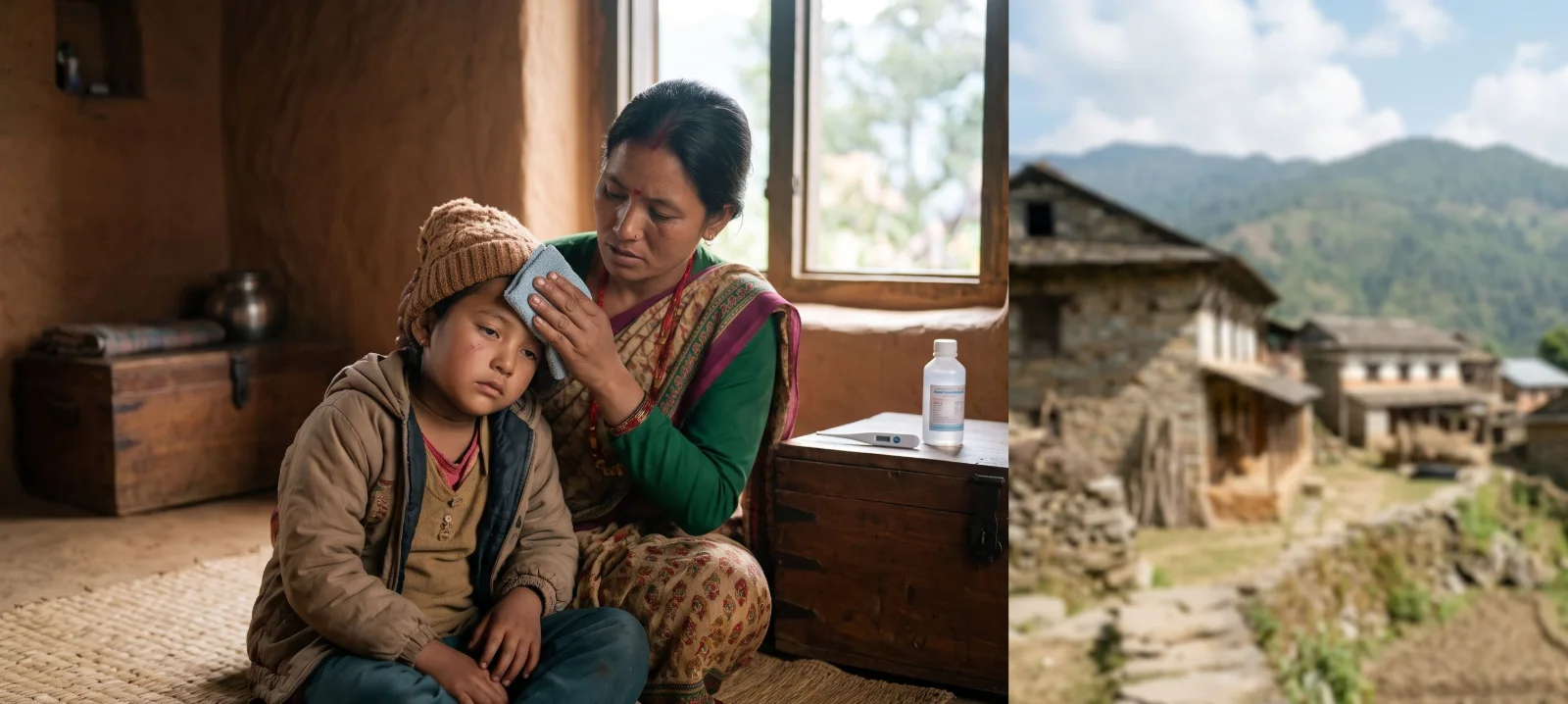
Fever in Children
A fever means a body temperature of 38°C or higher. It is usually the body's response to an infection. Most childhood fevers are not caused by a serious illness, but a child can sometimes become unwell quickly.
Do not judge severity from the temperature alone. The child's breathing, alertness, skin colour, drinking, urine output and overall behaviour are often more important. A baby younger than 3 months with a temperature of 38°C or higher needs urgent medical assessment.
Emergency warning signs
Take the child to the nearest emergency department immediately, or call 102 where ambulance services are available, if they:
Are struggling to breathe, grunting, gasping or pulling in under the ribs
Have blue, grey, very pale or blotchy lips, tongue or skin
Are unusually sleepy, difficult to wake, confused or not responding normally
Have a seizure, especially a first seizure or one lasting 5 minutes or longer
Have a stiff neck, severe headache or discomfort with bright light
Develop a rash that does not fade when pressed firmly with a clear glass
Cannot breastfeed or drink, vomit everything, or pass very little urine
Have unusually cold hands and feet while appearing seriously unwell
Have a weak, high-pitched or continuous cry
Collapse or lose consciousness
Do not wait to see whether the temperature rises further or improves after fever medicine. These signs may indicate severe dehydration, pneumonia, meningitis, sepsis or another serious illness.
What this page cannot tell you
This page cannot identify why a child has a fever or confirm whether the cause is a viral infection, pneumonia, urinary infection, dengue, meningitis, measles or another illness.
The temperature reading alone cannot confirm or exclude serious illness. A clinician may need to examine the child and arrange tests.
Why it matters
Children, particularly babies, may deteriorate quickly. A serious infection can sometimes begin with few obvious symptoms.
Children younger than 3 months with a temperature of 38°C or higher are at increased risk of serious illness. Children aged 3 to 6 months with a temperature of 39°C or higher also need prompt medical assessment. In children older than 6 months, the height of the temperature alone should not be used to decide whether the illness is serious.
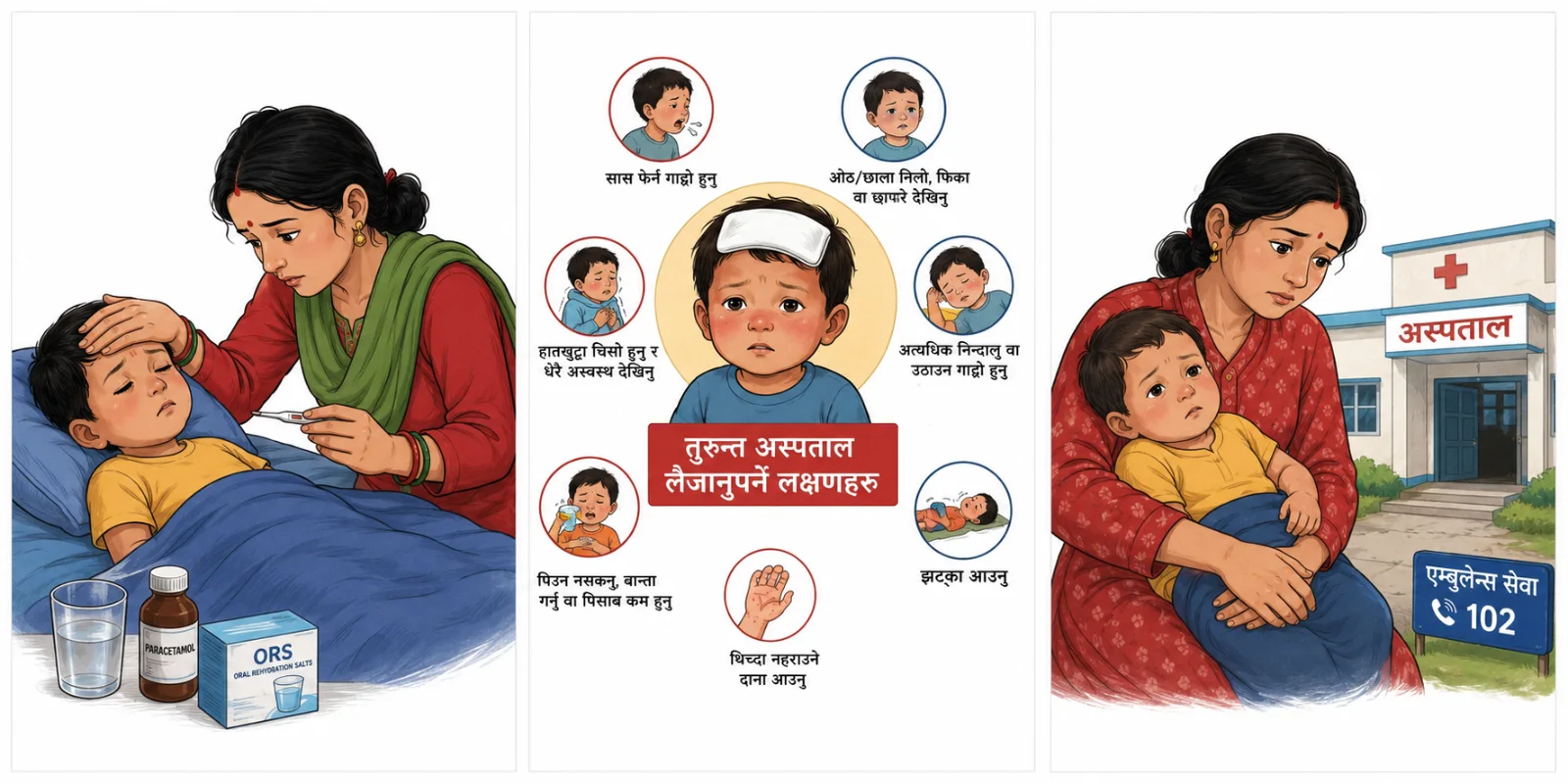
What you can do yourself
For a child who is alert, breathing comfortably and able to drink:
Offer frequent breastfeeds and suitable fluids.
Keep clothing light and comfortable; do not overwrap the child.
Check the child regularly, including during the night.
Use paracetamol or ibuprofen only when the child is distressed or uncomfortable and the medicine is suitable for their age and health.
Follow the medicine label or advice from a qualified health professional.
Record the temperature, fluids, urine and medicines given.
Do not:
Do not give paracetamol and ibuprofen together unless advised by a health professional.
Do not use ice, cold baths or alcohol rubs to reduce the temperature.
Do not force food; fluids are more important during a short illness.
Do not give leftover antibiotics or medicines prescribed for another child.
Do not give aspirin to a child.
Do not rely on the temperature falling after medicine as proof that the illness is harmless.
When to see a doctor
Arrange urgent medical assessment if:
The child is younger than 3 months and has a temperature of 38°C or higher.
The child is 3 to 6 months old and has a temperature of 39°C or higher.
The fever has lasted for 5 days or longer.
The child is drinking or breastfeeding less, passing less urine or becoming increasingly irritable.
Breathing is faster or harder than usual.
There is persistent vomiting, diarrhoea, ear pain, painful urination or a swollen joint.
The child has weakened immunity, a significant long-term condition or recently had surgery.
The child is worsening, or the caregiver remains seriously concerned.
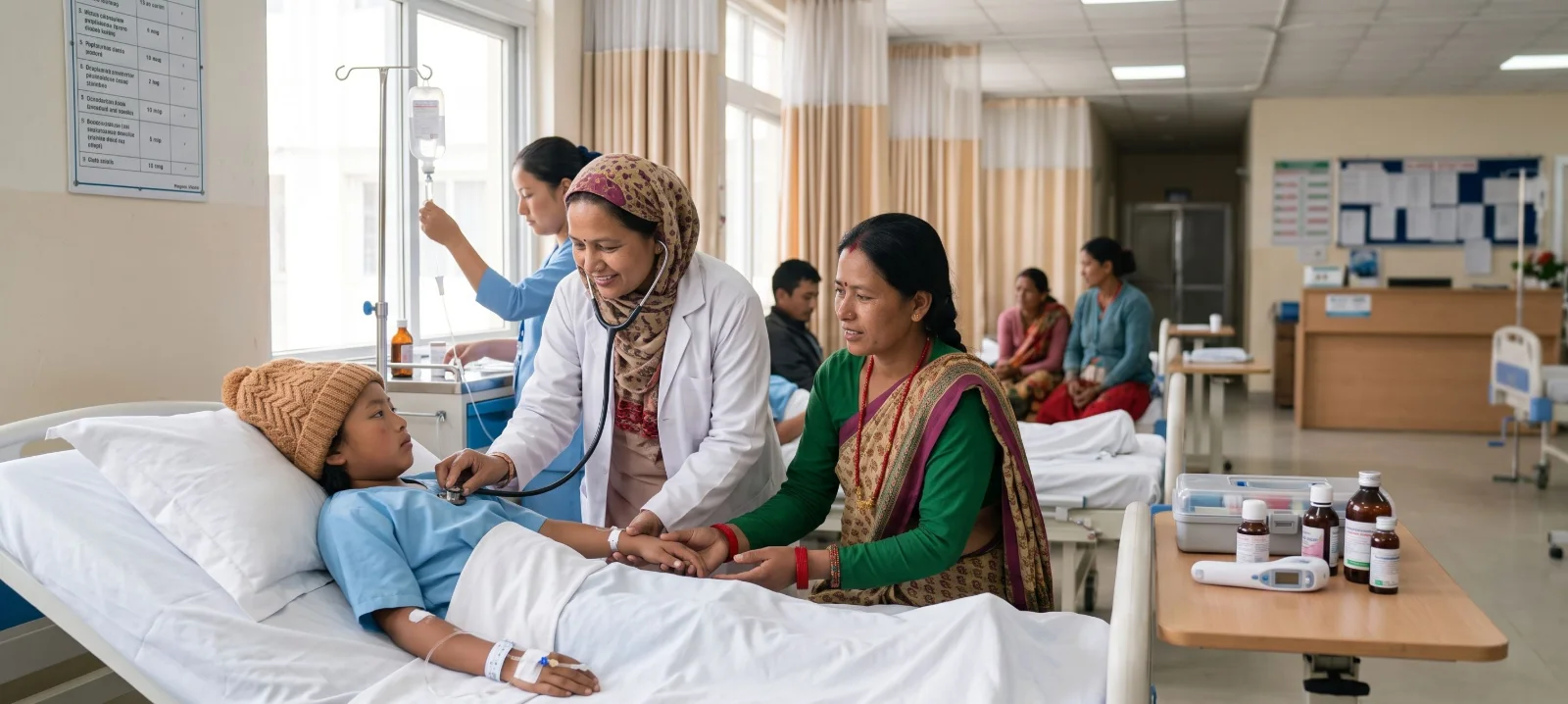
What a doctor may check
A doctor or emergency team may check:
Temperature, breathing rate, heart rate, oxygen level and blood pressure
Alertness, behaviour, skin colour and hydration
Breathing effort and signs of pneumonia
The throat, ears, neck, chest, abdomen, skin and joints
Feeding, fluid intake, urine output, vomiting, diarrhoea and pain
Vaccination history, recent travel, mosquito exposure and contact with infections
Depending on the child's age and symptoms, tests may include urine testing, blood tests, infection tests, chest imaging or other investigations.
Nepal context
In Nepal, fever in children may be caused by common viral illnesses, pneumonia, diarrhoeal infections, urinary infections, dengue, typhoid, measles or other conditions. Likely causes vary according to season, location, vaccination history and recent travel.
Take a seriously unwell child directly to the nearest hospital or health facility that can provide emergency care. Call 102 where ambulance services are available. Do not delay urgent care while trying traditional remedies or waiting for the fever to become higher.
Useful records to keep
The child's age and approximate weight
When the fever started
Temperature readings and how they were measured
Breathing difficulty, rash, pain, vomiting or diarrhoea
Breastfeeding and other fluid intake
Number of wet nappies or times urine was passed
Medicines given, including the name, time and amount
Recent travel, mosquito exposure, vaccinations and contact with illness
Important notice
This information is for general health information only. It should not be used as a substitute for a doctor's advice, examination, diagnosis, treatment, or emergency services.
Help improve this guide
Spotted an error or want to contact us about this guide? Send a message to the HamroSwasthya team.