
Angina
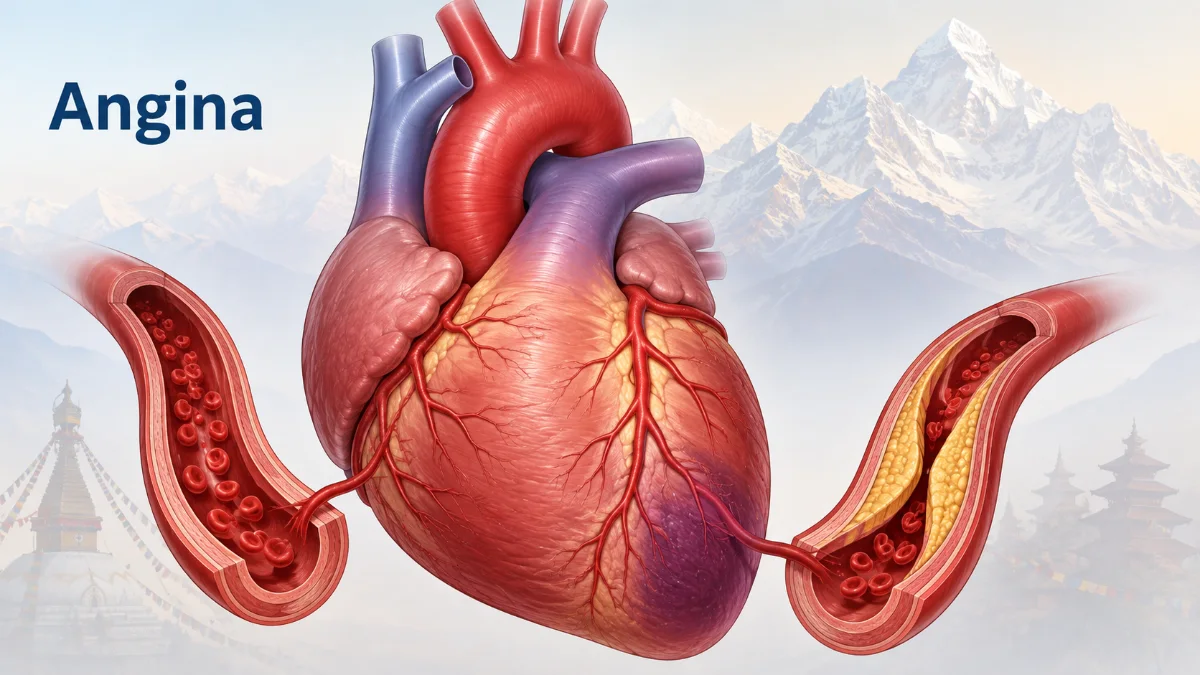
Angina is chest discomfort or breathlessness caused by reduced blood flow to the heart muscle. It usually happens because the coronary arteries, which supply blood to the heart, have become narrowed by coronary heart disease. Angina is not the same as a heart attack, but it is an important warning sign that the heart may not be getting enough oxygen.
Angina can be stable or unstable. Stable angina usually comes on with exertion, emotional stress, cold weather or heavy meals, and improves with rest or prescribed angina medicine. Unstable angina is new, worsening, happening at rest, or not settling as expected. Unstable angina may be part of an acute coronary syndrome and needs urgent hospital assessment.
Symptoms
Angina may feel different from person to person. Symptoms can include:
Pain, pressure, tightness, heaviness or squeezing in the chest
Discomfort spreading to the left or right arm, shoulder, neck, jaw, back or upper abdomen
Breathlessness during activity
Sweating, nausea or feeling faint during an episode
Unusual tiredness or reduced ability to walk uphill or climb stairs
Symptoms triggered by walking, climbing, carrying loads, cold weather, emotional stress or a heavy meal
Symptoms that improve with rest or prescribed nitrate medicine
Some people, especially older adults, women and people with diabetes, may have less typical symptoms such as breathlessness, nausea, fatigue, indigestion-like discomfort or reduced exercise tolerance rather than clear chest pain.
Chest pain is not always angina. Acid reflux, stomach ulcer, muscle pain, anxiety, lung disease and gallbladder disease can also cause chest or upper abdominal discomfort. However, new or unexplained chest pain should not be assumed to be "gas," "acidity" or indigestion without proper assessment.
Red flags
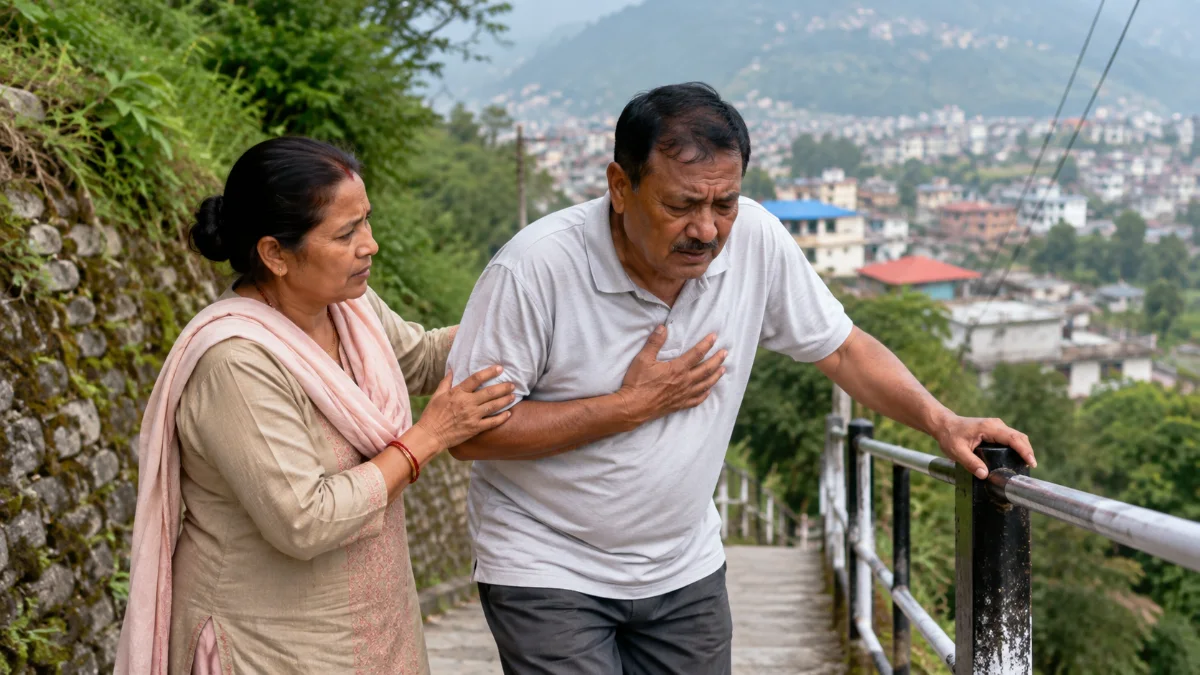
Go to the nearest emergency-capable hospital immediately, or call 102 where available, if chest discomfort or breathlessness:
Is new, severe or frightening
Happens at rest
Lasts more than a few minutes or does not settle with rest
Is becoming more frequent, more severe or triggered by less activity than before
Spreads to the arm, jaw, neck, back or upper abdomen
Occurs with sweating, nausea, vomiting, fainting, severe weakness or a sense of impending doom
Occurs with severe breathlessness, blue lips or collapse
Occurs with a fast, irregular or very slow heartbeat
Occurs with coughing blood or one painful swollen leg
Occurs in someone with known heart disease, diabetes, chronic kidney disease, previous stroke, high blood pressure or heavy smoking history
These symptoms may indicate a heart attack, unstable angina, a dangerous heart rhythm, pulmonary embolism or another serious condition. Do not drive yourself to hospital if a safer option is available.
Self-care
Angina should not be managed with home care alone. Medical assessment is needed to confirm the diagnosis, assess heart risk and start treatment to reduce the chance of heart attack and stroke.
Alongside the treatment recommended by your healthcare team:
Stop smoking and avoid second-hand smoke.
Take prescribed medicines regularly.
Keep prescribed short-acting angina medicine with you if your clinician has given it.
Learn when and how to use your angina medicine, and what to do if symptoms do not settle.
Avoid suddenly doing strenuous activity beyond your usual ability.
Build physical activity gradually within the limits advised by your clinician.
Eat a heart-healthy diet with more vegetables, fruit, pulses, whole grains and unsaturated fats.
Reduce excess salt, deep-fried foods, trans fats and highly processed foods.
Manage blood pressure, diabetes and cholesterol with regular follow-up.
Maintain a healthy, sustainable weight.
Limit alcohol and avoid recreational drugs.
Keep a record of chest pain episodes, triggers, duration, medicines used and response.
Do not ignore chest pain because it feels like acidity. Do not use someone else's heart medicine. Do not stop aspirin, blood pressure medicine, cholesterol medicine or angina medicine without medical advice.
Treatment
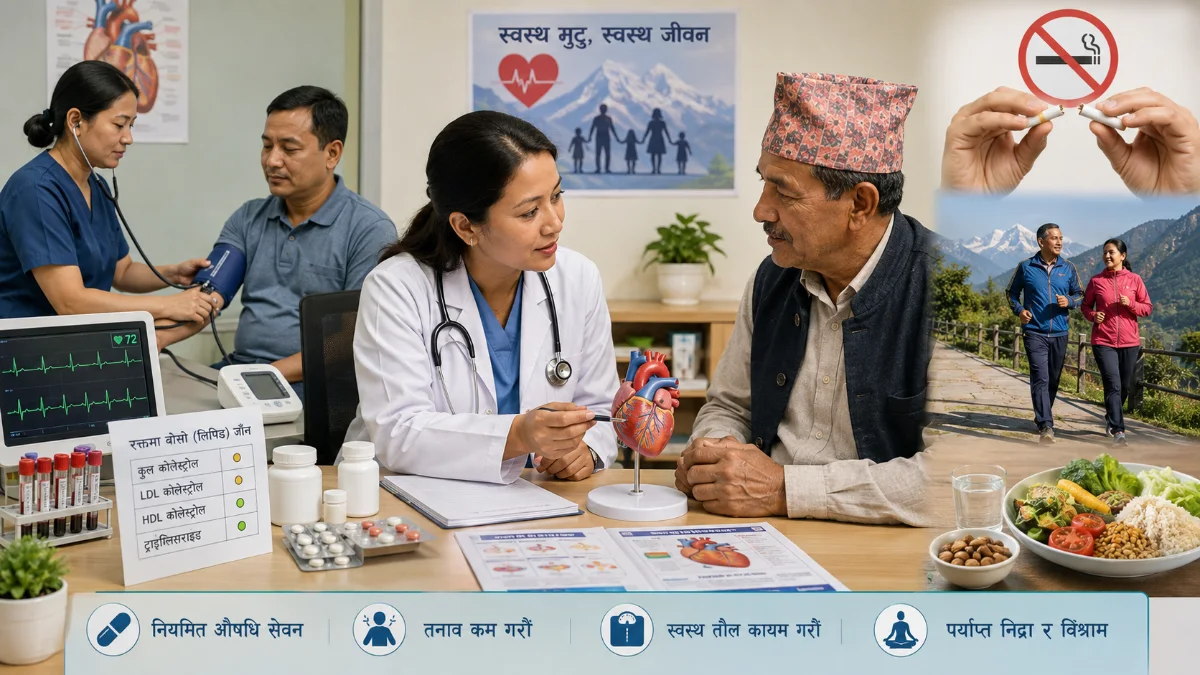
Assessment may include a history of the chest pain, examination, blood pressure, ECG, blood tests including cholesterol and diabetes screening, and tests to look for coronary artery disease. People with possible recent-onset angina may need CT coronary angiography or other heart tests depending on local availability and clinical risk.
Treatment has two main aims: to reduce angina symptoms and to reduce the risk of heart attack, stroke and death. NICE explains that anti-anginal medicines are used to prevent angina episodes, while secondary-prevention treatment reduces future cardiovascular events.
Treatment may include:
Short-acting nitrate medicine to relieve angina attacks.
Regular anti-anginal medicines, such as beta blockers or calcium-channel blockers, to prevent symptoms.
Antiplatelet medicine, cholesterol-lowering treatment and blood-pressure treatment when appropriate to reduce cardiovascular risk.
Diabetes management, smoking cessation and cardiac rehabilitation or supervised exercise advice.
Coronary angioplasty or bypass surgery for selected people whose symptoms are not controlled with medicines or whose coronary anatomy suggests a benefit from a procedure.
In Nepal, specialist heart services may be concentrated in larger hospitals and cardiac centres. A person with suspected unstable angina or heart attack symptoms should attend the nearest hospital that can provide emergency ECG, blood tests and acute cardiac care. For stable symptoms, evaluation may involve a physician, cardiologist or referral centre depending on local availability.
Questions to ask your doctor
Are my symptoms likely to be angina or another cause of chest pain?
Is this stable angina or could it be unstable angina?
Do I need an ECG, blood tests, CT coronary angiography, stress test or angiogram?
What should I do if chest pain happens again?
How and when should I use my prescribed angina medicine?
Which symptoms mean I should go to hospital immediately?
What is my risk of heart attack or stroke?
Do I need aspirin, cholesterol medicine or blood-pressure treatment?
What level of exercise is safe for me?
Could diabetes, high blood pressure, smoking or kidney disease be increasing my risk?
Would angioplasty, stenting or bypass surgery help in my case?
How often should I have follow-up?
Nepal pathway
In Nepal, start with your nearest health post, PHC, clinic, or hospital if symptoms are worrying, severe, worsening, or not improving. Take previous prescriptions, test reports, allergy information, and current medicines with you. Seek urgent care immediately if there are red flag symptoms.
Disclaimer
This is general health information only and does not replace medical advice, diagnosis, treatment, or emergency care.
Help improve this guide
Spotted an error or want to contact us about this guide? Send a message to the HamroSwasthya team.