
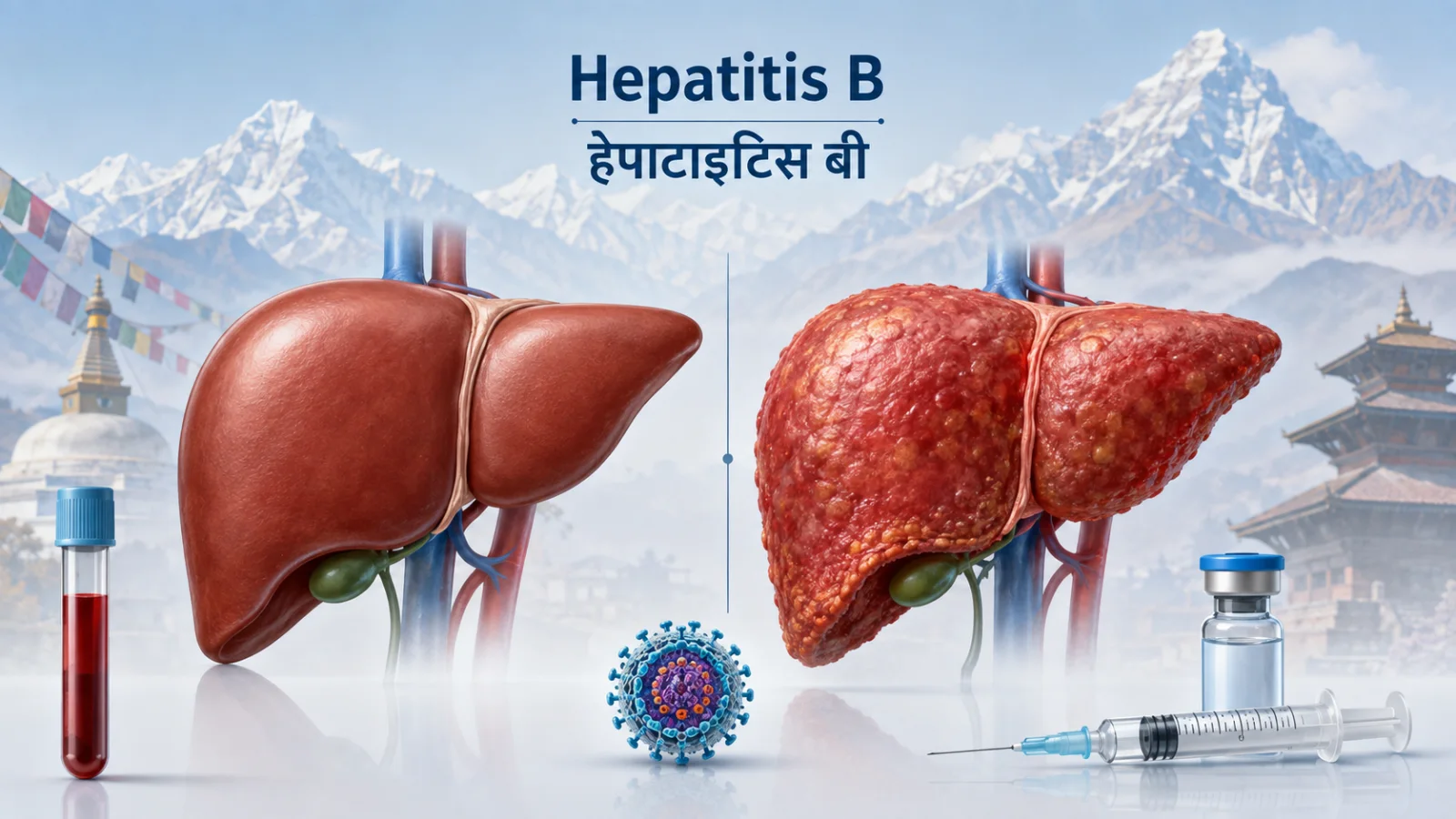
Hepatitis B
Hepatitis B is a viral infection that affects the liver. It spreads through infected blood and body fluids, including during birth from mother to baby, unprotected sex, sharing needles, needle-stick injuries, and medical, dental, tattooing or piercing procedures done with unsterilised equipment. It is different from hepatitis A, which mainly spreads through contaminated food and water.
Some people develop a short-term infection that clears within a few months. If hepatitis B infection lasts longer than 6 months, it is called chronic hepatitis B. Chronic infection can silently damage the liver over years and increase the risk of cirrhosis and liver cancer. Babies, young children and people with weakened immunity are more likely to develop chronic infection after exposure.
In Nepal, hepatitis B is included in the national viral hepatitis response. Nepal's Ministry of Health and Population disseminated the National Strategy for Viral Hepatitis B and C 2023-2030, supported by WHO Nepal, to strengthen prevention, diagnosis and treatment services, including expansion to communities and vulnerable populations.
Symptoms
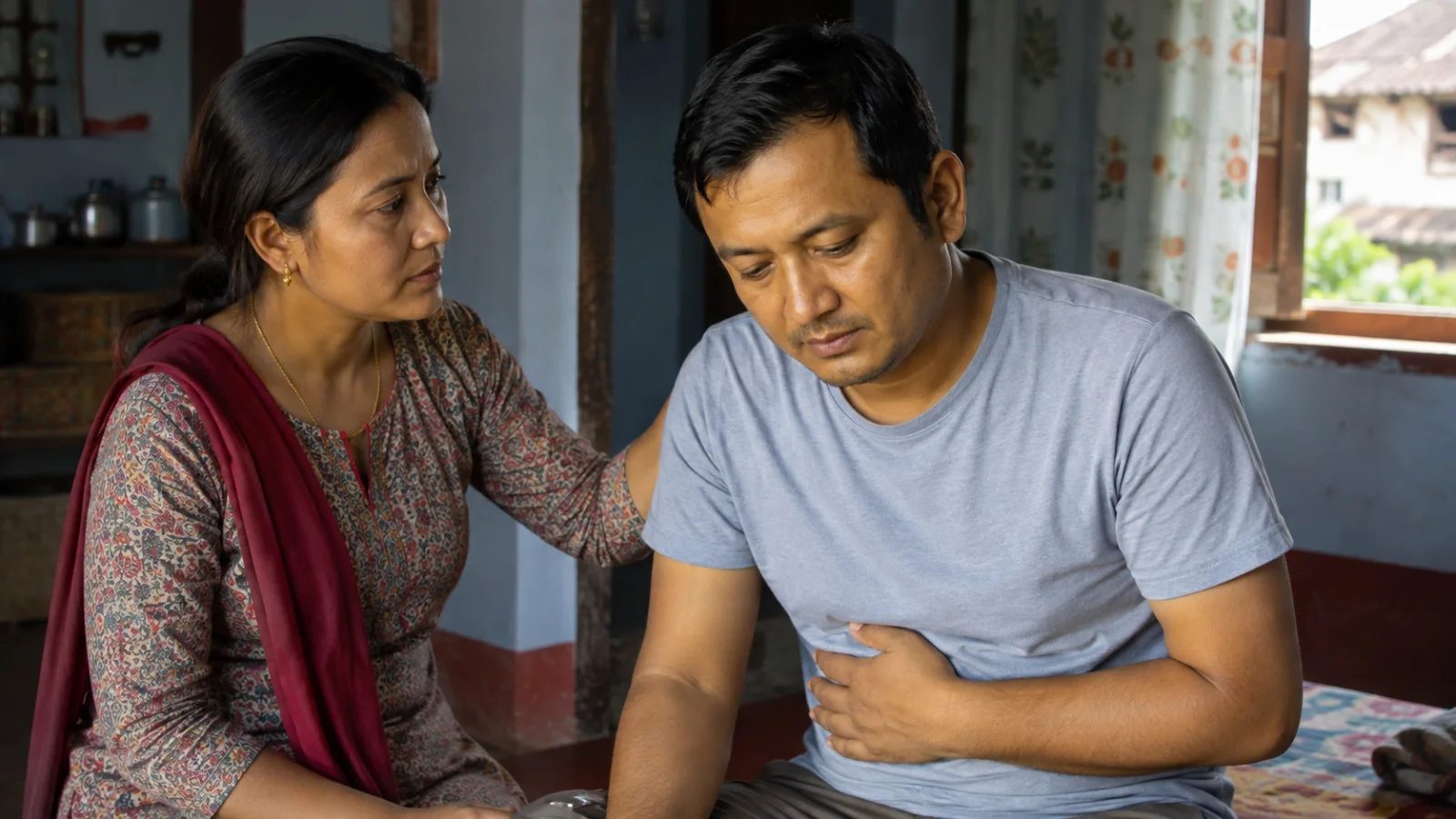
Many people with hepatitis B have no symptoms, especially during early or chronic infection. When symptoms occur, they may include:
Tiredness or weakness
Loss of appetite
Nausea or vomiting
Pain or discomfort in the upper right side of the abdomen
Yellowing of the eyes or skin, called jaundice
Dark urine
Pale or grey-coloured stool
Itchy skin or rash
Joint or body aches
Jaundice and abnormal liver tests can also be caused by hepatitis A, hepatitis E, hepatitis C, gallstones, alcohol-related liver disease, fatty liver disease, medicines, malaria, leptospirosis, typhoid and other conditions. Symptoms alone cannot confirm hepatitis B.
Chronic hepatitis B may cause no symptoms for many years. This is why blood testing is important for people with risk factors, pregnant people, household contacts of someone with hepatitis B, and people with unexplained liver-test abnormalities.
Red flags
Go to the nearest hospital urgently if suspected hepatitis B or jaundice occurs with:
Severe drowsiness, confusion, unusual behaviour or difficulty waking
Repeated vomiting or inability to keep fluids down
Severe abdominal pain or a swollen, very tender abdomen
Bleeding from the gums, nose, vomit or stool, or easy bruising
Very dark urine with very little urine output
Rapidly worsening yellowing of the eyes or skin
Severe weakness, fainting or collapse
Fast breathing, severe dehydration or signs of shock
High fever with severe headache, stiff neck or rash
Pregnancy with jaundice, abdominal pain, vomiting, bleeding or significant illness
Known chronic liver disease, hepatitis C, hepatitis D, HIV, heavy alcohol use or weakened immunity
Confusion, marked sleepiness, bleeding, severe vomiting or rapidly worsening jaundice can suggest serious liver involvement and need urgent assessment.
Seek urgent advice after possible recent exposure to hepatitis B, such as a needle-stick injury, unprotected sex with someone who may have hepatitis B, sexual assault, shared needle use, or a newborn baby born to a mother with hepatitis B. Post-exposure vaccination and hepatitis B immunoglobulin may reduce the risk of infection when given promptly in selected situations.
Self-care
Hepatitis B should not be managed with home remedies alone. Medical assessment and blood tests are needed to confirm the diagnosis, check whether the infection is acute or chronic, and assess liver inflammation.
While waiting for assessment or during recovery:
Rest if you feel very tired or unwell.
Drink enough safe fluids, especially if vomiting or appetite is poor.
Avoid alcohol completely unless a clinician confirms it is safe.
Ask a healthcare professional before taking paracetamol, painkillers, antibiotics, anti-nausea medicines, supplements or herbal remedies.
Do not share razors, toothbrushes, needles, nail clippers or anything that may have blood on it.
Cover cuts and wounds.
Use condoms or avoid sex until a clinician has advised how to prevent transmission.
Tell healthcare workers, dentists and relevant clinicians that you have hepatitis B before procedures.
Encourage household and sexual contacts to seek testing and vaccination advice.
If pregnant, attend antenatal care and make sure the maternity team knows about hepatitis B status.
Do not donate blood, organs, semen or eggs if you have hepatitis B unless a specialist service has confirmed it is safe. Do not stop follow-up because you feel well; chronic hepatitis B can still affect the liver without obvious symptoms.
Treatment
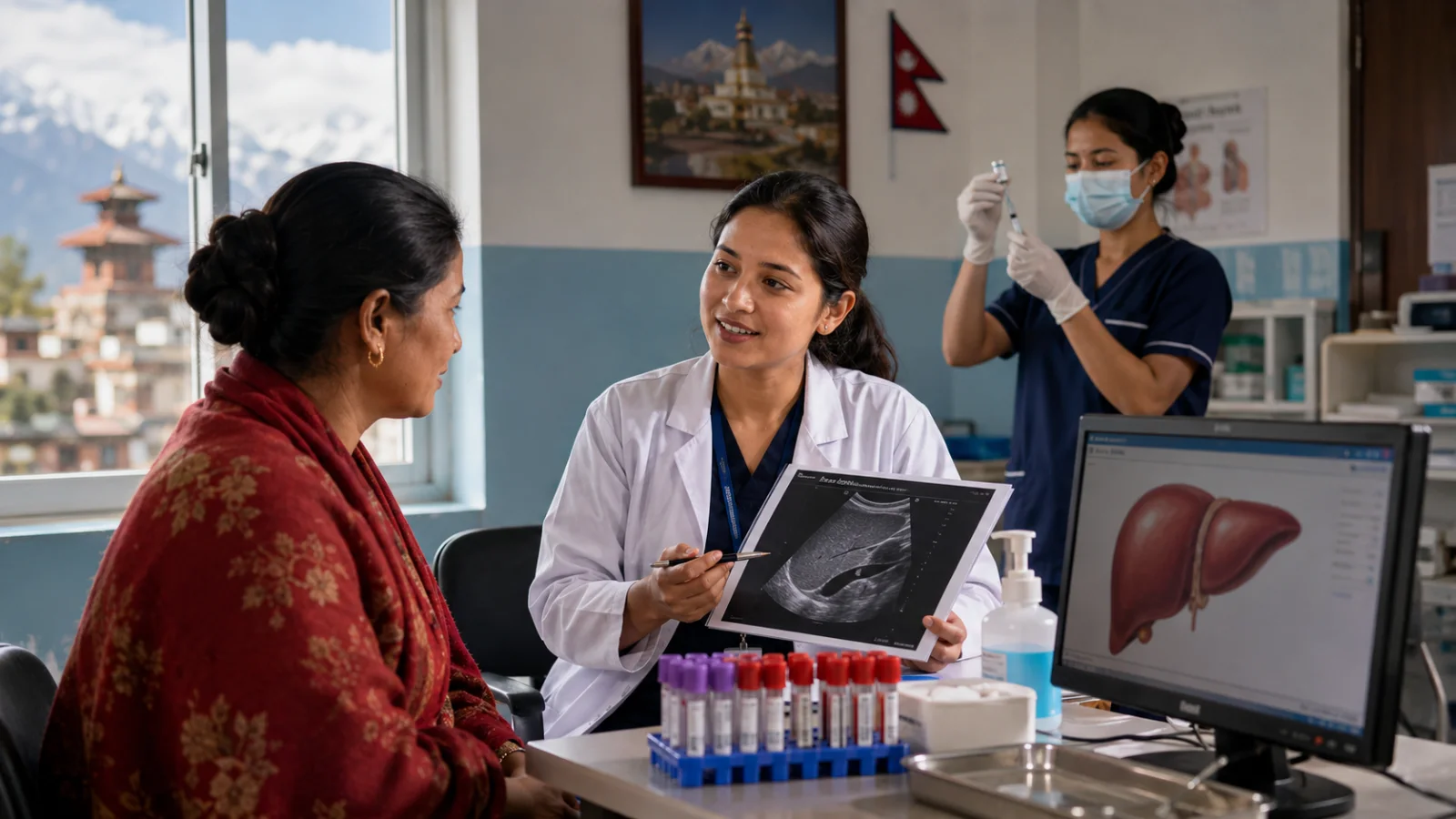
Treatment depends on whether hepatitis B is recent and short-term, or chronic.
For acute hepatitis B, most adults recover without antiviral treatment. Care is usually supportive, including fluids, rest, avoiding alcohol and avoiding medicines that may harm the liver. Severe acute hepatitis with liver failure signs needs hospital care.
For chronic hepatitis B, some people need antiviral treatment and others need regular monitoring. Treatment decisions are based on blood tests, viral load, liver inflammation, fibrosis or cirrhosis, age, pregnancy status and other infections such as HIV, hepatitis C or hepatitis D. NICE recommends specialist assessment, liver fibrosis assessment such as transient elastography, and antiviral treatment for selected people with chronic hepatitis B according to HBV DNA, ALT and liver disease stage.
A healthcare professional may arrange:
Hepatitis B surface antigen, called HBsAg
Hepatitis B core antibody and surface antibody tests
HBeAg and anti-HBe tests
HBV DNA viral-load testing
Liver function blood tests
Blood clotting tests if illness is severe
Full blood count and kidney function
Tests for hepatitis A, C, D, E and HIV when relevant
Ultrasound or liver fibrosis assessment
Liver-cancer surveillance in higher-risk chronic hepatitis B
Vaccination is the best prevention. Hepatitis B vaccine is used in infant immunisation programmes and for people at higher risk, including healthcare workers, household and sexual contacts of infected people, people who inject drugs, some travellers, and people with chronic liver or kidney disease. Nepal has used hepatitis B-containing vaccine within its national immunisation programme, and WHO Nepal reported that Nepal achieved hepatitis B control through high infant hepatitis B vaccine coverage.
Questions to ask your doctor
Do I have acute hepatitis B or chronic hepatitis B?
Which blood tests confirm the diagnosis?
What do my HBsAg, HBeAg, anti-HBs and HBV DNA results mean?
Are my liver tests normal or inflamed?
Do I need testing for hepatitis C, hepatitis D, hepatitis E or HIV?
Do I need a liver ultrasound or fibrosis scan?
Do I need antiviral treatment, or regular monitoring only?
How often should my liver tests and viral load be repeated?
Am I at risk of cirrhosis or liver cancer?
Should my partner, children or household members be tested or vaccinated?
What should I do if I am pregnant or planning pregnancy?
Which medicines, painkillers, supplements or herbal remedies should I avoid?
Which symptoms mean I should go to hospital urgently?
Nepal pathway
In Nepal, start with your nearest health post, PHC, clinic, or hospital if symptoms are worrying, severe, worsening, or not improving. Take previous prescriptions, test reports, allergy information, and current medicines with you. Seek urgent care immediately if there are red flag symptoms.
Disclaimer
This is general health information only and does not replace medical advice, diagnosis, treatment, or emergency care.
Help improve this guide
Spotted an error or want to contact us about this guide? Send a message to the HamroSwasthya team.