
Japanese encephalitis
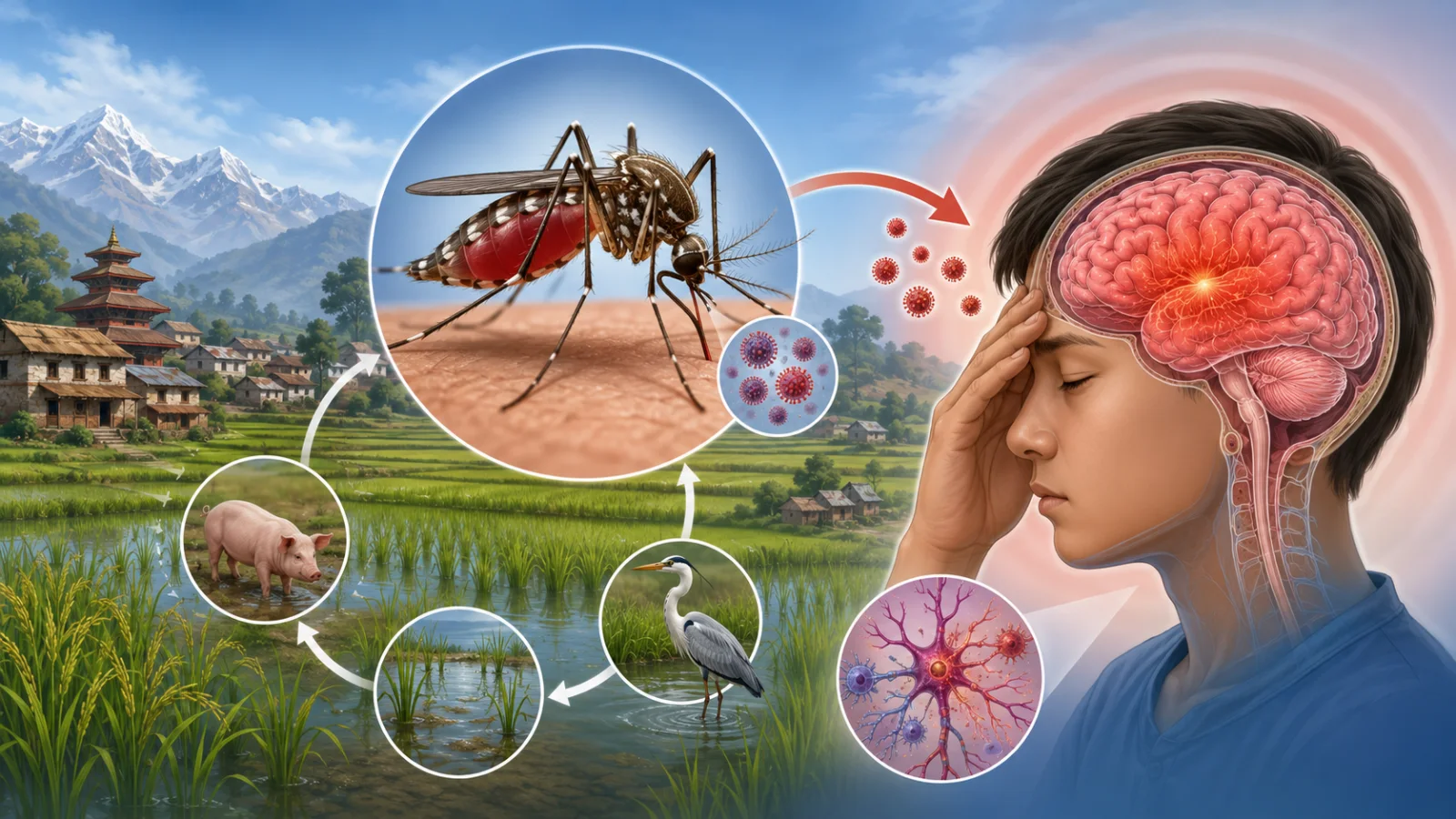
Japanese encephalitis, often shortened to JE, is a viral infection spread through the bite of infected Culex mosquitoes. The virus can cause inflammation of the brain. Most infected people have no symptoms, but a small proportion develop severe illness. JE does not usually spread directly from one person to another.
Red flags
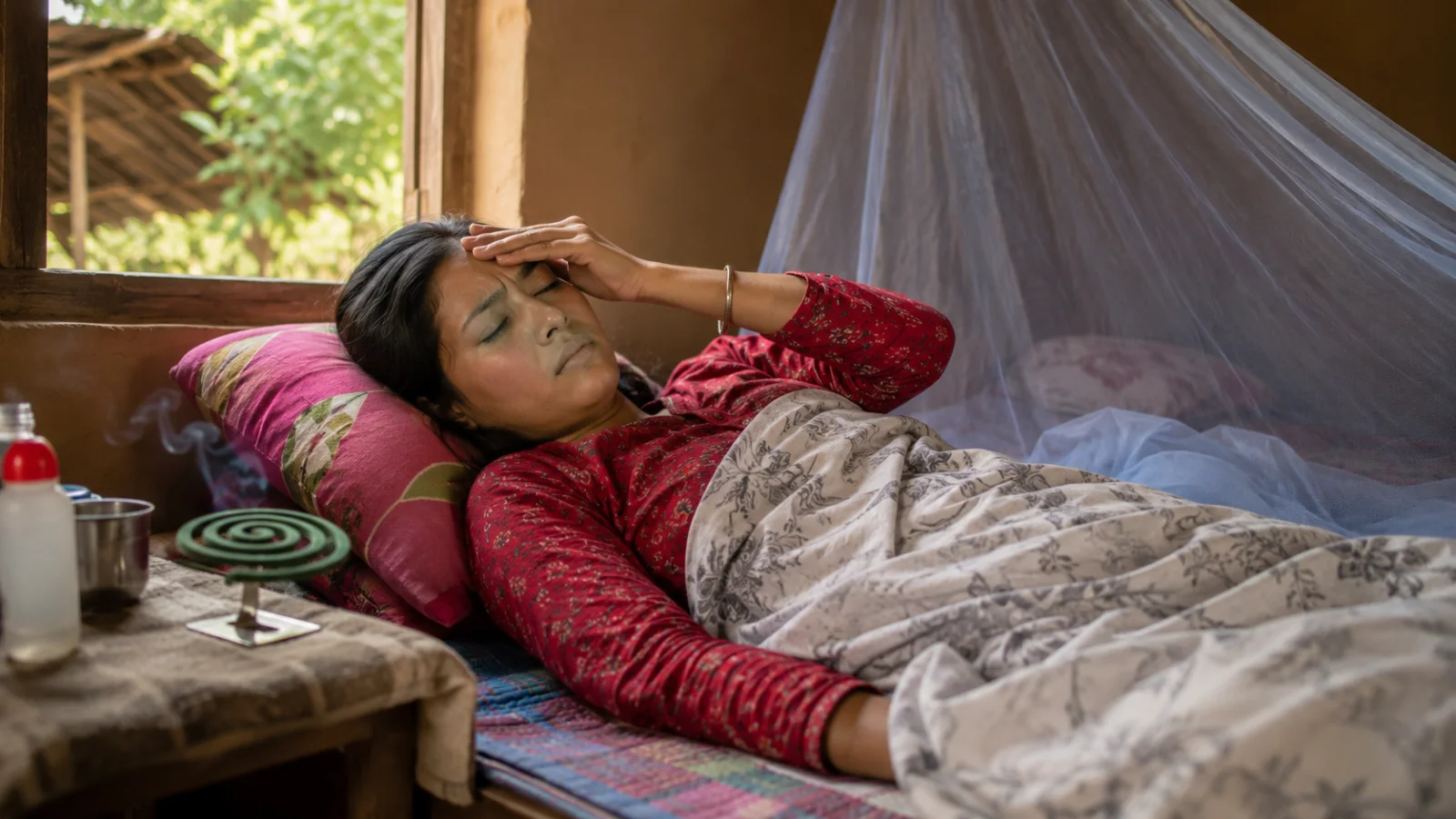
Go to the nearest hospital immediately if someone with fever develops:
Confusion, unusual behaviour or difficulty waking
A seizure
Severe headache with repeated vomiting or neck stiffness
New weakness, paralysis or difficulty walking
Difficulty speaking, swallowing or breathing
Loss of consciousness or coma
Rapid worsening or extreme illness
These signs can indicate encephalitis, meningitis or another serious brain infection. Severe JE can be fatal, and some survivors develop long-term problems with movement, memory, behaviour, speech or learning.
Symptoms
Symptoms may begin with:
Sudden fever
Severe headache
Nausea or vomiting
Tiredness or weakness
Muscle aches
If the infection affects the brain, symptoms may include:
Confusion, disorientation or unusual behaviour
Difficulty speaking or responding normally
Neck stiffness
Seizures, particularly in children
Weakness or paralysis
Tremor, abnormal movements or poor coordination
Extreme drowsiness, coma or loss of consciousness
Many mild viral illnesses can cause fever and headache. JE cannot be diagnosed from symptoms alone.
Self-care
Japanese encephalitis cannot be safely managed at home once brain-related symptoms are present.
To reduce the risk:
Check that children have received vaccines recommended through Nepal's National Immunization Programme.
Use mosquito nets, especially when sleeping.
Wear clothing that covers the arms and legs.
Apply a suitable mosquito repellent to exposed skin.
Use screens, coils or other safe mosquito-control measures where appropriate.
Reduce stagnant water around the home where mosquitoes may breed.
Do not delay hospital care while trying home remedies or assuming the illness is ordinary fever. Vaccination and protection from mosquito bites are the main preventive measures. Nepal includes JE vaccination within its national childhood immunization programme.
Treatment
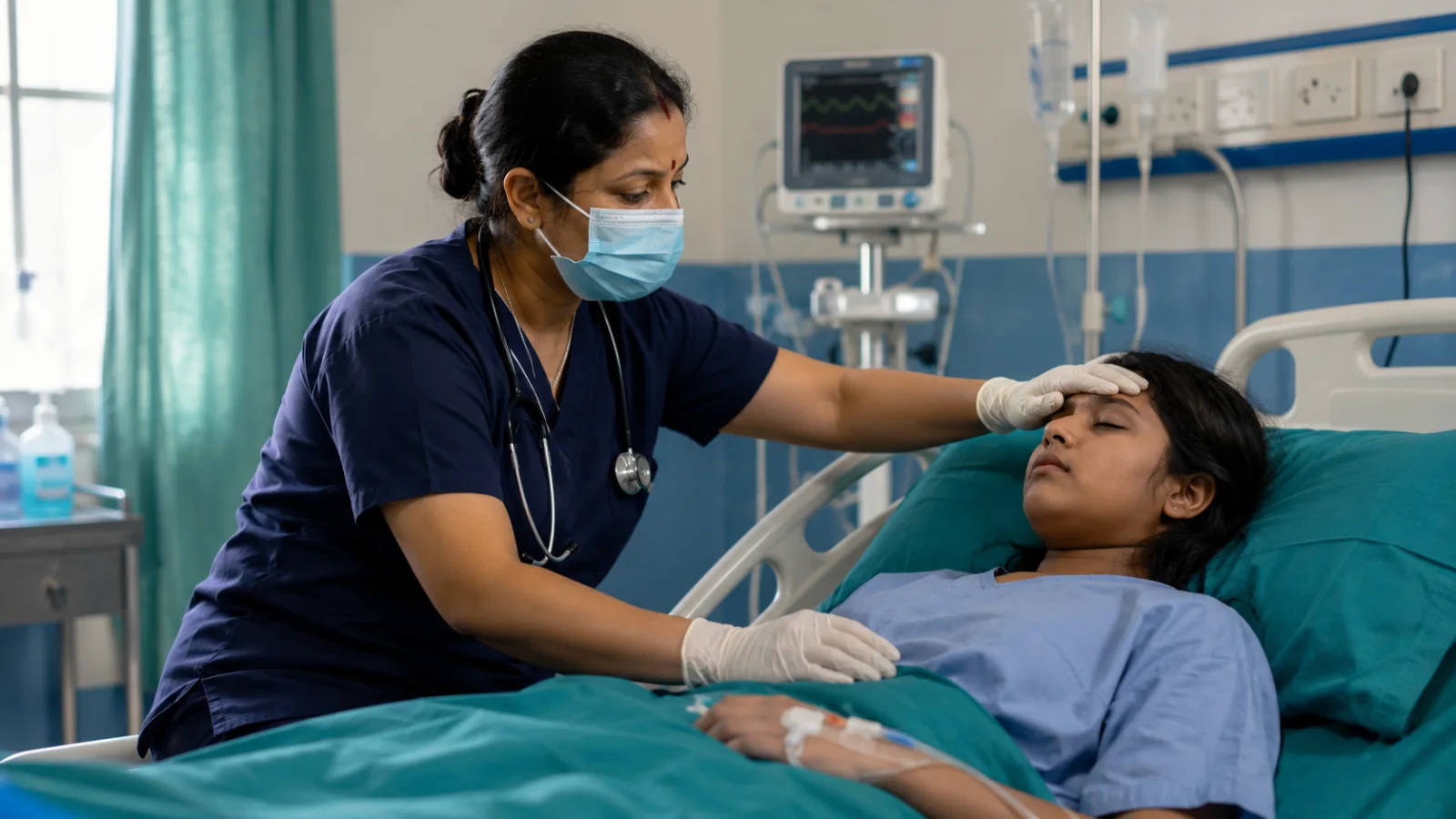
There is no specific antiviral medicine that cures Japanese encephalitis. People with suspected encephalitis usually require hospital admission and close monitoring. Treatment may include fluids, oxygen, seizure control, breathing support and management of pressure or swelling affecting the brain.
Doctors may arrange blood tests, spinal-fluid testing, brain imaging or other investigations to identify JE and exclude illnesses such as bacterial meningitis, cerebral malaria or other causes of encephalitis. Recovery can be prolonged, and some people need physiotherapy, speech therapy, occupational therapy or ongoing neurological care.
Questions to ask your doctor
Could these symptoms be encephalitis or meningitis?
What tests are needed to identify the cause?
Does the person need hospital admission or intensive monitoring?
How will seizures, breathing problems or brain swelling be managed?
Could there be long-term neurological or learning difficulties?
What rehabilitation or follow-up may be needed?
Is my child's Japanese encephalitis vaccination complete?
How can our family reduce mosquito exposure?
Nepal pathway
In Nepal, start with your nearest health post, PHC, clinic, or hospital if symptoms are worrying, severe, worsening, or not improving. Take previous prescriptions, test reports, allergy information, and current medicines with you. Seek urgent care immediately if there are red flag symptoms.
Disclaimer
This is general health information only and does not replace medical advice, diagnosis, treatment, or emergency care.
Help improve this guide
Spotted an error or want to contact us about this guide? Send a message to the HamroSwasthya team.