
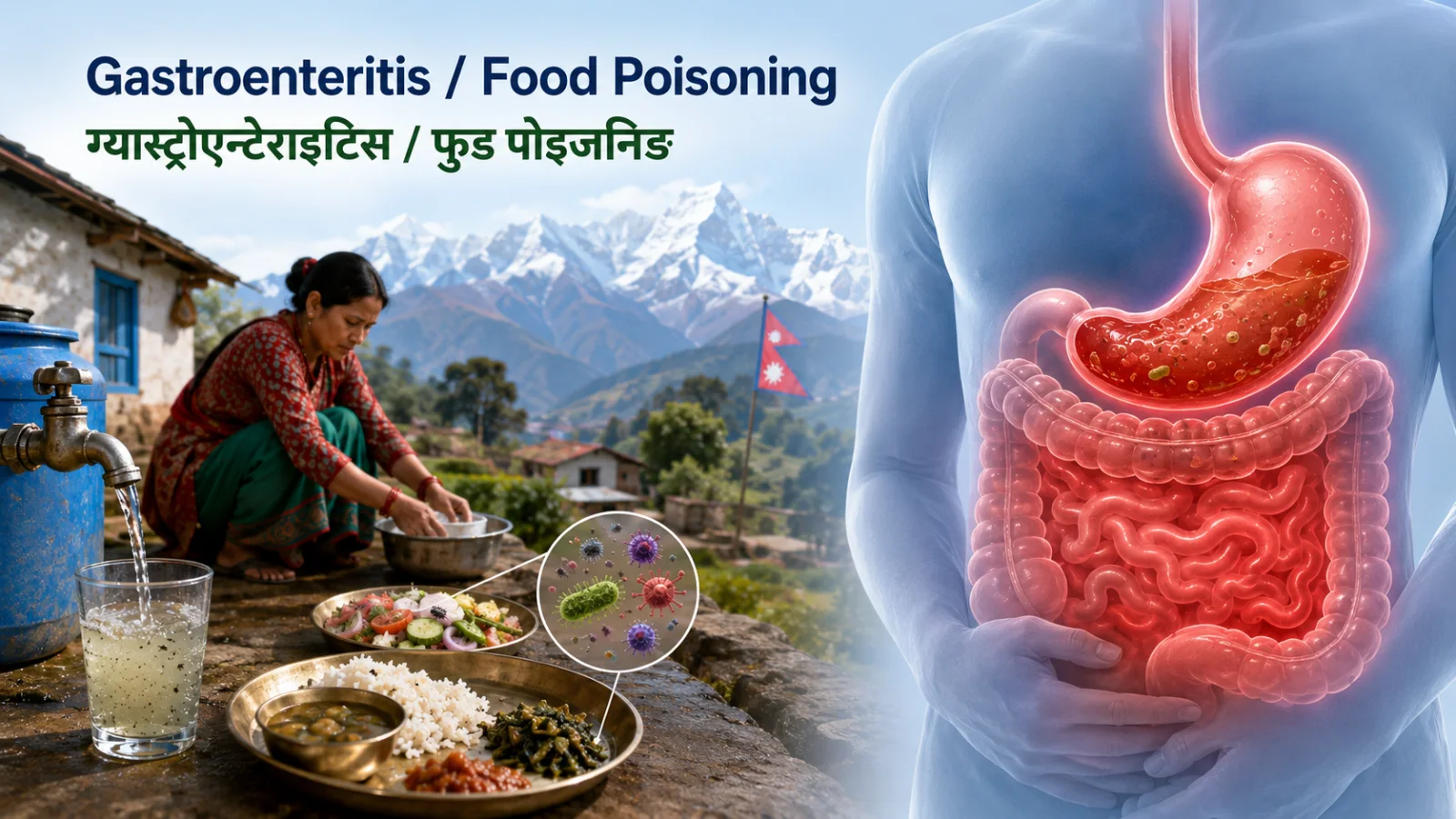
Gastroenteritis / food poisoning
Gastroenteritis is inflammation or infection of the stomach and intestines, usually causing diarrhoea, vomiting, abdominal cramps or fever. Food poisoning is gastroenteritis caused by eating food or drinking water contaminated with harmful germs or toxins. In practice, the symptoms can overlap, and the most important early risk is dehydration.
Most cases improve within a few days with fluids and rest. However, severe diarrhoea or vomiting can become dangerous, especially in babies, young children, older adults, pregnant people, and people with long-term illness or weakened immunity. In Nepal, gastroenteritis may be linked to unsafe drinking water, poor sanitation, contaminated street food, improperly stored food, monsoon flooding, and outbreaks of acute gastroenteritis or cholera. EDCD has national preparedness guidance for acute gastroenteritis and cholera outbreaks in Nepal.
Symptoms
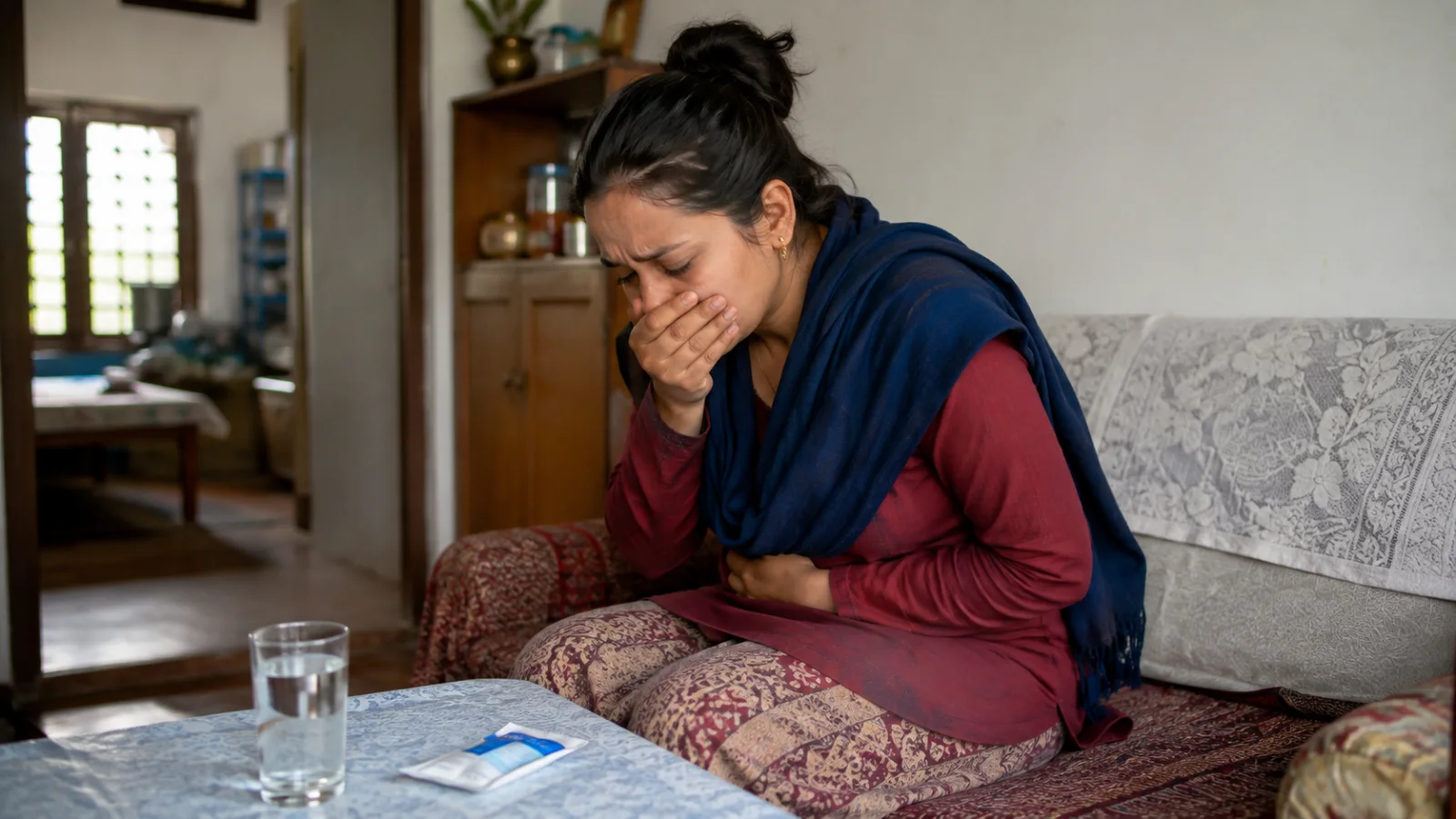
Symptoms may begin within hours of eating contaminated food, or after one or more days depending on the cause. Possible symptoms include:
Loose or watery diarrhoea
Nausea or vomiting
Abdominal cramps or stomach pain
Fever or chills
Headache, body aches or tiredness
Loss of appetite
Bloating or feeling generally unwell
Signs of dehydration, such as thirst, dry mouth, dizziness, reduced urine or dark urine
Food poisoning and viral gastroenteritis can look very similar. Some bacterial infections are more likely to cause high fever, severe abdominal pain or blood in the stool, but symptoms alone cannot reliably identify the germ.
Red flags
Go to the nearest hospital urgently if diarrhoea or vomiting occurs with:
Very little or no urine
Severe thirst, dry mouth, sunken eyes or extreme weakness
Repeated vomiting or inability to keep fluids down
Drowsiness, confusion, fainting or collapse
Blood in the stool or black, tar-like stool
Severe or worsening abdominal pain
A swollen, hard or very tender abdomen
High fever or feeling seriously unwell
Fast breathing, rapid heartbeat, cold hands or signs of shock
Diarrhoea after recent antibiotic use, especially if severe or persistent
Symptoms in a baby, older adult, pregnant person or someone with weakened immunity
A child who is unusually sleepy, not drinking, has no tears when crying, or has markedly fewer wet nappies
Severe dehydration can develop quickly and may require urgent oral rehydration or intravenous fluids. Anti-diarrhoeal medicines should be avoided when there is high fever or blood in the stool unless a clinician advises otherwise, because they can sometimes worsen the illness.
Self-care
Gastroenteritis can often be managed at home only if symptoms are mild and there are no red flags. The main aim is to prevent dehydration.
Drink frequent small amounts of fluid.
Use oral rehydration solution, especially if diarrhoea or vomiting is significant.
Continue breastfeeding babies.
Eat when you feel able; start with simple foods if appetite is low.
Avoid alcohol.
Rest and avoid strenuous activity while unwell.
Wash hands with soap and safe water after using the toilet and before preparing food.
Use a separate towel if possible.
Avoid preparing food for others while ill.
Stay away from school, work, food handling and caring for vulnerable people until at least 48 hours after diarrhoea and vomiting have stopped.
Do not mix ORS incorrectly. Use the amount of clean water stated on the packet. Do not make the solution stronger or weaker, and do not add extra sugar, salt, milk or soft drinks. Sports drinks and sweet drinks are not the same as ORS and may not replace lost salts properly.
In Nepal, use boiled, filtered or properly treated drinking water when water safety is uncertain. Eat food that is freshly cooked and served hot, wash fruit and vegetables with safe water, avoid raw or undercooked meat and seafood, and be careful with food that has been left at room temperature for a long time.
Treatment
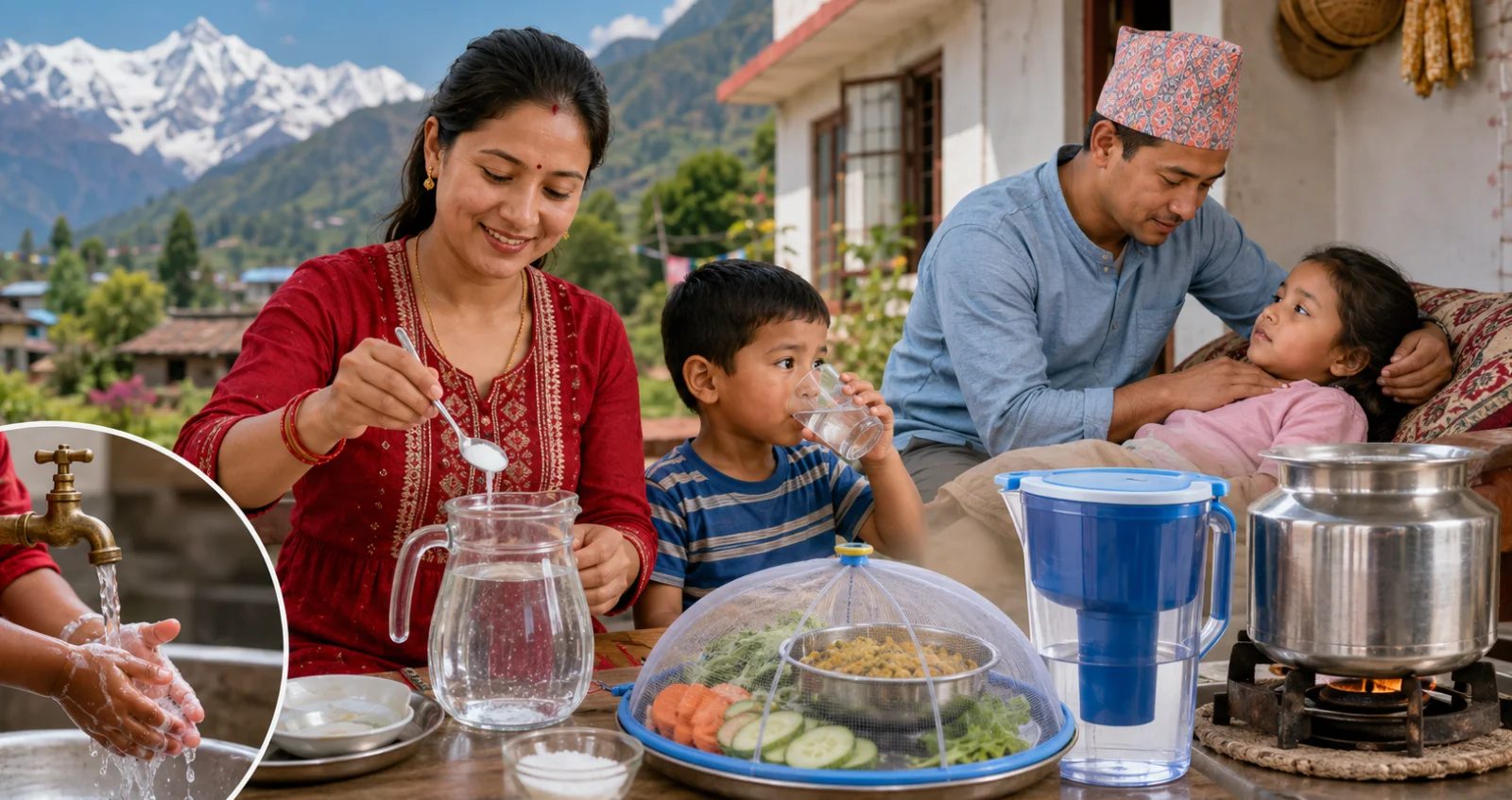
Treatment depends on severity and the likely cause. Most uncomplicated cases improve without antibiotics. The most important treatment is replacing lost fluid and salts with ORS or, in severe dehydration, intravenous fluids.
A healthcare professional may check hydration, temperature, pulse, blood pressure, abdominal tenderness and urine output. Tests are not always needed, but stool testing, blood tests or urine tests may be arranged if symptoms are severe, prolonged, bloody, part of an outbreak, or affecting a high-risk person.
Antibiotics are not needed for most gastroenteritis and can sometimes cause harm. They may be used for selected bacterial or parasitic infections, severe disease, cholera, dysentery, typhoid or high-risk patients after clinical assessment. Treatment should not be delayed in severe dehydration while waiting for test results.
Seek assessment if symptoms are not improving after a few days, diarrhoea persists, vomiting prevents drinking, fever continues, symptoms return repeatedly, or several people become unwell after eating the same food. Public-health reporting may be needed if many people are affected, food poisoning is suspected from a restaurant or event, or there is concern about a local outbreak.
Questions to ask your doctor
Is this likely to be viral gastroenteritis, food poisoning, cholera, dysentery, typhoid or another infection?
How dehydrated am I?
Is ORS enough, or do I need intravenous fluids?
Do I need stool testing or blood tests?
Is an antibiotic needed, or would it be unnecessary?
Should I avoid anti-diarrhoeal medicine?
What should I eat and drink while recovering?
When can I return to work, school or food preparation?
Could this be linked to unsafe water, food from an event or a local outbreak?
Which symptoms mean I should go to hospital urgently?
Nepal pathway
In Nepal, start with your nearest health post, PHC, clinic, or hospital if symptoms are worrying, severe, worsening, or not improving. Take previous prescriptions, test reports, allergy information, and current medicines with you. Seek urgent care immediately if there are red flag symptoms.
Disclaimer
This is general health information only and does not replace medical advice, diagnosis, treatment, or emergency care.
Further information
for more information visit: https://edcd.gov.np/resources/manuals
Help improve this guide
Spotted an error or want to contact us about this guide? Send a message to the HamroSwasthya team.