
Scrub typhus
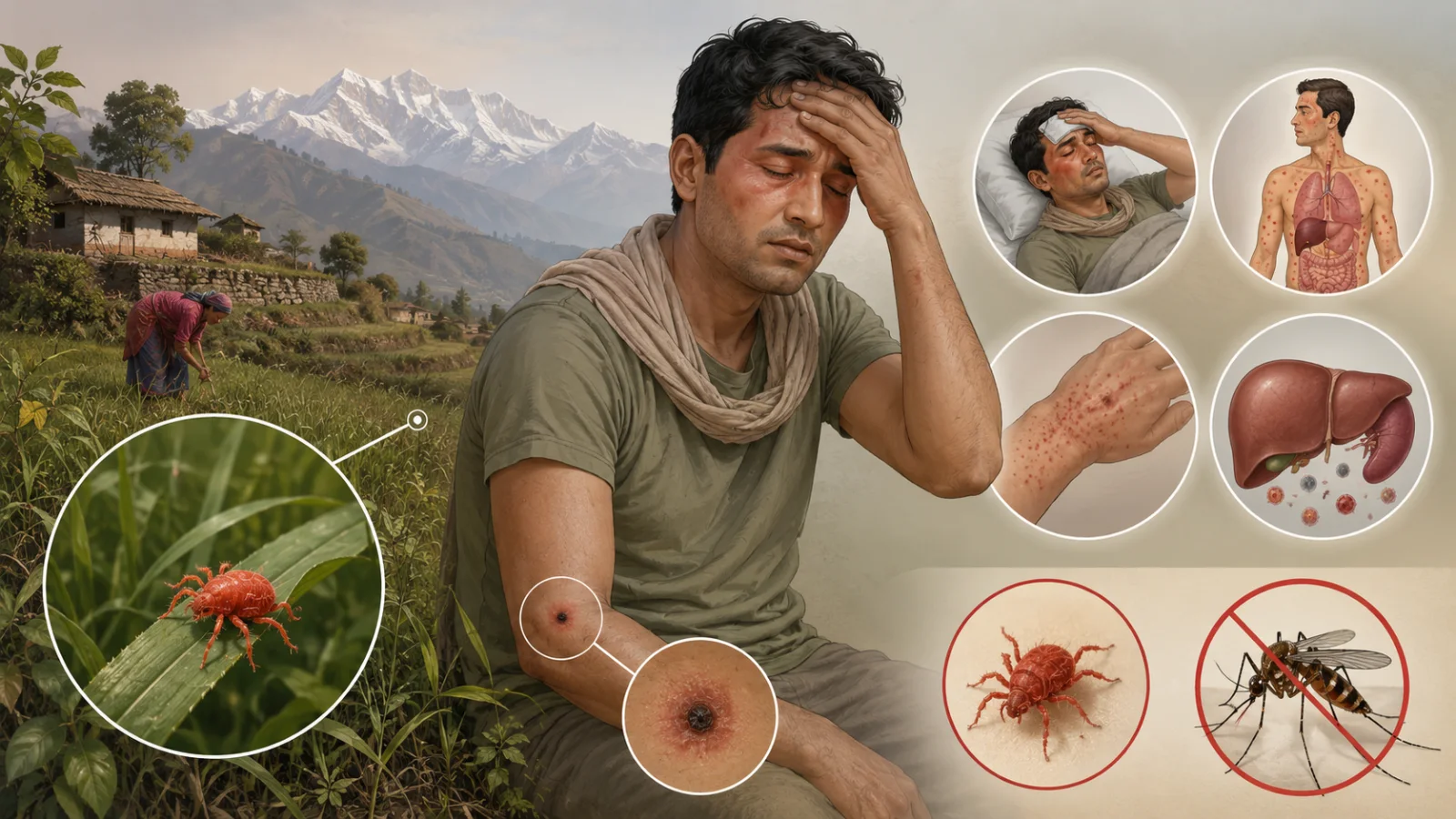
Scrub typhus is a bacterial infection caused by Orientia tsutsugamushi. It spreads through the bite of infected larval mites, sometimes called chiggers, which are commonly found in areas with grass, bushes, farms and other vegetation. It does not usually spread directly from one person to another. Scrub typhus occurs in Nepal and should be considered when someone develops an unexplained fever, particularly after outdoor, farming or field exposure.
Scrub typhus is different from typhoid fever. Without timely treatment, it can affect the lungs, brain, heart, liver, kidneys and circulation, but early antibiotic treatment is usually effective.
Symptoms
Symptoms often begin suddenly several days after infection and may include:
High fever, chills or shivering
Severe headache
Muscle or body aches
Marked tiredness or weakness
Reduced appetite
Nausea, vomiting, abdominal discomfort or diarrhoea
Cough or breathlessness
Swollen lymph glands
A widespread rash
A dark, painless scab or ulcer at the bite site, called an eschar
An eschar may appear in hidden areas such as the armpit, groin, waist, under the breast or behind the ear. However, many people do not notice a bite or develop an obvious eschar, so its absence does not exclude scrub typhus.
Red flags
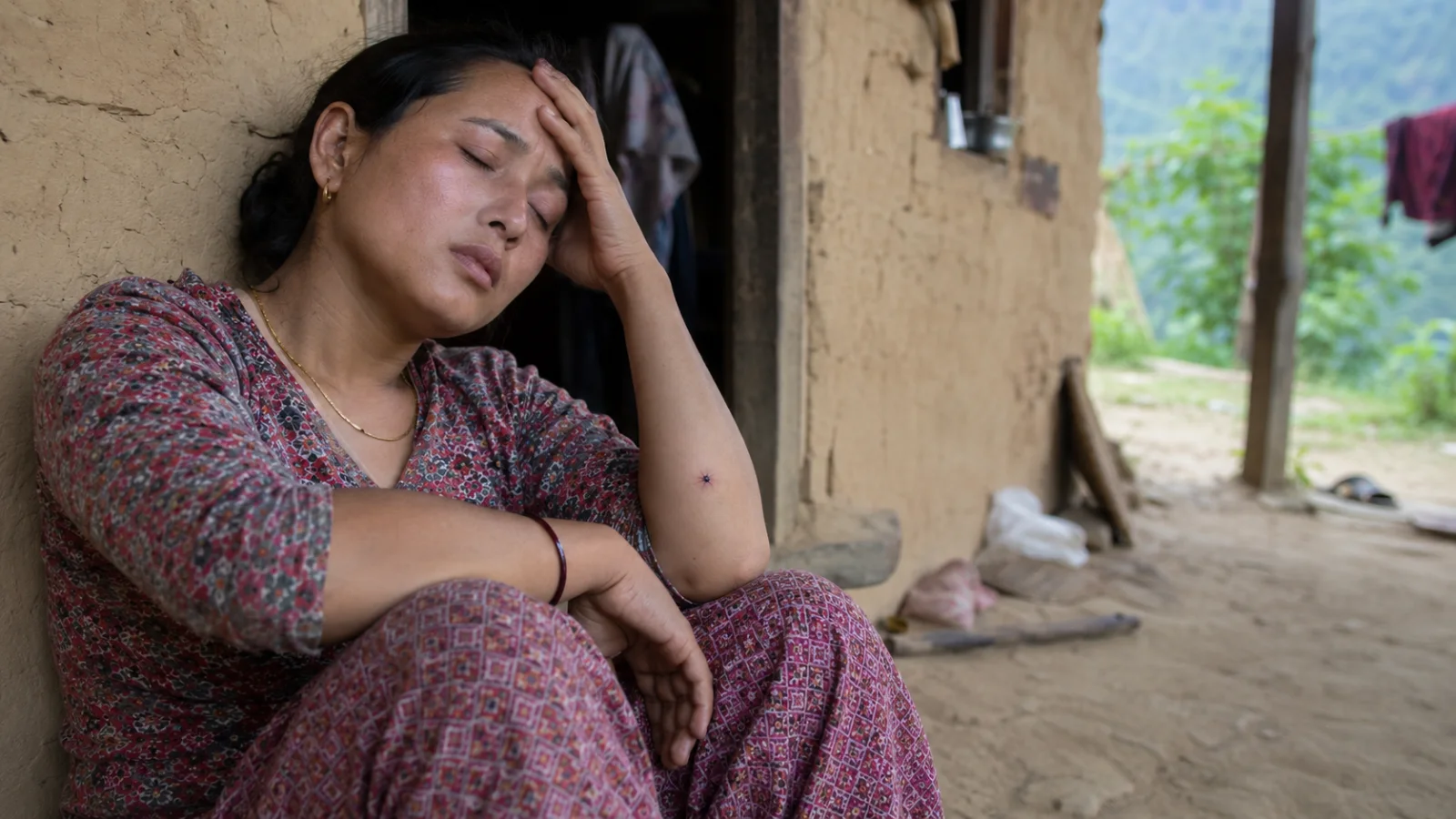
Seek urgent hospital assessment if fever occurs with:
Difficulty breathing, rapid breathing or blue lips
Confusion, unusual behaviour or difficulty waking
Seizure, severe drowsiness or loss of consciousness
Severe headache with neck stiffness or repeated vomiting
Chest pain, fainting or very low blood pressure symptoms
Yellowing of the eyes or skin
Very little urine or unusually dark urine
Unusual bleeding, widespread bruising or blood in vomit or stool
Severe abdominal pain
Rapid worsening or extreme weakness
These may indicate severe infection affecting the brain, lungs, heart, liver, kidneys or circulation.
Self-care
Arrange medical assessment for persistent or unexplained fever, especially after working or walking in fields, grass or bushes.
Rest and drink suitable fluids while awaiting assessment, if able to drink safely.
Wear long sleeves, long trousers, socks and closed shoes when working in vegetation.
Use a suitable insect or mite repellent on exposed skin and clothing.
Bathe and change clothes after fieldwork or outdoor exposure.
Keep grass and dense vegetation controlled around homes where practical.
Do not scratch, cut or apply chemicals or herbal products to a suspected eschar.
Do not assume the illness is typhoid, dengue or a routine viral fever without proper assessment.
Do not take leftover antibiotics or stop prescribed treatment early.
Treatment
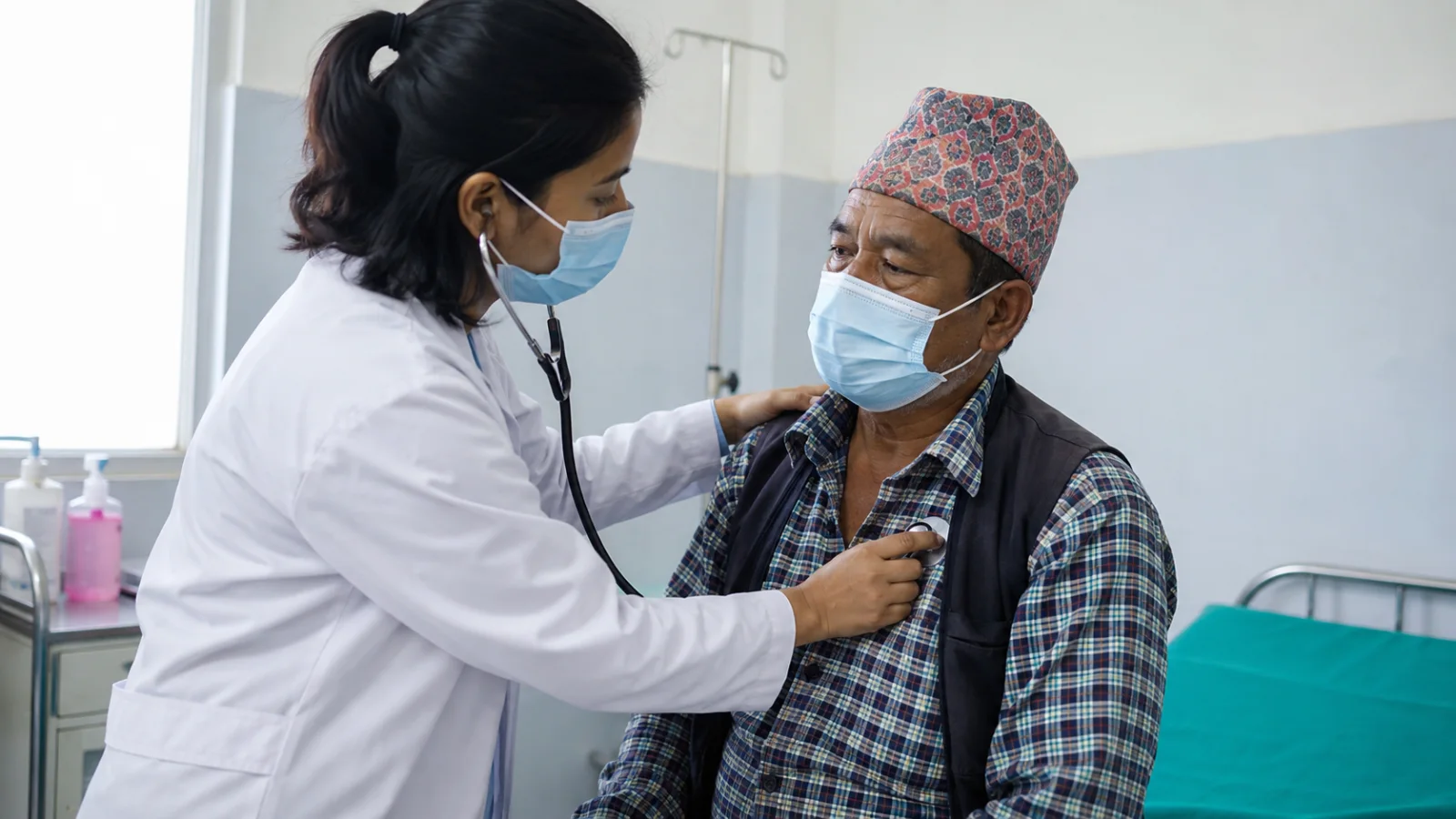
Scrub typhus is treated with antibiotics. Treatment works best when started promptly, and people treated early often recover quickly. A doctor may begin treatment based on the symptoms and exposure history rather than waiting for every test result when clinical suspicion is high.
Tests may include blood count, liver and kidney tests, and antibody or molecular testing for scrub typhus. Tests for dengue, malaria, typhoid, leptospirosis or other infections may also be needed because the symptoms can overlap.
Severe illness may require hospital admission, oxygen, intravenous fluids, seizure treatment, breathing support or treatment for organ complications.
Questions to ask your doctor
Could this be scrub typhus rather than typhoid or dengue?
Is there an eschar or another clue on the skin?
Which blood tests are needed?
Should treatment start before the test results return?
Has the infection affected my lungs, liver, kidneys or brain?
When should the fever begin to improve?
Which symptoms mean I should return to hospital immediately?
How can I reduce exposure during farming or outdoor work?
Nepal pathway
In Nepal, start with your nearest health post, PHC, clinic, or hospital if symptoms are worrying, severe, worsening, or not improving. Take previous prescriptions, test reports, allergy information, and current medicines with you. Seek urgent care immediately if there are red flag symptoms.
Disclaimer
This is general health information only and does not replace medical advice, diagnosis, treatment, or emergency care.
Help improve this guide
Spotted an error or want to contact us about this guide? Send a message to the HamroSwasthya team.