
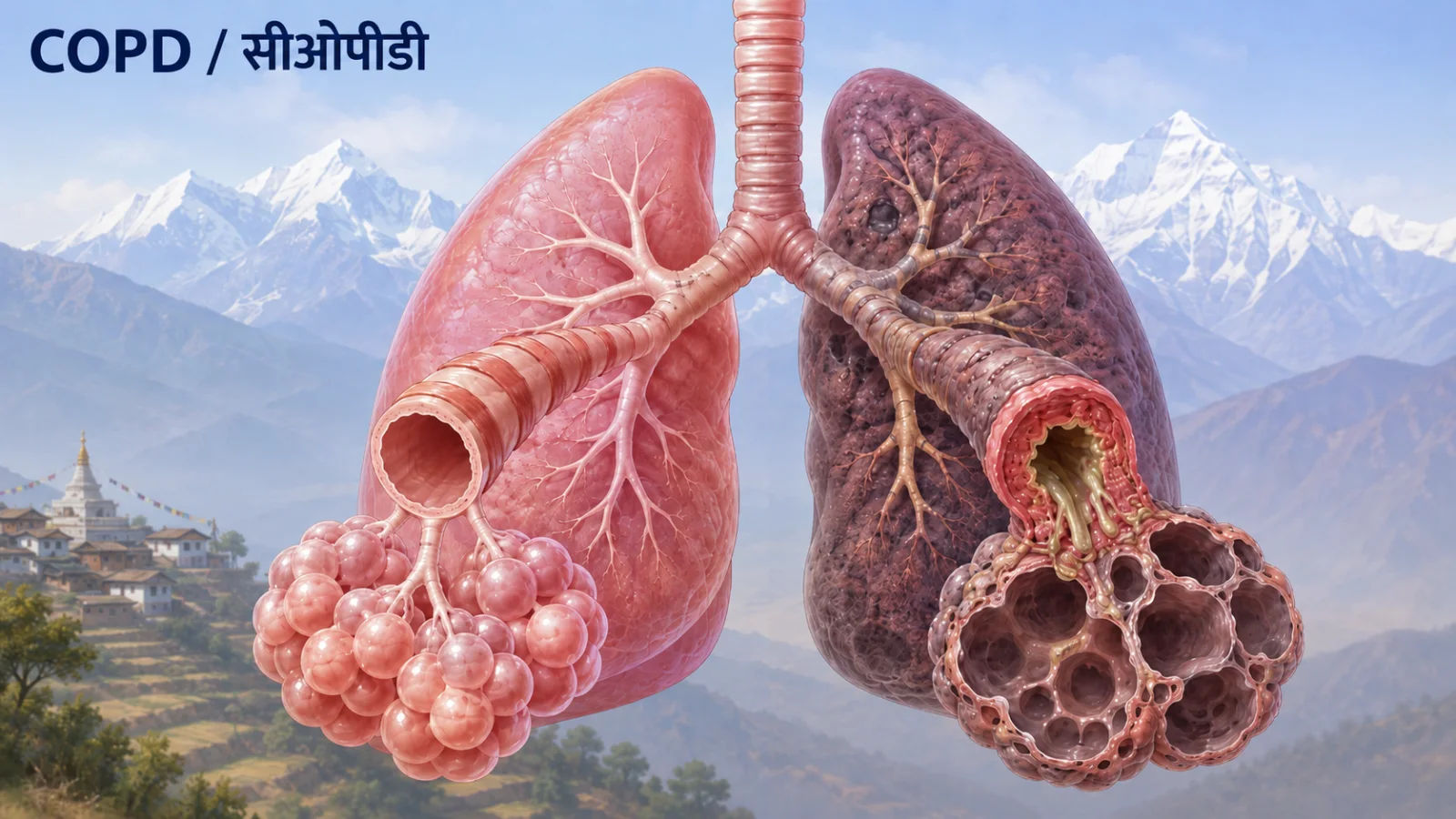
Chronic obstructive pulmonary disease (COPD)
Chronic obstructive pulmonary disease, or COPD, is a long-term lung condition in which damaged and narrowed airways make it difficult to move air in and out of the lungs. It includes conditions commonly described as chronic bronchitis and emphysema. COPD usually develops gradually and is most often linked to tobacco smoke, but household cooking smoke, outdoor air pollution, workplace dust and chemical fumes can also contribute.
The lung damage cannot usually be reversed completely, but stopping exposure to smoke, using the right inhalers, remaining active and receiving appropriate medical care can reduce symptoms, prevent flare-ups and slow deterioration. COPD should be confirmed with a breathing test called spirometry, because asthma, heart failure, anaemia and other conditions can cause similar symptoms.
Symptoms

COPD symptoms often develop slowly and may initially be noticed only during physical activity. They can include:
Increasing breathlessness when walking, climbing stairs or doing routine work
A long-lasting cough
Regular production of phlegm or mucus
Wheezing or a whistling sound when breathing
Tightness or heaviness in the chest
Frequent chest infections
Taking longer than usual to recover from colds or respiratory infections
Persistent tiredness or reduced ability to exercise
Unintentional weight loss and muscle weakness in more advanced disease
Swollen ankles or legs in some people with severe disease or associated heart problems
Symptoms may suddenly become worse during a COPD flare-up or exacerbation. Signs include more breathlessness than usual, increased coughing, more phlegm, or phlegm becoming thicker or changing colour.
Red flags
Go to the nearest hospital immediately if a person with COPD has:
Severe or rapidly worsening breathlessness
Gasping or being unable to speak in complete sentences
Blue, grey or unusually pale lips, tongue or skin
New confusion, severe drowsiness or difficulty waking
Chest pain, pressure or heaviness
Collapse, fainting or a seizure
Coughing up more than small streaks of blood
A very fast or irregular heartbeat with dizziness or severe weakness
Breathing symptoms that are not improving after using the prescribed rescue treatment
Severe breathlessness with fever, repeated vomiting, dehydration or inability to take medicines
New swelling and pain in one leg together with sudden breathlessness or chest pain
These symptoms can indicate severe oxygen deficiency, pneumonia, a heart problem, a blood clot in the lungs or a life-threatening COPD flare-up. Use 102 where ambulance services are available, or arrange immediate transport to an emergency-capable hospital.
Self-care

COPD cannot be managed with home care alone. However, alongside the treatment recommended by your healthcare team, the following measures can help control symptoms and reduce flare-ups:
Stop smoking and avoid second-hand smoke. Stopping smoking is the most important step for people who smoke.
Reduce exposure to wood smoke, dung or crop-waste smoke, kerosene fumes, traffic pollution, dust and chemical fumes where possible.
Use prescribed inhalers regularly and learn the correct inhaler technique. Ask for the technique to be checked periodically.
Keep a written COPD action plan explaining what to do when symptoms worsen.
Remain physically active within your safe limits and take part in pulmonary rehabilitation if available.
Use breathing-control techniques, such as relaxed breathing and breathing out slowly through pursed lips, when taught by a healthcare professional.
Eat regular, nutritious meals. Smaller meals may be easier if breathlessness makes eating difficult.
Drink enough fluids unless a clinician has advised a restriction; this may help keep phlegm easier to clear.
Wash hands regularly and avoid close contact with people who have respiratory infections where practical.
Ask which influenza, COVID-19, pneumococcal or other vaccines are appropriate and locally available.
Seek early assessment when breathlessness, cough or phlegm becomes noticeably worse.
Do not smoke while using oxygen. Do not start, increase or share oxygen without medical assessment, because oxygen must be prescribed according to measured oxygen levels and individual need. Do not use another person's inhaler, leftover antibiotics or steroid tablets without clinical advice.
Treatment
A clinician will usually ask about smoking, household smoke, occupational exposure and symptoms. Diagnosis is supported by post-bronchodilator spirometry, which measures how much air can be blown out and how quickly. Other tests may include oxygen measurement, chest X-ray, blood tests, ECG, sputum testing or a CT scan when another condition or complication is suspected.
Treatment may include:
Short-acting inhalers to relieve episodes of breathlessness
Long-acting bronchodilator inhalers to keep the airways more open
Inhaled corticosteroids for selected people, usually in combination with long-acting inhalers rather than for everyone
Pulmonary rehabilitation, combining supervised exercise, education and breathing support
Smoking-cessation treatment and support
Antibiotics or short courses of steroid tablets for selected flare-ups after clinical assessment
Long-term oxygen therapy only for people who meet specific criteria after oxygen-level assessment
Nutritional support, airway-clearance advice or treatment for anxiety and depression where needed
Specialist procedures or surgery in a small number of people with severe disease
Regular reviews should include symptom control, flare-up frequency, inhaler technique, smoking status, physical activity, weight, oxygen levels and other illnesses. COPD is long-term, but treatment can reduce symptoms, improve daily functioning and help prevent deterioration.
Questions to ask your doctor
Have my symptoms been confirmed as COPD with spirometry?
Could asthma, tuberculosis, heart failure or another illness be causing similar symptoms?
What caused or contributed to my COPD?
Which inhalers do I need, and can you check my technique?
What should I do when my breathing or phlegm becomes worse?
Would pulmonary rehabilitation help me?
Which vaccinations are appropriate for me?
Do I need my oxygen level checked at rest or during activity?
Which medicines or painkillers should I avoid?
How can I reduce exposure to household smoke, workplace dust and outdoor pollution?
Which symptoms mean I should go to hospital immediately?
Nepal pathway
In Nepal, start with your nearest health post, PHC, clinic, or hospital if symptoms are worrying, severe, worsening, or not improving. Take previous prescriptions, test reports, allergy information, and current medicines with you. Seek urgent care immediately if there are red flag symptoms.
Disclaimer
This is general health information only and does not replace medical advice, diagnosis, treatment, or emergency care.
Help improve this guide
Spotted an error or want to contact us about this guide? Send a message to the HamroSwasthya team.